
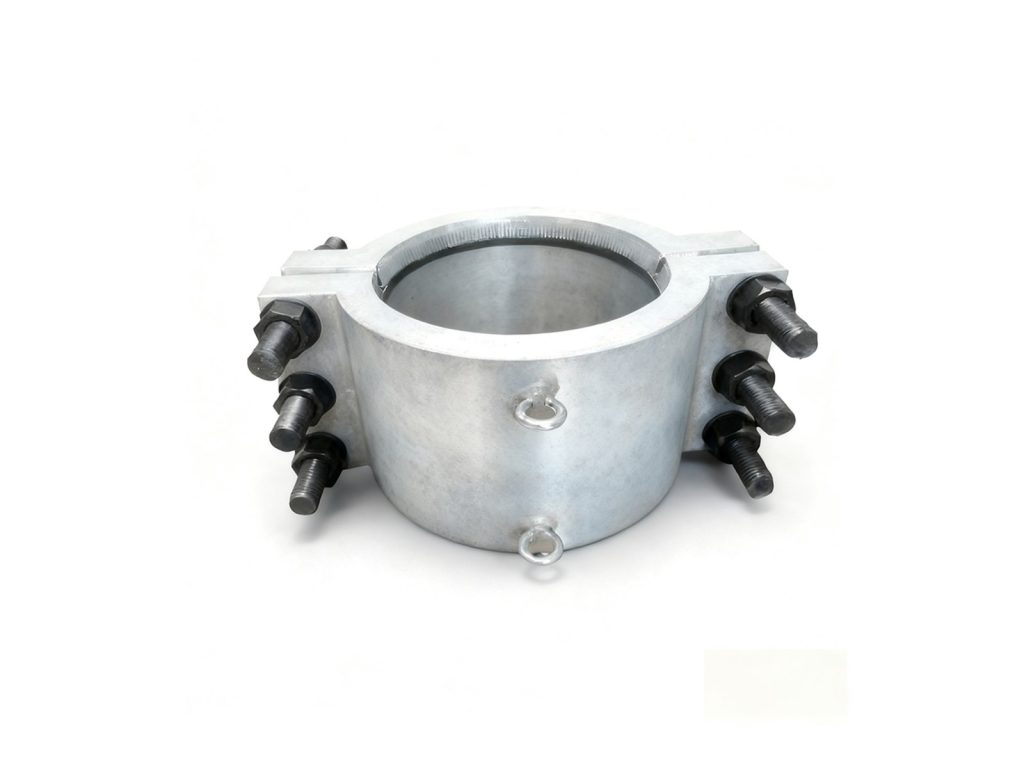
Stainless Steel High-Pressure Repair Sleeve
A reinforced stainless repair sleeve for the confirmed high-pressure duty; verify pipe wall, surge pressure, gasket and the ordered rating.
Also known as: Stainless Steel High Pressure Repair Clamp, Stainless Steel High Pressure Split Sleeve
Usually replies within 24 hours sales@baoshuopipe.com
Technical Specifications
| Size Range | DN15–DN4000 · Stainless Steel DN15–DN4000 · Custom sizes available beyond the above range |
|---|---|
| Body Material | SS304 / SS316L / Duplex 2205 |
| Seal Material | NBR / FKM |
| Sealing Pressure | ≥6.4MPa (928 PSI) |
| Bolt Specification | M16×80, Grade 8.8 High-Strength Bolts |
| Coating | None (Stainless Steel Body) |
| Length Range | 200–600mm (7.9"–23.6") |
| Applicable Pipe Types | Steel, Stainless Steel, Ductile Iron, PVC |
| Working Conditions | High Pressure, Corrosion Resistant |
Custom Orders Available
This product can be customized to your specifications. Contact us with your requirements.
Request Custom QuoteCheck the fit before ordering.
- Measure the actual pipe
- Nominal DN alone does not define the outside diameter. Confirm the pipe material, measured OD and condition.
- Confirm the geometry
- Provide dimensions of the connection or damaged area. Product shape, sealing length and end connections must match the job.
- Match the seal to the service
- Confirm medium, temperature and pressure together. A material name alone is not a service approval.
- Plan a safe installation
- Pipe integrity, isolation and installation procedure require a site-specific assessment. Suitability for live service must be confirmed.
Read the full technical guide7 chapters · complete product description
Product Overview
A stainless high-pressure sleeve is built for lines that are corrosive and must also hold pressure. Offshore and chemical duties rarely present one condition alone: the pipe is stainless because the medium attacks steel, and the pressure is high because of where the line sits in the process. The sleeve is one heavier shell with high-grade fasteners for that combination.
Where it is used
- Corrosive lines above the standard pressure range
- Offshore, chemical and desalination pipework
- Pump discharge and test lines in stainless systems
- Repairs specified to a pressure and a material together
Choosing the right build
Send the outside diameter, the maximum working pressure and the medium with its temperature; the shell and the gasket follow from those three. What a rating means in practice is covered in understanding pipe repair clamp pressure ratings; the carbon steel part is the high-pressure repair clamp.
Pressure changes the design, not just the material
It is tempting to think a high pressure sleeve is the standard sleeve in a better alloy. It is not. Raising the rating changes which part of the joint fails first.
At moderate pressure the limiting item is usually the gasket losing contact with the pipe. At higher pressure the gasket does not lose contact, it gets pushed out: the elastomer is extruded into the gap between the shell edge and the pipe wall, and once a sliver of it has gone the seal is finished. The second mechanism is the fasteners, which stretch under the separating load and let the shell edges lift. Both are stiffness problems, so the response is a heavier shell, heavier lugs and more fasteners, with a compound chosen for extrusion resistance rather than softness.
That is why the seal list on this build is NBR and FKM rather than EPDM. EPDM is an excellent potable water compound, but its extrusion resistance is lower, so it is not offered here. The published rating for this build is 6.4 MPa.
Installation
- Measure the pipe wall thickness, or find it from the schedule, and check the pipe is round. A high pressure sleeve on a thinned or oval pipe will not seal.
- Clean the whole gasket footprint to bare metal and dry it. Residue becomes a leak path at this pressure.
- Check the compound matches the medium and the maximum temperature.
- Fit both halves, start all fasteners by hand, and check the shell edge gap is even before tightening.
- Tighten from the centre outwards in three passes, alternating sides and finishing on a diagonal sequence. An uneven bolt load is what extrudes the gasket.
- Do not over-tighten to chase a weep. Past the point where the shell closes, extra torque ovalises the pipe and worsens the leak.
- Pressurise in steps and hold at each step, watching both shell edges.
- Re-check the fasteners after the first pressure cycle and after the first thermal cycle.
Support the sleeve so pipe vibration does not fret it against the pipe, and never reuse a gasket that has been through a pressure test.
What to send with an enquiry
- Pipe outside diameter and actual wall thickness, or the pipe schedule. On this build the pipe’s own strength is a selection input, not background.
- The pipe alloy.
- Design pressure and the maximum surge pressure. A sleeve selected on working pressure alone can still be damaged by water hammer.
- Medium and maximum temperature, which choose between NBR and FKM.
- The defect type and its length, so the sleeve length can be chosen from the build range.
- Whether the pipe has been repaired before. A previous sleeve leaves an uneven surface the gasket cannot seal over.
- Whether the line can be shut down. If it can, a welded or flanged replacement may be the better permanent answer and we will say so.
Failure modes, and where a high pressure sleeve is the wrong part
Gasket extrusion is the failure that defines this product. It shows as a bulge or a shredded elastomer edge at the shell rim, and it happens when the shell-to-pipe gap is too wide, when the bolt load is uneven, or when the compound was chosen for chemical resistance rather than extrusion. Fastener relaxation is the second: the joint passes the test, then weeps a week later when the bolts have taken a set.
Do not use it on a pipe too thin to take the bolt load, on pipe that cannot be made round, or on a long axial crack that will keep running. Do not use it to join two ends that have parted, because a sleeve grips but does not pull. At a joint, a bend, a branch or a flange the load path is different: use the mechanical joint split repair sleeve, the stainless steel split repair elbow, the stainless steel split repair tee or the stainless steel flange wrap repair clamp. Where the pressure is within the standard range the stainless steel straight pipe repair clamp is the lighter answer, and for carbon steel pipe the equivalent is the high pressure repair clamp.
Materials and the standards behind them
The shell is SS304, SS316L or Duplex 2205 to ASTM A240 / GB/T 3280. SS304 is adequate for potable water and mildly corrosive service only; the crevice under a shell edge is a chloride trap, so coastal, brackish, chlorinated or washdown duty needs SS316L at minimum. Duplex 2205 is specified where chloride stress corrosion cracking is a risk, which means hot chlorided service, and where the shell carries mechanical load as well as pressure. Its higher yield strength is why it appears on high pressure builds more often than standard ones.
The gasket is NBR to BS EN 681-2 / GB/T 21873 where the medium carries oil or fuel, or FKM to ASTM D2000 / ISO 1629 for high temperature and chemical duty. Note the FKM limits: excellent in hydrocarbons, acids and heat, but not the compound for hot water or steam, and its low temperature flexibility is poor. Where the line is hot water rather than hot oil, say so and the compound will be reviewed.
An all-stainless build takes fasteners in a matching grade to ASTM A193 / GB/T 3098.6; grade 8.8 carbon steel to ISO 898-1 / GB/T 3098.1 applies to carbon steel builds. Sleeve construction falls under AWWA C230. What a rating covers in service is set out in the guide to pipe repair clamp pressure ratings.
Documents
Material standards ASTM A240 · GB/T 3280 · BS EN 681-2 · GB/T 21873 · ASTM D2000 · ISO 1629 · ISO 898-1 · GB/T 3098.1
Warning: Undefined array key "sp01-ss" in /www/wwwroot/baoshuopipe.com/wp-content/themes/astra-child/inc/helpers.php on line 1806
Also available in carbon steel: High-Pressure Repair Sleeve
Related Products
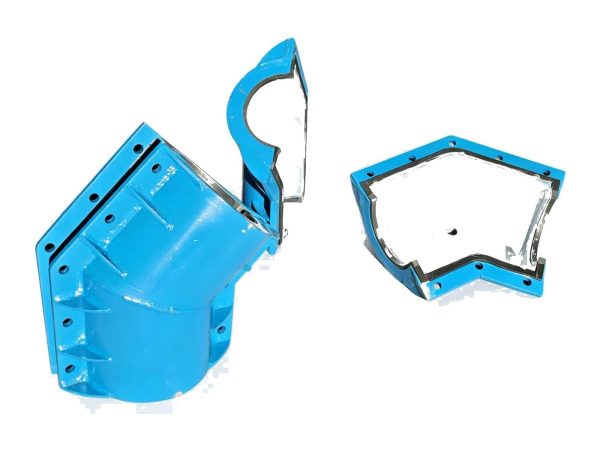
Corrosion-Resistant Repair Sleeve
The interior fluoroplastic barrier protects its covered shell surfaces, while FKM provides the seal; confirm both for…
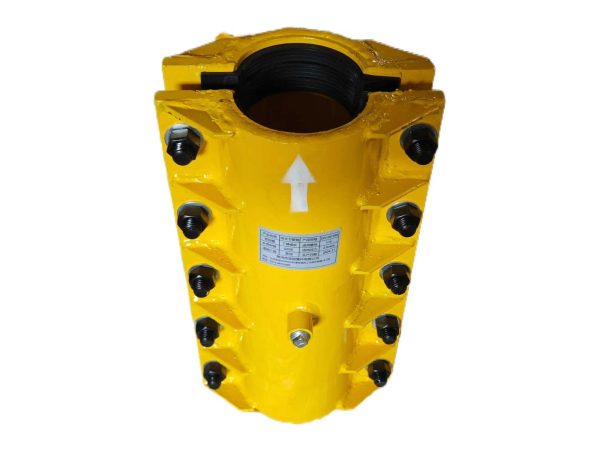
NBR-Sealed Repair Sleeve
NBR-sealed repair clamp for petroleum, lubricant and fuel lines — hydrocarbon service that swells and destroys EPDM…
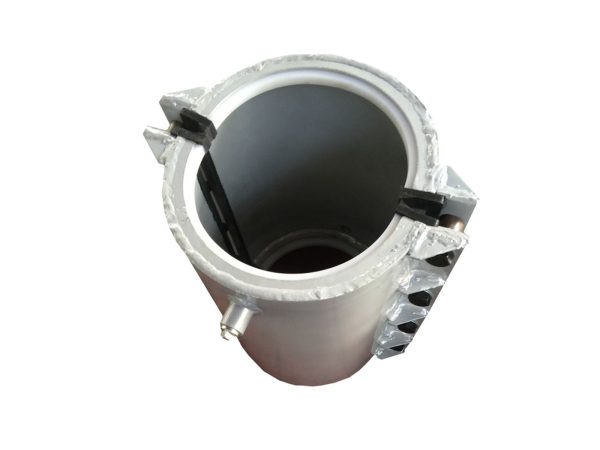
High-Temperature Repair Sleeve
The supplied silicone VMQ seal requires confirmation for the actual fluid, phase, temperature, pressure and thermal…