
 1 / 2
Click image to enlarge
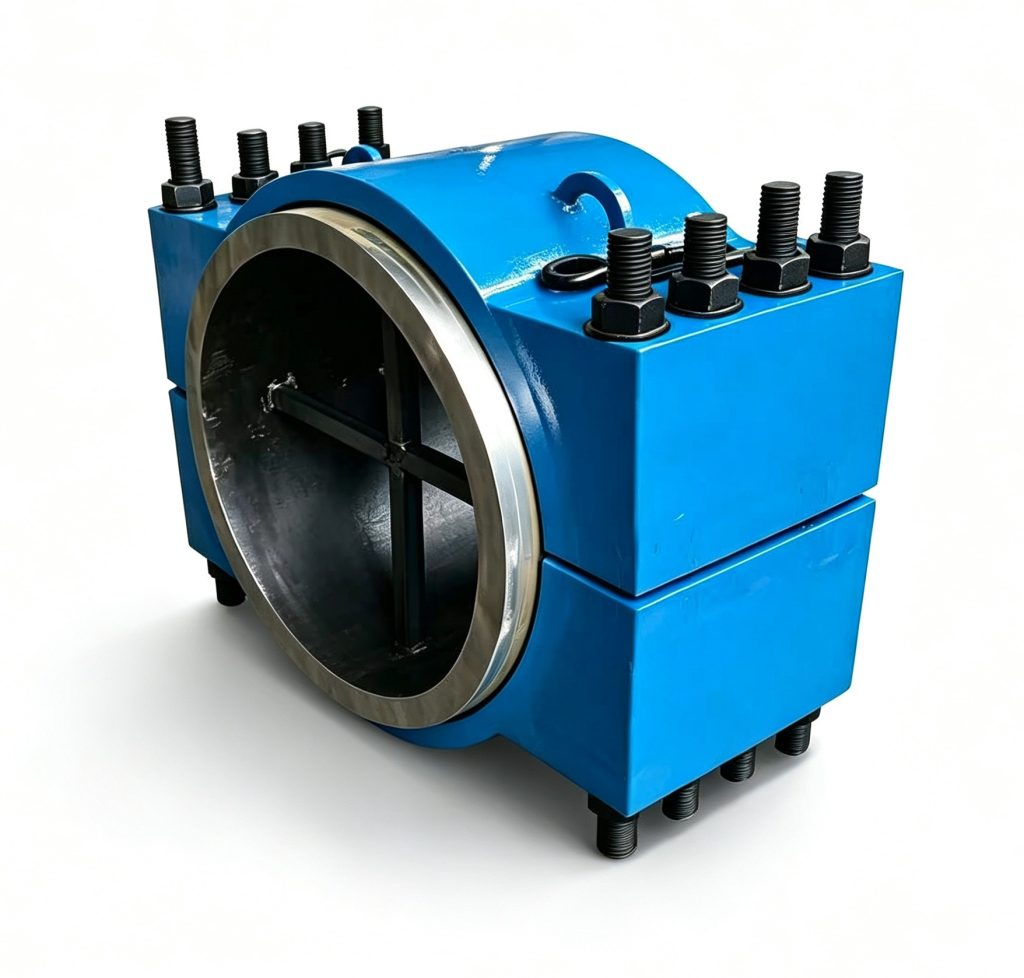
High-Pressure Repair Sleeve
Above the ordinary range a split repair sleeve changes in three ways at once: the shell has to be stiffer so it does not ovalise under load, the bolts have to carry a higher preload without yielding, and…
Also known as: High Pressure Repair Clamp, High Pressure Split Sleeve
Usually replies within 24 hours sales@baoshuopipe.com
Technical Specifications
| Size Range | DN15–DN4000 · Ductile Iron DN15–DN4000 / Steel DN15–DN4000 / Stainless Steel DN15–DN4000 · Custom sizes available beyond the above range |
|---|---|
| Body Material | Carbon Steel Q235 |
| Seal Material | NBR |
| Sealing Pressure | ≥4.0MPa (580 PSI) |
| Bolt Specification | M20×100, Grade 8.8 High-Strength Bolts |
| Coating | Epoxy Powder |
| Length Range | 200–600mm (7.9"–23.6") |
| Applicable Pipe Types | Steel, Ductile Iron |
| Working Conditions | High Pressure, Oil Resistant |
Custom Orders Available
This product can be customized to your specifications. Contact us with your requirements.
Request Custom QuoteCheck the fit before ordering.
- Measure the actual pipe
- Nominal DN alone does not define the outside diameter. Confirm the pipe material, measured OD and condition.
- Confirm the geometry
- Provide dimensions of the connection or damaged area. Product shape, sealing length and end connections must match the job.
- Match the seal to the service
- Confirm medium, temperature and pressure together. A material name alone is not a service approval.
- Plan a safe installation
- Pipe integrity, isolation and installation procedure require a site-specific assessment. Suitability for live service must be confirmed.
Read the full technical guide7 chapters · complete product description
Product Overview
Above the ordinary range a split repair sleeve changes in three ways at once: the shell has to be stiffer so it does not ovalise under load, the bolts have to carry a higher preload without yielding, and the seal has to hold its shape under that load. Clamp load, bolt grade and gasket are chosen as one set, which is why these are built to order.
Where it is used
- Oil, gas and high-pressure water lines
- Hydrostatic test lines, pump discharge and manifolds
- Joints where the medium also attacks the seal
- Repairs specified above the standard range
Choosing this clamp
Three numbers settle the build: outside diameter, maximum working pressure, and the medium with its temperature — the gasket and the bolt grade follow from those, not from the pipe size alone. How a rating is established is covered in understanding pipe repair clamp pressure ratings; the stainless equivalent is the stainless high-pressure sleeve.
Where the load goes at high pressure
A repair sleeve seals because bolt load is transferred into the gasket across the contact area. At ordinary pressures the shell can flex a little and still seal. At high pressure the shell has to be stiff enough that the load arriving at the gasket is the load put in by the bolts, and not a smaller number after the shell has ovalised.
Bolt behaviour matters as much as shell section. A bolt only holds its preload if it stays elastic in service. If it is tensioned near its yield point, or if the joint relaxes under thermal cycling, the preload falls and the gasket loses contact. Higher-pressure work therefore moves up the bolt grade and increases the number of bolts rather than lengthening the spanner.
Three things are therefore chosen as one set — shell section, bolt grade and count, and gasket compound. A high-pressure part cannot be assembled from a standard shell with better bolts, which is why these are built against the operating data rather than selected from a size table alone.
Installation
- Confirm the operating pressure, the surge or water-hammer figure the line actually sees, and the test pressure the sleeve has to pass. On high-pressure work the test pressure, not the working pressure, usually governs.
- Depressurise and drain where the procedure allows it. Fitting a high-pressure shell on a live line is a decision for the operating authority, not for the fitting crew, and it should be taken before the excavation is opened.
- Clean back to sound metal and check the wall thickness around the defect. A high-pressure shell puts more load into the pipe wall than a standard one, so thin or badly pitted pipe is a real constraint here.
- Dry-fit the shell and confirm it is built to the pipe outside diameter as measured. On high-pressure work there is no surplus gasket compression to absorb a diameter error.
- Seat the gasket, close the shell, run all bolts finger-tight, then tighten in a cross pattern in several passes. Several small passes load the gasket evenly; one long pull on a single bolt loads the shell locally and can yield the bolt.
- Record the final bolt condition by eye — even gaps, bolts all loaded, no shell distortion at the lugs — before testing.
- Pressure-test to the specified figure, hold it, then inspect the split lines again. Any weep at this stage is a seating problem and should be corrected before backfill.
What we need to quote
The measured pipe outside diameter and the wall thickness. Then the maximum operating pressure, the surge or transient pressure if the line has one, and the test pressure the repair must hold — these are three different numbers, and the highest of them sizes the part.
Send the medium and its temperature, because these select the gasket and, where the medium is a fuel or a gas, the seal compound changes completely. Say whether the line runs continuously or cycles, and whether the pipe is above ground, buried or in a chamber. Where the defect sits at a weld, a bend or a branch, say so: the shell geometry has to follow it, and a high-pressure repair at a fitting is a different part from a high-pressure repair on a straight run.
Where high pressure changes the answer
If the pipe wall has thinned enough that it cannot take the additional clamping load, the correct repair is a welded patch or a spool replacement, not a bolted shell. A sleeve holds a gasket against a pipe; it does not replace missing wall.
If the defect is a crack with a live tip — one that grows under cycling — enclosing it will hold until the crack reaches the shell edge and then fail at the worst moment. Crack-like defects on cycling high-pressure lines should be assessed before a clamp is specified, and a temporary shell should be treated as temporary. Where the medium is also corrosive, the part to look at is the Corrosion Resistant Repair Clamp or the stainless steel high-pressure sleeve, which keeps the same load path in a material that survives the medium. Where the temperature is the governing condition rather than the pressure, the High Temperature Repair Clamp is specified with the appropriate compound. How ratings are established for this class of fitting is set out in understanding pipe repair clamp pressure ratings.
Materials and standards
Shells are made in Q235 carbon steel to GB/T 700, or SS304, SS316L or Duplex 2205 to ASTM A240 / GB/T 3280. At high pressure the shell is thicker and the material choice is driven by both strength and environment: duplex is used where chloride stress corrosion is the risk, stainless where the medium is aggressive, and coated carbon steel where the line is buried and the load is the only demand.
Gaskets are EPDM to BS EN 681-1 / GB/T 21873 for water service, NBR to BS EN 681-2 / GB/T 21873 for oil and fuel, and FKM or silicone to ASTM D2000 / ISO 1629 where temperature or chemical attack governs. At high pressure the gasket has to seal at higher unit load without extruding, so compound and thickness are chosen together. Bolts are Grade 8.8 to ISO 898-1 / GB/T 3098.1 as standard, or SS304 to ASTM A193 / GB/T 3098.6 where the fasteners are exposed. Coatings are epoxy to AWWA C210 / GB/T 18593, or zinc plating to ASTM B633 / GB/T 9799. Full-encirclement repair clamps and bolted split sleeves in this family are described by AWWA C230 and AWWA C227.
Documents
Material standards GB/T 700 · BS EN 681-2 · GB/T 21873 · AWWA C210 · GB/T 18593 · ISO 898-1 · GB/T 3098.1
Also available in stainless steel: Stainless Steel High-Pressure Repair Sleeve
Related Products
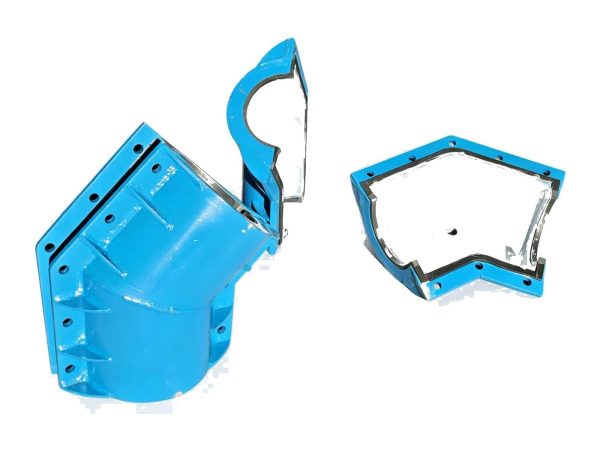
Corrosion-Resistant Repair Sleeve
The interior fluoroplastic barrier protects its covered shell surfaces, while FKM provides the seal; confirm both for…
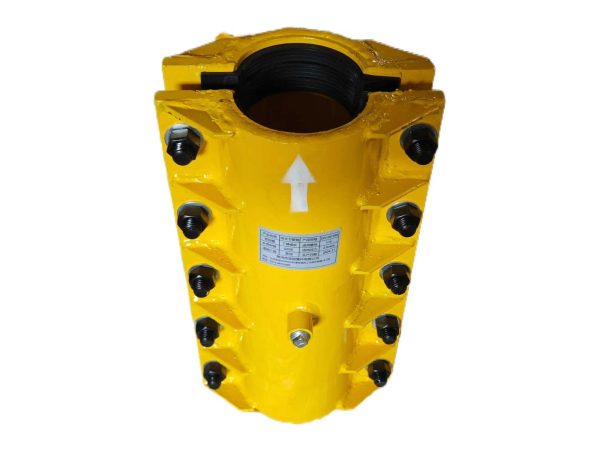
NBR-Sealed Repair Sleeve
NBR-sealed repair clamp for petroleum, lubricant and fuel lines — hydrocarbon service that swells and destroys EPDM…
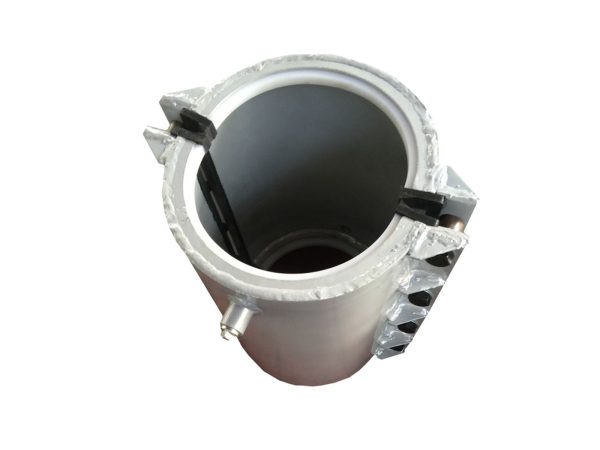
High-Temperature Repair Sleeve
The supplied silicone VMQ seal requires confirmation for the actual fluid, phase, temperature, pressure and thermal…