
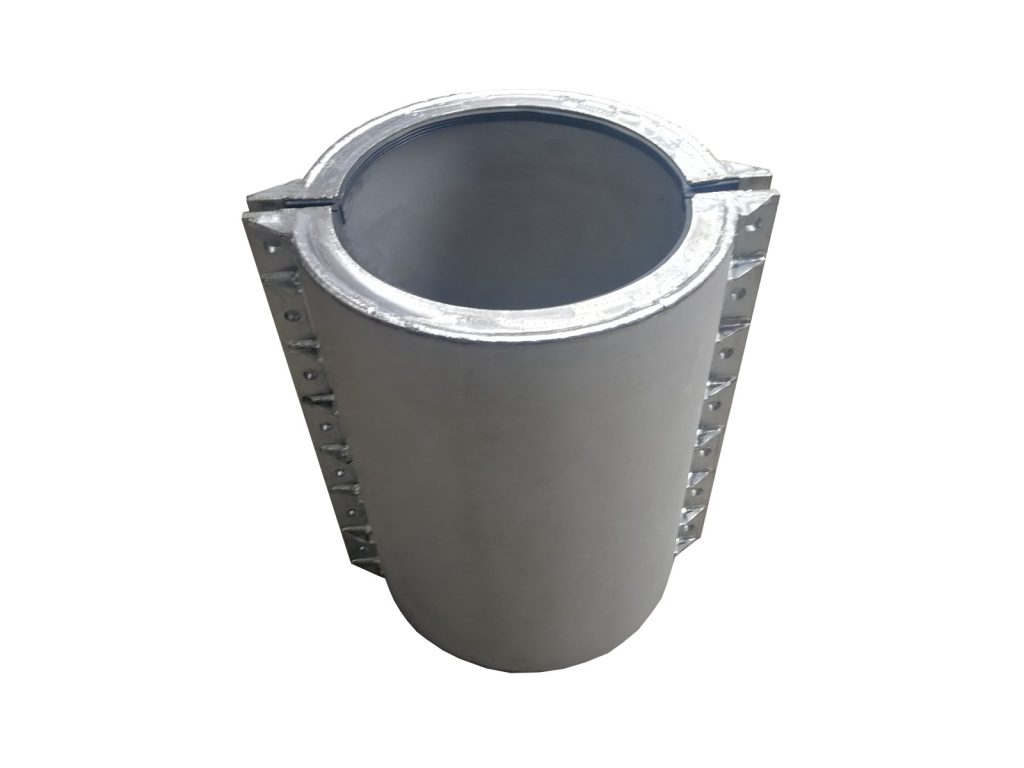
Stainless Steel Split Repair Sleeve
A stainless split sleeve seals defects on straight pipe; choose the alloy and gasket for the pipe, fluid and exposure.
Also known as: Stainless Steel Pipe Repair Sleeve, Stainless Steel Split Sleeve Repair Clamp
BS-RCSP-SSUsually replies within 24 hours sales@baoshuopipe.com
Technical Specifications
| Part Number | BS-RCSP-SS |
|---|---|
| Size Range | DN15–DN4000 · Stainless Steel DN15–DN3400 · Custom sizes available beyond the above range |
| Body Material | SS304 / SS316L / Duplex 2205 |
| Seal Material | EPDM / NBR / FKM |
| Sealing Pressure | ≥1.6MPa (232 PSI) |
| Bolt Specification | M16×80, Grade 8.8 High-Strength Bolts |
| Coating | None (Stainless Steel Body) |
| Length Range | 200–600mm (7.9"–23.6") |
| Applicable Pipe Types | Steel, Stainless Steel, Ductile Iron, PVC |
| Working Conditions | Standard Pressure, Corrosion Resistant |
Custom Orders Available
This product can be customized to your specifications. Contact us with your requirements.
Request Custom QuoteCheck the fit before ordering.
- Measure the actual pipe
- Nominal DN alone does not define the outside diameter. Confirm the pipe material, measured OD and condition.
- Confirm the geometry
- Provide dimensions of the connection or damaged area. Product shape, sealing length and end connections must match the job.
- Match the seal to the service
- Confirm medium, temperature and pressure together. A material name alone is not a service approval.
- Plan a safe installation
- Pipe integrity, isolation and installation procedure require a site-specific assessment. Suitability for live service must be confirmed.
Read the full technical guide7 chapters · complete product description
Product Overview
On a stainless or hygienic line the split repair sleeve — the pipe repair sleeve in its stainless form — has to match the pipe it repairs. A coated carbon steel sleeve seals the leak, but its coating can be damaged at the edges and the crevice between shell and pipe corrodes in a washdown or chloride environment. An all-stainless sleeve removes that mismatch.
Where it is used
- Food, beverage and pharmaceutical process lines
- Offshore, coastal and washdown-duty pipework
- Stainless process mains where coating damage is not acceptable
- Repairs that stay in place rather than be replaced at the next shutdown
Choosing the right build
Tell us the pipe outside diameter, the alloy the pipe is made of and the medium; the sleeve is built in the matching grade so the repair is metallurgically invisible in service. Compare the grades on the stainless steel series page; the carbon steel part is the straight repair clamp.
A sleeve that grips, on a line built on ring seals
This sleeve works the opposite way to the push-fit fittings in our range. A socket seals with a rubber ring compressed by a pipe end sliding into it, and grips nothing. This sleeve does the reverse: the shell wraps the pipe, the bolts pull the halves together, and the gasket is compressed against the pipe wall by that load. The resulting friction stops the sleeve moving along the line, and it lets a sleeve bridge a defect a ring cannot.
On a stainless or hygienic line the shell material becomes part of the problem, not just a container for the gasket. A split sleeve creates a crevice along both shell edges. In that crevice a coated carbon steel shell and a stainless pipe form a galvanic pair in any wet environment, and the coating is thinnest and most vulnerable at those edges. An all-stainless shell removes both mechanisms at once, which is why the alloy is chosen to match the pipe.
The published range is DN15 to DN4000, in lengths from 200 mm to 600 mm chosen from the defect.
Installation
- Depressurise and drain, then clean the pipe to bare metal over the whole gasket footprint. A stainless shell on a pipe with mill scale under the gasket will not seal.
- Measure the defect and mark the shell position so the band is centred on it, with sound pipe under both edges.
- Check the pipe is round and that the wall has not been thinned. A sleeve cannot compensate for a collapsed pipe.
- Seat the gasket in its retaining strip and check it is not stretched, twisted or nicked.
- Fit both halves and start every bolt by hand before tightening any of them.
- Tighten from the centre outwards, alternating sides, in two or three passes. One bolt taken to full load before the rest is the most common cause of a weeping sleeve.
- Check the gap between the shell edges is even along the whole length. An even gap means the shell is sitting square.
- Pressurise slowly, re-check the shell edges, and re-torque after the first pressure or thermal cycle.
Two stainless-specific mistakes: a carbon steel wire brush, and grinding dust left on the pipe. Both leave free iron that rusts and looks like the sleeve corroding.
What to send with an enquiry
- The pipe outside diameter, measured rather than taken from the nominal size. Thin-wall stainless varies more than people expect.
- The pipe alloy: 304, 316L, duplex or something else. The shell is built to match it.
- Medium, concentration and temperature, which choose the gasket. On chemical duty these matter more than the pressure.
- Design pressure and surge pressure.
- The defect type and its length, so the sleeve length can be chosen from the 200 mm to 600 mm build range. A long axial crack needs a longer band than a pinhole.
- The pipe wall thickness, or what is left of it at the defect.
- Whether the pipe is insulated, buried or in a chamber, and whether a hygienic external finish is required.
Failure modes, and where a straight sleeve is the wrong part
A split sleeve is a mechanical repair. It seals the defect and restores pressure containment, but it does not restore the pipe’s structural strength and it does not stop a crack from running. Where the pipe has lost most of its wall, or the defect is a long axial crack that will keep extending, the sleeve is a holding measure and the pipe needs replacing at the next shutdown. Say so in the enquiry and the build can be specified for that rather than sold as a permanent fix.
Where the defect is at a joint rather than in the barrel, a straight sleeve bridges nothing useful because the leak is under the joint gap; the part for that is the mechanical joint split repair sleeve. At a bend use the stainless steel split repair elbow; at a branch the stainless steel split repair tee; at a flange the stainless steel flange wrap repair clamp. A sleeve also cannot join two pipe ends that have parted, because it has no way to pull them together. The carbon steel equivalent of this part is the straight pipe repair clamp.
Materials and the standards behind them
The shell is SS304, SS316L or Duplex 2205 to ASTM A240 / GB/T 3280, and the grades are not interchangeable. SS304 suits potable water, food contact and mildly corrosive service, but not chlorides: pitting and crevice attack are exactly what a split sleeve creates. SS316L adds molybdenum and is the minimum grade for coastal, washdown, brackish and chlorinated water. Duplex 2205 has roughly twice the yield strength and far better resistance to chloride stress corrosion cracking, so it is specified where the sleeve carries mechanical load or where the line is hot and chlorided together.
The gasket follows the medium: EPDM to BS EN 681-1 / GB/T 21873 for potable water and general service, NBR to BS EN 681-2 where the medium carries oil, and FKM to ASTM D2000 / ISO 1629 for hot and chemically aggressive duty. An all-stainless build takes fasteners in a matching grade to ASTM A193 / GB/T 3098.6; grade 8.8 carbon steel to ISO 898-1 / GB/T 3098.1 applies to the carbon steel builds. Full-encirclement repair clamp construction falls under AWWA C230, and assembly is described in the repair clamps installation manual.
Documents
Material standards ASTM A240 · GB/T 3280 · BS EN 681-1 · GB/T 21873 · BS EN 681-2 · ASTM D2000 · ISO 1629 · ISO 898-1 · GB/T 3098.1
Warning: Undefined array key "rcsp-ss" in /www/wwwroot/baoshuopipe.com/wp-content/themes/astra-child/inc/helpers.php on line 1806
Also available in carbon steel: Split Repair Sleeve
Related Products
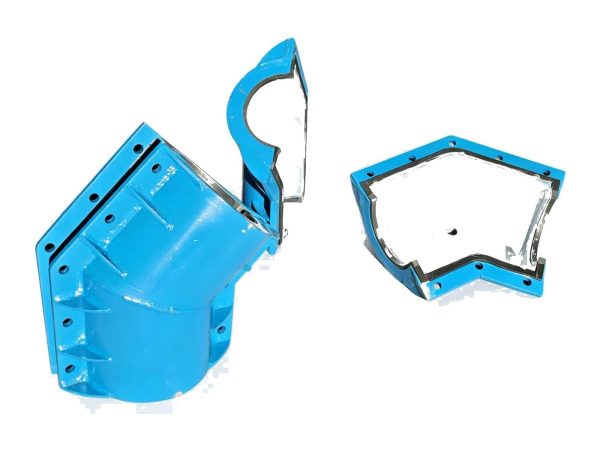
Corrosion-Resistant Repair Sleeve
The interior fluoroplastic barrier protects its covered shell surfaces, while FKM provides the seal; confirm both for…
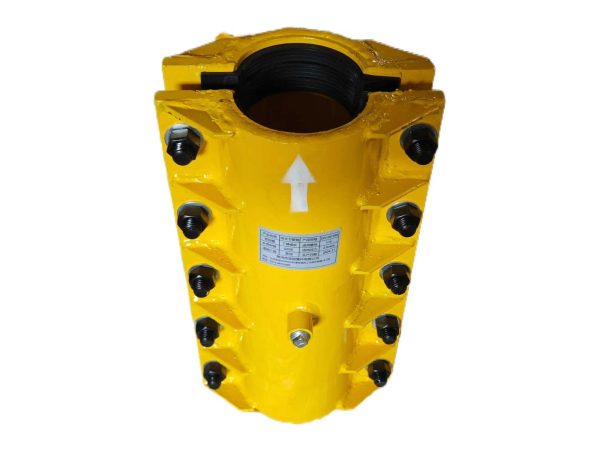
NBR-Sealed Repair Sleeve
NBR-sealed repair clamp for petroleum, lubricant and fuel lines — hydrocarbon service that swells and destroys EPDM…
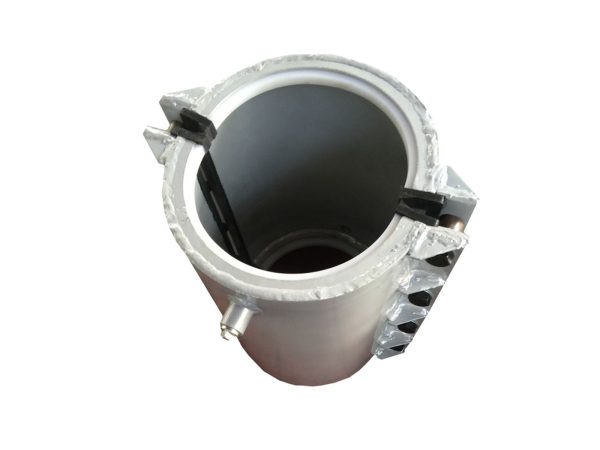
High-Temperature Repair Sleeve
The supplied silicone VMQ seal requires confirmation for the actual fluid, phase, temperature, pressure and thermal…