
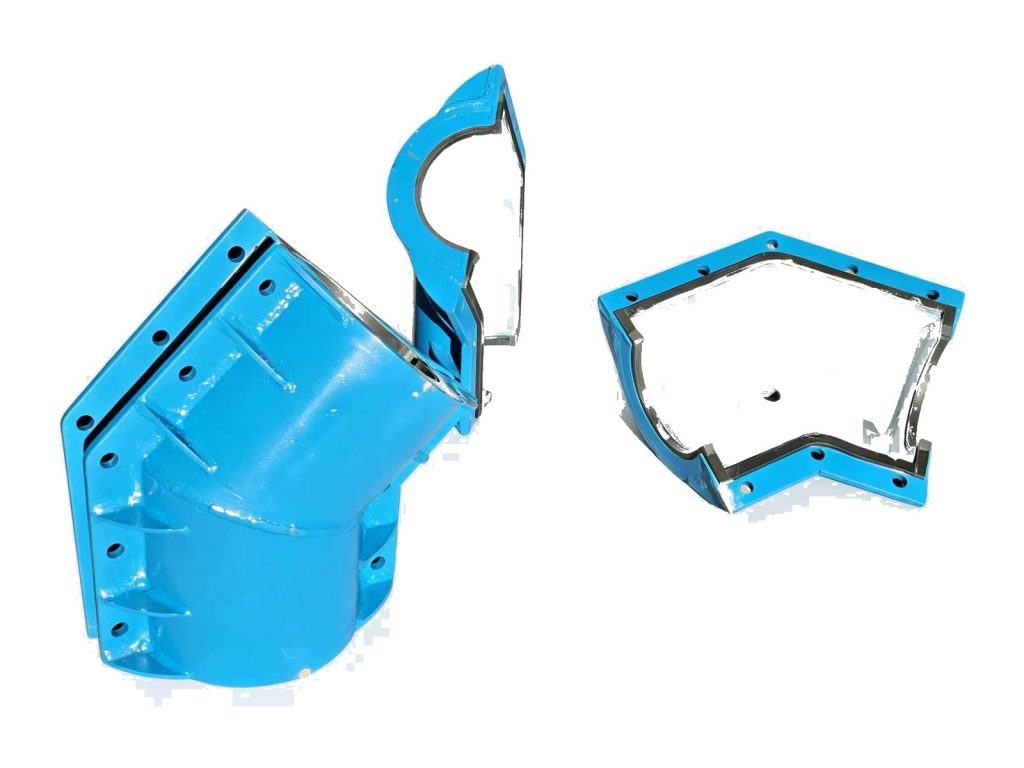
Corrosion-Resistant Repair Sleeve
A corrosion resistant split sleeve assumes that corrosion rarely attacks the pipe alone. On a coated sleeve the medium first meets the coating, then the steel at any damaged edge, and the elastomer at the gasket line —…
Also known as: Corrosion Resistant Repair Clamp
Usually replies within 24 hours sales@baoshuopipe.com
Technical Specifications
| Size Range | DN15–DN4000 · Ductile Iron DN15–DN4000 / Steel DN15–DN4000 / Stainless Steel DN15–DN4000 · Custom sizes available beyond the above range |
|---|---|
| Body Material | Carbon Steel Q235 / SS304 / SS316L / Duplex 2205 |
| Seal Material | FKM + Fluoroplastic Coating |
| Sealing Pressure | ≥1.6MPa (232 PSI) |
| Bolt Specification | M16×80, Grade 8.8 High-Strength Bolts |
| Coating | Epoxy Powder (or Stainless Steel on request) |
| Length Range | 200–600mm (7.9"–23.6") |
| Applicable Pipe Types | Steel, Stainless Steel, Ductile Iron, PVC |
| Working Conditions | Corrosion Resistant |
Custom Orders Available
This product can be customized to your specifications. Contact us with your requirements.
Request Custom QuoteCheck the fit before ordering.
- Measure the actual pipe
- Nominal DN alone does not define the outside diameter. Confirm the pipe material, measured OD and condition.
- Confirm the geometry
- Provide dimensions of the connection or damaged area. Product shape, sealing length and end connections must match the job.
- Match the seal to the service
- Confirm medium, temperature and pressure together. A material name alone is not a service approval.
- Plan a safe installation
- Pipe integrity, isolation and installation procedure require a site-specific assessment. Suitability for live service must be confirmed.
Read the full technical guide7 chapters · complete product description
Product Overview
A corrosion resistant split sleeve assumes that corrosion rarely attacks the pipe alone. On a coated sleeve the medium first meets the coating, then the steel at any damaged edge, and the elastomer at the gasket line — three materials with three different resistances. The fluoroplastic layer protects its covered interior shell surfaces, while the FKM seal retains its separate compatibility requirements.
Where it is used
- Coastal, marine and chemical-plant pipework
- Lines carrying mildly aggressive media over long periods
- Atmosphere-driven corrosion on exposed or buried steel pipe
- Repairs where a coating edge would become the next leak
Choosing the right build
What decides the build is the medium, its temperature and whether the pipe itself is coated: barrier and shell are selected together. Send those three. The stainless version is the stainless corrosion resistant sleeve; compounds are compared in EPDM, NBR, FKM and silicone compared.
What a barrier layer inside the shell actually does
A shell is a crevice by construction. However closely it is formed, there is a gap between the shell bore and the pipe surface, and on a corroding line that gap fills with medium and stays wet. Once the fluid in that gap has given up its oxygen it becomes stagnant and aggressive, and a plain steel bore sitting in it will corrode from the inside out, in a place nobody can inspect. The shell then fails long before the pipe does.
The fluoroplastic layer on the inside of this sleeve answers that directly. It puts an inert surface against the pipe wall, so the void between shell and pipe holds the medium against a material that does not react with it. The steel behind the barrier never sees the fluid. That is a different job from coating the outside of the shell against the plant atmosphere, which is what an epoxy coating does and which does nothing for the crevice.
The barrier also does something structural: it is the anti-extrusion surface behind the elastomer. Where the gasket is compressed against a rough or pitted pipe, the barrier keeps the elastomer from being pushed into the shell bore at the edges of the defect.
Installation
- Establish why the line is corroding before ordering. Corrosion driven by the medium inside the pipe and corrosion driven by the atmosphere outside it need different answers, and only the first is solved by a barrier shell.
- Clean the pipe to bare metal over the full sleeve length and past both ends. Barrier protects the shell, not the pipe; the pipe surface still has to be clean enough for the gasket to seal on it.
- Inspect the wall. Pitting, general thinning and graphitisation on cast iron all reduce what is left under the sleeve. Measure, and record the lowest reading and where it sits.
- Handle the barrier shell carefully before fitting. The barrier is the working surface; a scored or torn barrier is a place for medium to reach the steel behind it. Do not drag the shell along the pipe or across the ground.
- Do not use a carbon steel wire brush on a stainless pipe beside the repair, and do not leave carbon steel swarf inside the sleeve. Free iron on a stainless surface is where the next pit starts.
- Fit without grease, oil or jointing compound between the barrier and the pipe. Anything left in there is a gap the gasket cannot close.
- Tighten in two alternating passes and check that the barrier has not buckled or ruckled at either end as the shell closed.
- Pressure-test and then inspect both ends of the sleeve, where the barrier edge sits against the pipe. This is the one place a barrier shell can fail.
Two errors account for most problems. Dragging a barrier shell into position scores the barrier along its whole length. Handling a stainless pipe with carbon steel tools beside the repair leaves free iron that pits within weeks.
What we need to size a barrier shell
A barrier shell is selected on the environment, so the service data comes first:
- Medium, with concentration and normal and maximum temperature
- Whether the pipe is coated, and with what — an existing coating changes the surface the gasket seals against
- Whether the line is buried, immersed, in a bund, or exposed to coastal or chemical plant atmosphere
- Expected remaining service life of the line, which decides whether a sleeve or a replacement spool is the honest answer
Then the geometry: outside diameter, the length of pipe available between the nearest fittings, line pressure, and the position of the leak or the corroded area within that length.
Photographs help more here than on any other product in the range. A picture showing the corrosion — patches, pitting, general thinning, or a coating that has broken down along an edge — tells us whether the shell needs a barrier, whether the pipe is sound enough to seal against at all, and whether the gasket should be moved away from the worst area. Where the medium is reactive enough that the metal has to change as well, the stainless version is the stainless corrosion resistant repair clamp.
Where a barrier shell is not enough
A barrier protects the shell. It does not protect the pipe, and it does not stop corrosion that is already under way. That distinction decides when this part is the wrong choice.
- Wall loss beyond what the pipe can carry. If the remaining wall is already below the minimum for the line’s pressure, a sleeve covers the evidence. A barrier shell keeps the repair sound but leaves the pipe unsound. Replace the section.
- Corrosion from the inside out over a long length. A sleeve covers a limited length. Where a whole spool has thinned, one repair moves the failure point rather than removing it.
- Corrosion product sitting under the shell. Loose scale, graphitised cast iron and flaking coating are not a sealing surface. If cleaning reveals that the pipe under the corrosion is gone, the sleeve has nothing to seal against.
- Media that attack fluoroplastic and FKM. No barrier is universal. Molten alkali metals, elemental fluorine and some hydrofluoric duty are outside the range, and so are streams where the barrier can be permeated over a long enough time. Tell us the medium and we will say when it is outside what we can supply.
- Atmospheric corrosion with a mechanical cause. If the coating failed because the pipe is being abraded, impacted or vibrated by something, the sleeve will lose its barrier the same way. Fix the cause first.
- A line that is due to be replaced anyway. A barrier shell is a repair, not a life extension for a spool that has reached the end of its design life.
Materials and standards
The shell is supplied in carbon steel Q235 to GB/T 700, or in SS304, SS316L or Duplex 2205 to ASTM A240 / GB/T 3280. Where the pipe itself is stainless, an SS304 or SS316L shell keeps the assembly in one alloy family, which matters because a barrier carbon steel shell bolted to a stainless pipe still puts two different metals in a wet crevice at the ends.
- Q235 with epoxy to AWWA C210 / GB/T 18593 for buried and general service where the atmosphere also needs to be kept off the shell.
- SS304 for mildly corrosive duty and low chlorides.
- SS316L for chloride-bearing streams, coastal and marine exposure, and chemical plant atmospheres.
- Duplex 2205 where chloride stress corrosion cracking is the risk, which is the usual reason an exposed stainless shell fails in a coastal plant.
The seal is FKM, an elastomer; the shell interior fluoroplastic barrier is a separate material and construction element, with its own coverage and documentation to confirm. Fasteners are grade 8.8 to ISO 898-1 / GB/T 3098.1, or SS304 to ASTM A193 / GB/T 3098.6 where the bolts also sit in the corrosive atmosphere; on a coastal or chemical site the bolts are frequently the first thing to go, and they are the part holding the seal closed. Galvanised fasteners follow ASTM B633 / GB/T 9799. The design working pressure is 1.6 MPa and the size range is DN15–DN4000. Compounds are compared in EPDM, NBR, FKM and silicone compared.
Documents
Material standards GB/T 700 · ASTM A240 · GB/T 3280 · ASTM D2000 · ISO 1629 · AWWA C210 · GB/T 18593 · ISO 898-1 · GB/T 3098.1
Also available in stainless steel: Stainless Steel Corrosion-Resistant Repair Sleeve
Related Products
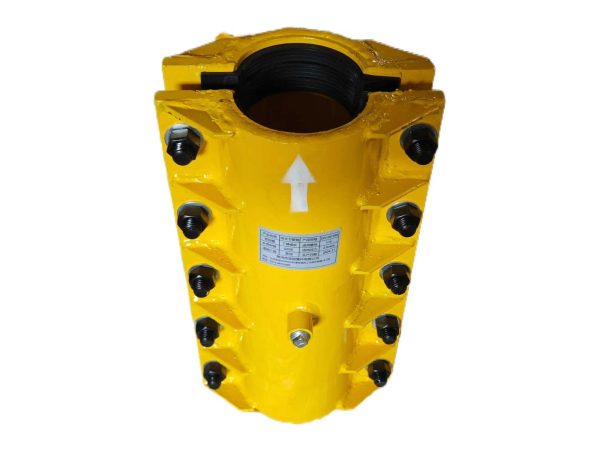
NBR-Sealed Repair Sleeve
NBR-sealed repair clamp for petroleum, lubricant and fuel lines — hydrocarbon service that swells and destroys EPDM…
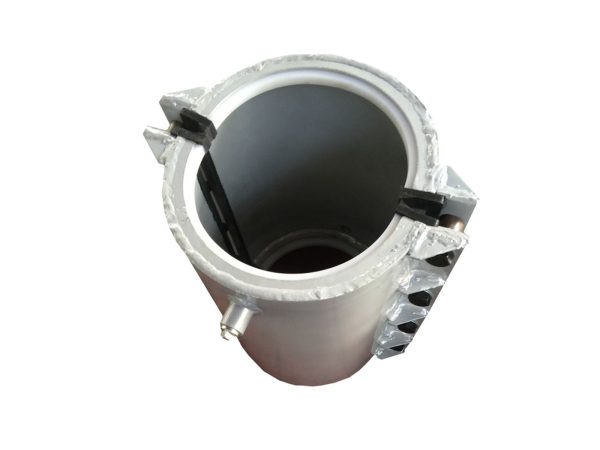
High-Temperature Repair Sleeve
The supplied silicone VMQ seal requires confirmation for the actual fluid, phase, temperature, pressure and thermal…
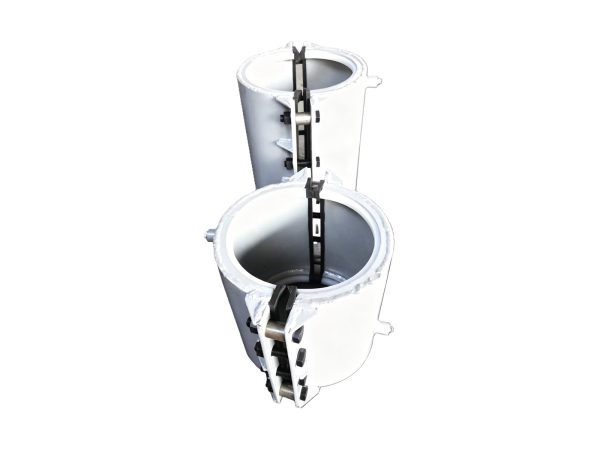
Ultra-Low-Temperature Repair Sleeve
Confirm the PTFE seal construction and the full assembly for the actual minimum temperature, fluid phase, pressure and…