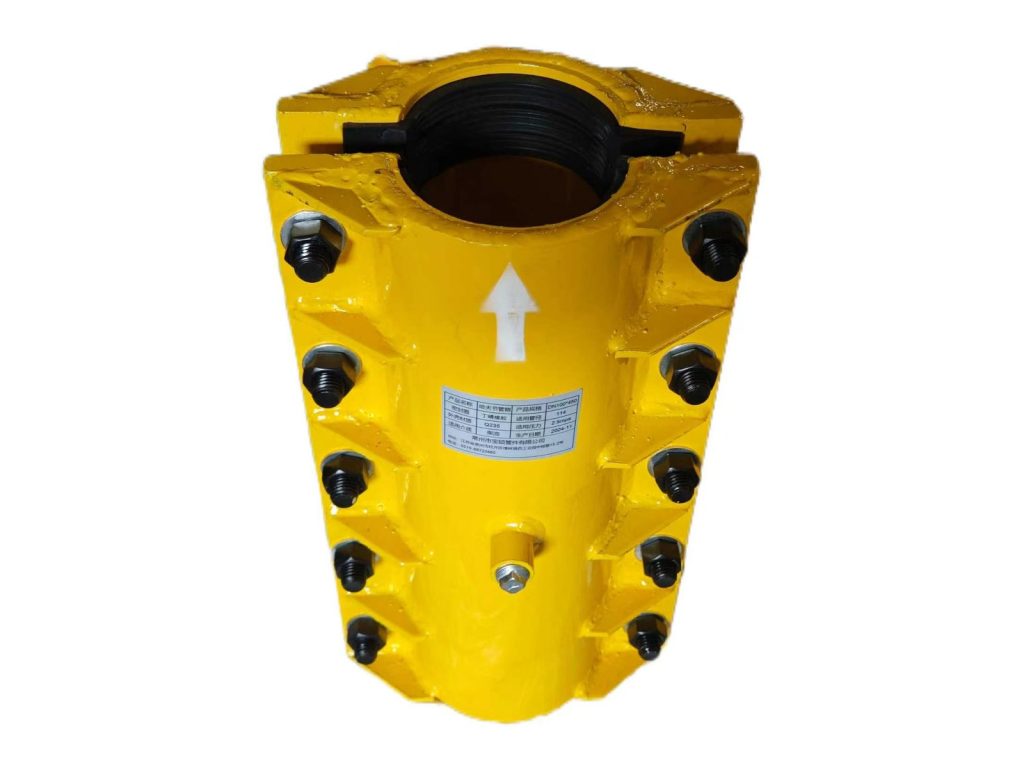
NBR-Sealed Repair Sleeve
A repair sleeve with an NBR seal for compatible oil and fuel duty; specify the exact fluid, additives and temperatures before selection.
Also known as: NBR Sealed Repair Clamp, Oil Resistant Repair Clamp
Usually replies within 24 hours sales@baoshuopipe.com
Technical Specifications
| Size Range | DN15–DN4000 · Ductile Iron DN15–DN4000 / Steel DN15–DN4000 / Stainless Steel DN15–DN4000 · Custom sizes available beyond the above range |
|---|---|
| Body Material | Carbon Steel Q235 / SS304 / SS316L / Duplex 2205 |
| Seal Material | NBR |
| Sealing Pressure | ≥1.6MPa (232 PSI) |
| Bolt Specification | M16×80, Grade 8.8 High-Strength Bolts |
| Coating | Epoxy Powder (or Stainless Steel on request) |
| Length Range | 200–600mm (7.9"–23.6") |
| Applicable Pipe Types | Steel, Stainless Steel, Ductile Iron, PVC |
| Working Conditions | Oil Resistant |
Custom Orders Available
This product can be customized to your specifications. Contact us with your requirements.
Request Custom QuoteCheck the fit before ordering.
- Measure the actual pipe
- Nominal DN alone does not define the outside diameter. Confirm the pipe material, measured OD and condition.
- Confirm the geometry
- Provide dimensions of the connection or damaged area. Product shape, sealing length and end connections must match the job.
- Match the seal to the service
- Confirm medium, temperature and pressure together. A material name alone is not a service approval.
- Plan a safe installation
- Pipe integrity, isolation and installation procedure require a site-specific assessment. Suitability for live service must be confirmed.
Read the full technical guide7 chapters · complete product description
Product Overview
Hydrocarbon service is where a water-duty gasket fails quietly, so this leak clamp is built around a different seal. An elastomer that seals water perfectly can swell, soften and lose its compression set in oil, fuel or grease, so the clamp holds on the day it is fitted and weeps weeks later.
Where it is used
- Petroleum, lubricant and fuel lines
- Oil-filled plant, hydraulic return lines and bunded areas
- Lines where the medium also carries heat
- Repairs where a repeat visit would mean another outage
Choosing the right build
Give us the medium, its temperature and the outside diameter — fuel, lubricating oil and hot oil behave differently against the same compound, so naming the fluid matters more than naming the pressure. Compounds are compared in EPDM, NBR, FKM and silicone compared; for high-pressure hydrocarbon duty see the high pressure repair clamp, and for the rating itself, understanding pressure ratings.
Why the seal is the whole specification on a hydrocarbon line
On a water line the elastomer is chosen almost as an afterthought, because most rubbers handle water. On a hydrocarbon line the seal is the design. A non-polar fluid such as diesel, lubricating oil or kerosene does not sit on the surface of the wrong elastomer; it is absorbed into it. The gasket swells, its hardness and modulus drop, and it takes a permanent set in the compressed position. At that point the bolt load is still there but the material behind it has stopped pushing back.
Nitrile is the seal used here for exactly that reason. Its resistance to petroleum-based oils, fuels, greases and hydraulic fluids comes from the polarity of the polymer, which makes it incompatible with non-polar hydrocarbons in a useful way: the fluid does not want to enter the material, so swelling stays low and the gasket keeps its recovery.
Two consequences follow. First, the shell can be a plain coated carbon steel shell, because the fight is being won at the gasket line. Second, the one specification that actually decides whether this repair lasts is the fluid itself, not the pressure.
Installation
- Identify the fluid precisely: product name, base stock if you know it, and whether it is a fuel, a lubricant, a hydraulic fluid, or a heat transfer oil. “Oil” is not enough to select a compound.
- Note the temperature, and specifically whether the line runs hot in service. Temperature moves hydrocarbon resistance: an oil that barely touches a nitrile gasket when cold will swell it noticeably when hot.
- Depressurise, drain and, on a fuel line, purge and prove the atmosphere before any hot work or grinding near the repair.
- Degrease the pipe back to bare metal over the full length the sleeve will cover, and past both ends. Hydrocarbon residue left on the pipe is a leak path along the surface and a fire risk during fitting.
- Do not use a solvent that leaves an oily film. A rag soaked in the wrong cleaner leaves a residue the gasket cannot seal through.
- Check the pipe for wall loss. Hydrocarbon lines corrode where water collects — at low points, at the bottom of the pipe, and under supports — so the defect is often on the underside.
- Fit the shell centred on the defect, mark both pipe ends, and tighten in two alternating passes.
- Pressure-test and inspect the underside first, since that is where hydrocarbon leaks usually show, and where a fitting error is easiest to make.
The two mistakes that recur: leaving a film of product on the pipe because it looks clean, and selecting on fluid name alone where the fluid has been changed, blended or is being used above the temperature it was specified at.
What we need to quote an oily duty
Fluid first, geometry second. Send the following:
- The fluid, named as precisely as you can — grade, base stock if known, and any additive package that matters
- Normal and maximum temperature, including whether the line is ever flushed, steamed or cleaned with something else
- Whether the line carries one product or is switched between products
- Outside diameter, line pressure, and whether the pipe sits in a bund, a trench or a sump where it stays wet
The reason temperature matters as much as the fluid is that hydrocarbon resistance is not fixed. Nitrile compounds are formulated across a range, and a compound that resists one oil well at ambient can swell appreciably in the same oil when the line runs hot. Naming the fluid and the temperature together gives us something to select against; naming only the fluid does not.
If the fluid is a fuel, say which one. Gasoline, diesel and kerosene behave differently against the same compound, and the ones with a higher aromatic content are the harder duty. Where the line combines high pressure with hydrocarbon, the shell needs to change as well, and that is the high pressure repair clamp. Where the fluid is hot enough that nitrile is no longer the right seal, see the high temperature repair clamp.
Where nitrile reaches its limit
Nitrile is the right seal for petroleum-based oil, fuel and grease. It is the wrong seal for a set of fluids that are easy to mistake for those, and the distinction has little to do with how the fluid is labelled.
- Ozone and weathering. Nitrile is attacked by ozone and degrades in sunlight and around electrical equipment that generates it. An exposed repair on an outdoor line should not rely on bare nitrile as the outer surface.
- Ketones, esters and ethers. Acetone, MEK, ethyl acetate and similar solvents swell nitrile badly. These are not hydrocarbon duties at all, and this is not the right sleeve.
- Phosphate-ester hydraulic fluids and brake fluid. These are the classic nitrile failure. They look like hydraulic duty and behave nothing like mineral oil.
- Aromatic-rich and high-aromatic streams. Benzene, toluene, xylene and fuel blends with a high aromatic content attack nitrile more than paraffinic oil does. For these the seal should be FKM.
- Hot oil and heat transfer fluids. As temperature rises, nitrile’s advantage narrows quickly. Sustained hot-oil duty is usually FKM or silicone territory, which is why a silicone-sealed sleeve is sometimes the better answer on a hot oil line.
- Biodiesel and biofuel blends. These are not straight hydrocarbons and behave differently from the mineral fuel they replace, particularly at higher blend ratios.
If the fluid is outside that list rather than on it, say so when you enquire. Compounds are compared in EPDM, NBR, FKM and silicone compared, and the honest answer for a genuinely mixed stream is often FKM.
Materials and standards
The shell is supplied in carbon steel Q235 to GB/T 700, or in SS304, SS316L or Duplex 2205 to ASTM A240 / GB/T 3280 depending on the plant atmosphere rather than the fluid. Hydrocarbon lines are frequently in coastal refineries, terminals and bunded areas, and a coated carbon steel shell that rusts through on the outside will drop the seal whether or not the fluid ever touched it.
- Q235 with epoxy to AWWA C210 / GB/T 18593 for inland and general duty.
- SS304 for mildly corrosive surroundings with low chlorides.
- SS316L for coastal terminals, marine exposure and chemical plant atmosphere.
- Duplex 2205 where chloride stress corrosion cracking is a risk on a warm, exposed shell.
The seal is NBR to BS EN 681-2 / GB/T 21873. Fasteners are grade 8.8 to ISO 898-1 / GB/T 3098.1, or SS304 to ASTM A193 / GB/T 3098.6 for corrosive surroundings. The design working pressure is 1.6 MPa and the size range is DN15–DN4000; where the line runs above that, the rating is a separate selection and is set out in understanding pipe repair clamp pressure ratings. A hydrocarbon line is also the case where the bolts matter most: on a fuel line the fastener is the part that has to come undone for maintenance, and it should be chosen for the atmosphere it sits in rather than inherited from the shell.
Documents
Material standards GB/T 700 · ASTM A240 · GB/T 3280 · BS EN 681-2 · GB/T 21873 · AWWA C210 · GB/T 18593 · ISO 898-1 · GB/T 3098.1
Related Products
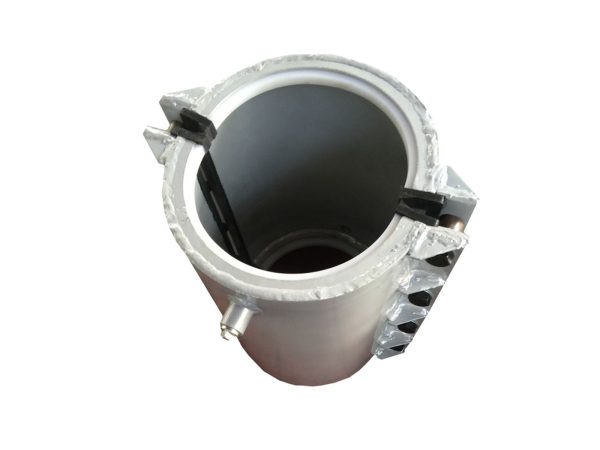
High-Temperature Repair Sleeve
The supplied silicone VMQ seal requires confirmation for the actual fluid, phase, temperature, pressure and thermal…
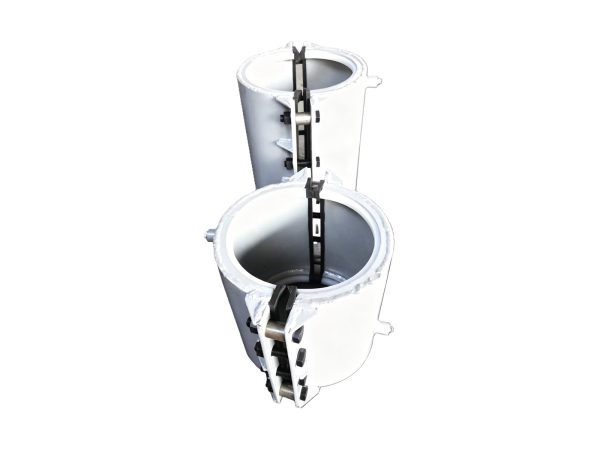
Ultra-Low-Temperature Repair Sleeve
Confirm the PTFE seal construction and the full assembly for the actual minimum temperature, fluid phase, pressure and…
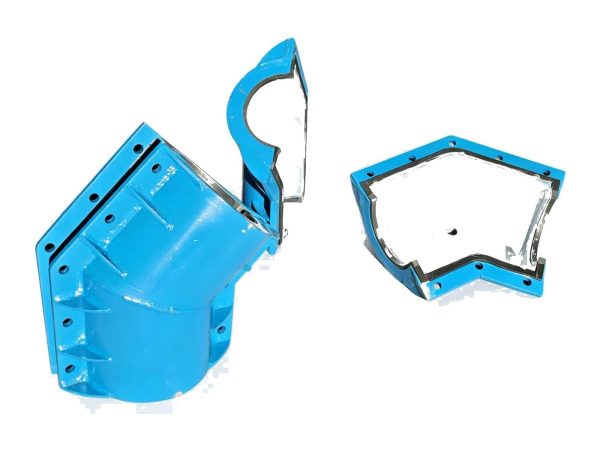
Corrosion-Resistant Repair Sleeve
The interior fluoroplastic barrier protects its covered shell surfaces, while FKM provides the seal; confirm both for…