Understanding Pipe Repair Clamp Pressure Ratings
A repair-clamp pressure rating applies to a specified product and its confirmed conditions. It does not establish the pressure in an unknown pipeline, and a factory test figure is not a universal working rating. Read the configuration, service limits and supporting documents together before selecting the repair.
Read the exact configuration
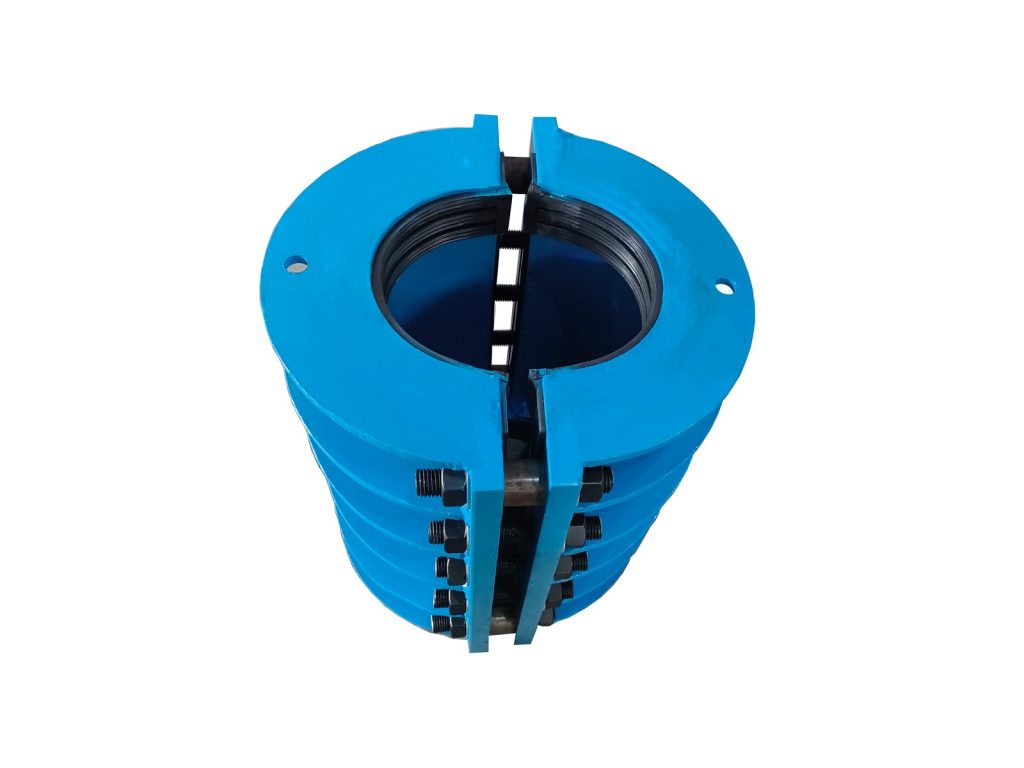
Identify the model, drawing or datasheet revision, pipe material and measured outside diameter, shell and seal. Check the stated pressure together with its temperature and other application conditions. The straight repair clamp and its current datasheet provide one configuration reference; their rows do not automatically rate a tee, elbow, flange sleeve or another ordered assembly.
Obtain the actual pipeline conditions
Request the normal and maximum service pressures, relevant transients, temperature range and any other design conditions from the operator’s records or responsible engineer. Identify the pressure location and reference basis. A municipal, building, gas or industrial label does not supply a missing value. If the pressure is unknown, resolve it before confirming the repair rather than assuming that the system operates at or below a familiar catalogue figure.
Keep units and pressure references clear
For unit conversion, 1 MPa equals 10 bar, so 1.6 MPa equals 16 bar. This example assigns no rating to a clamp or pipeline. Confirm whether the stated pressure is gauge or absolute and preserve that reference in the enquiry; a unit conversion alone does not change the pressure basis. Keep normal operation, maximum conditions and any proposed test pressure as separately labelled values.
Separate factory testing from working service
The Baoshuo About page describes in-house hydrostatic testing at 1.5 times rated pressure, up to 20 MPa on custom high-pressure orders. This is a factory testing statement, not permission to operate every product at 20 MPa or a field-test instruction. For the supplied assembly, request the confirmed working conditions and applicable test record; a test result alone does not approve a different fluid, temperature or damaged pipe.
Assess the installed assembly
Check the defect, remaining pipe condition, geometry, sealing areas, supports and any restraint requirements with the responsible team. A thicker shell, a bolt grade, a larger nominal size or a different seal does not independently establish a new pressure rating. Use the seal-selection guide to organise material inputs, then obtain confirmation for the complete configuration. A rating alone does not authorise installation on an operating line.
Record the confirmed limits
Send the model, measured OD, pipe material, defect information, fluid, temperatures and separately labelled pressures to Baoshuo. Retain the confirmed configuration and limits with the drawing, installation and acceptance documents, and operator decision. If one of these inputs changes, obtain a new assessment rather than carrying an earlier rating over to the revised service.