
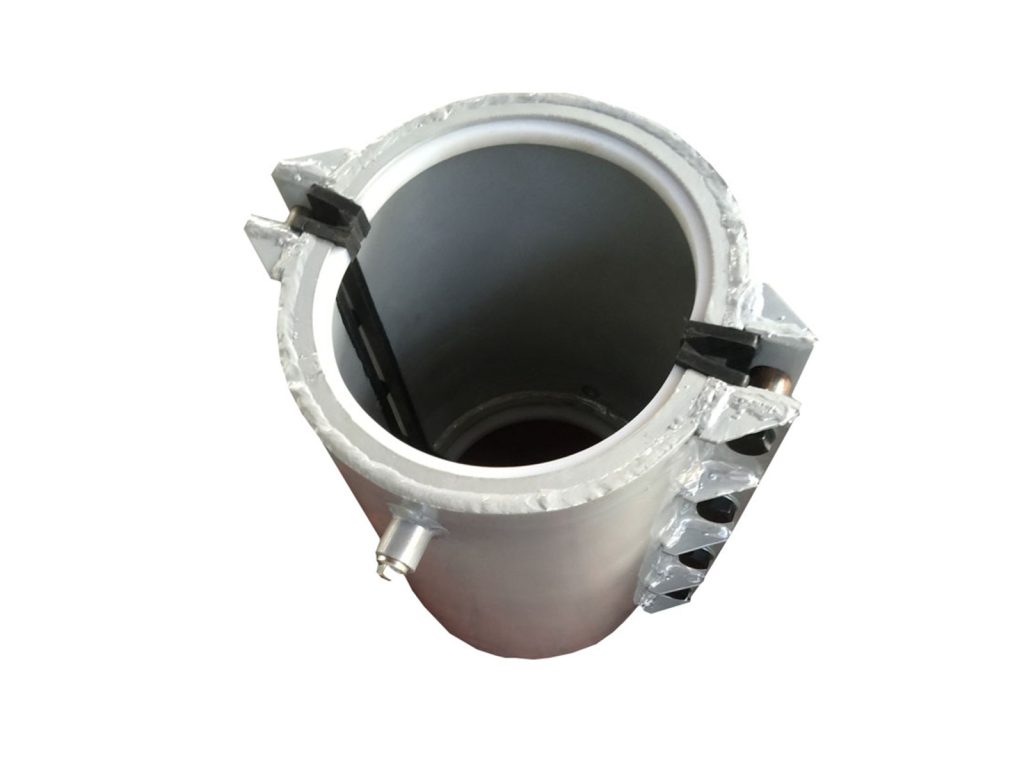
High-Temperature Repair Sleeve
A hot line is a seal problem before it is a strength problem, so this split sleeve is specified for temperature first. As the pipe heats, an ordinary gasket hardens, loses recovery and stops following the movement of…
Also known as: High Temperature Repair Clamp, Silicone Sealed Repair Sleeve
Usually replies within 24 hours sales@baoshuopipe.com
Technical Specifications
| Size Range | DN15–DN4000 · Ductile Iron DN15–DN4000 / Steel DN15–DN4000 / Stainless Steel DN15–DN4000 · Custom sizes available beyond the above range |
|---|---|
| Body Material | Carbon Steel Q235 / SS304 / SS316L / Duplex 2205 |
| Seal Material | Silicone (VMQ) |
| Sealing Pressure | ≥1.6MPa (232 PSI) |
| Bolt Specification | M16×80, Grade 8.8 High-Strength Bolts |
| Coating | Epoxy Powder (or Stainless Steel on request) |
| Length Range | 200–600mm (7.9"–23.6") |
| Applicable Pipe Types | Steel, Stainless Steel, Ductile Iron, PVC |
| Working Conditions | High Temperature |
Custom Orders Available
This product can be customized to your specifications. Contact us with your requirements.
Request Custom QuoteCheck the fit before ordering.
- Measure the actual pipe
- Nominal DN alone does not define the outside diameter. Confirm the pipe material, measured OD and condition.
- Confirm the geometry
- Provide dimensions of the connection or damaged area. Product shape, sealing length and end connections must match the job.
- Match the seal to the service
- Confirm medium, temperature and pressure together. A material name alone is not a service approval.
- Plan a safe installation
- Pipe integrity, isolation and installation procedure require a site-specific assessment. Suitability for live service must be confirmed.
Read the full technical guide7 chapters · complete product description
Product Overview
A hot line is a seal problem before it is a strength problem, so this split sleeve is specified for temperature first. As the pipe heats, an ordinary gasket hardens, loses recovery and stops following the movement of the joint, which is why a clamp fitted cold can weep only once the plant is at temperature.
Where it is used
- State the proposed fluid and thermal conditions for configuration review before treating the product as suitable for the service.
- Plant rooms where the leak appears only when hot
- Installation requires the line conditions authorized by the operator, including isolation, depressurization and temperature conditioning.
- Insulated pipework where the repair sits under the lagging
Choosing the right build
We size the gasket on the higher of two figures: normal operating temperature and the maximum the line can reach. Send both, with the outside diameter. Compounds are compared in EPDM, NBR, FKM and silicone compared; the stainless equivalent is the stainless high temperature sleeve.
Why heat is a compression set problem, not a strength problem
Steel loses a little strength as it gets hot; an elastomer loses its elastic memory. That difference is what governs a high-temperature repair. A gasket seals because it is compressed and pushes back. Heat accelerates the process by which the rubber rearranges and takes a permanent set in the compressed position — compression set. Once that has happened, the gasket no longer pushes back, and the bolt load simply holds a flattened piece of rubber against the pipe.
That is why a clamp fitted on a cold line can look perfect, pass a cold pressure test, and weep the first time the plant comes up to temperature. The damage is not done by the pressure. It is done by the first heat cycle, and it is permanent.
Hot pipe also grows. A line that expands along its length moves relative to the shell, and the gasket has to keep following the pipe surface as it does. A gasket that has hardened with heat cannot follow anything. This is why the sealing material is selected for temperature and the shell for pressure — they are two separate choices, and the temperature one is made first.
Installation
- Establish two temperatures, not one: the normal operating temperature, and the highest the line can reach — during a steam-out, a cleaning cycle, a blocked condition or a control failure. The seal is sized on the higher figure.
- Record how the line gets there. A slow rise to a steady temperature is easier on an elastomer than repeated cycles between ambient and hot, and the number of cycles is part of the specification.
- Isolate, drain and cool the section before fitting. Fitting a sleeve onto a hot line is a safety problem, and the shell geometry is set cold regardless.
- Clean the pipe to bare metal over the full sleeve length and past both ends. On an insulated line, remove the lagging generously rather than cutting it back to the last possible edge.
- Check the pipe for wall loss under the insulation. Lagged pipe corrodes where water gets in at a damaged cladding and cannot get out, and the worst thinning is often exactly where the repair is needed.
- Fit the shell and set the gasket centred on the defect. Do not use jointing compound; it is not rated for the temperature and leaves a film the gasket cannot seal through.
- Tighten in two alternating passes while the line is cold, and record the figure used. On insulated lines the bolts will be under the lagging afterwards, so this is the only chance to set them.
- Bring the line up to temperature slowly with the repair exposed, check it at operating temperature, then inspect again after the first full cool-down. The cool-down check is the one that finds compression set.
The two errors that matter: fitting to the normal operating temperature and ignoring the excursion the line occasionally sees, and reinstating the lagging before the first heat cycle has been observed, which hides the only opportunity to see whether the seal survived it.
What we need to quote a hot duty
Temperature drives everything here, so the first four items are the specification:
- Normal operating temperature and maximum possible temperature, both in Celsius
- Whether the line is steady or cycles, and roughly how often it is taken from cold to hot
- The medium — steam, condensate, hot water, hot oil and hot process fluid are four different sealing problems at the same temperature
- Whether the line is ever cleaned or steamed out at a temperature above normal operation, and with what
Then the geometry and the surroundings: outside diameter, line pressure, insulation type and thickness, and the clearance between the pipe and anything around it. Lagging thickness matters because the shell and the bolts end up inside it, and a shell that cannot be reached cannot be re-tightened later.
Where the medium is hot oil or a hot hydrocarbon, the seal selection has a second dimension, and the oil resistant repair clamp page deals with that side of it. Where the temperature is high and the medium is aggressive, both the shell and the seal change.
Where silicone and FKM reach their limits
The seal supplied on this sleeve is silicone, chosen for its temperature range and for how little its hardness changes across it. Confirm the supplied silicone seal and complete assembly for the actual fluid, phase, temperature, pressure and cycles; the material name does not establish a temperature rating or approval for steam or hot oil. Suitability for thermal cycling requires evidence for the actual silicone formulation, fluid, temperature, pressure and supplied assembly.
Silicone has real weaknesses, and they are not about temperature.
- Mechanical strength and tear resistance. Silicone is the weakest of the common sealing elastomers. It should not be used where the gasket will be cut, extruded into a gap or dragged across a rough surface during fitting.
- Hydrocarbons and non-polar fluids. Silicone swells badly in oils, fuels and many solvents. Do not infer hot-oil or hot-hydrocarbon suitability from the seal family; any alternative requires confirmation of the actual formulation, fluid, temperature, pressure and supplied assembly.
- Acids, alkalis and steam above its range. Silicone has poor resistance to many acids and to superheated steam at high temperature. Hot, concentrated chemicals are outside it.
- FKM is the alternative, with its own boundary. Any FKM alternative requires formulation-specific compatibility and compression-set evidence for the actual hot fluid and the complete supplied assembly. Its limits are specific: it is not the right choice for hot water and steam service, for hot strong alkalis, or for ketones, esters and low-molecular-weight organic acids. A hot alkaline line is not an FKM job.
- EPDM is the third case. For hot water and steam it is often the strongest choice and it is tough, but it is attacked by mineral oil and by many non-polar solvents, so it cannot be used on a line that also carries hydrocarbon.
If your line is hot and carries something other than water or steam, say so — the temperature alone does not pick the seal. Compounds are compared in EPDM, NBR, FKM and silicone compared.
Materials and standards
The shell is supplied in carbon steel Q235 to GB/T 700, or in SS304, SS316L or Duplex 2205 to ASTM A240 / GB/T 3280. At temperature the shell choice is about the installation as much as the medium. Hot pipe under lagging holds moisture against the outside of a sleeve, and on a warm stainless shell that is where chloride stress corrosion cracking starts.
- Q235 with epoxy to AWWA C210 / GB/T 18593 for insulated indoor plant and general hot water service.
- SS304 for clean hot water and steam with low chlorides.
- SS316L where chlorides are present, which is common in steam and condensate systems that see carryover.
- Duplex 2205 where chloride stress corrosion cracking is a genuine risk, because a warm insulated crevice is precisely the condition that causes it.
The product field lists Silicone (VMQ); any alternative compound requires a new compatibility and assembly assessment for the order. Fasteners are grade 8.8 to ISO 898-1 / GB/T 3098.1, or SS304 to ASTM A193 / GB/T 3098.6. Fastener choice matters more here than elsewhere: bolts cycle through the same heating as the shell, and a grade chosen for ambient duty can relax once it has been hot several times. The design working pressure is 1.6 MPa and the size range is DN15–DN4000.
Documents
Material standards GB/T 700 · ASTM A240 · GB/T 3280 · ASTM D2000 · ISO 1629 · AWWA C210 · GB/T 18593 · ISO 898-1 · GB/T 3098.1
Also available in stainless steel: Stainless Steel High-Temperature Repair Sleeve
Related Products
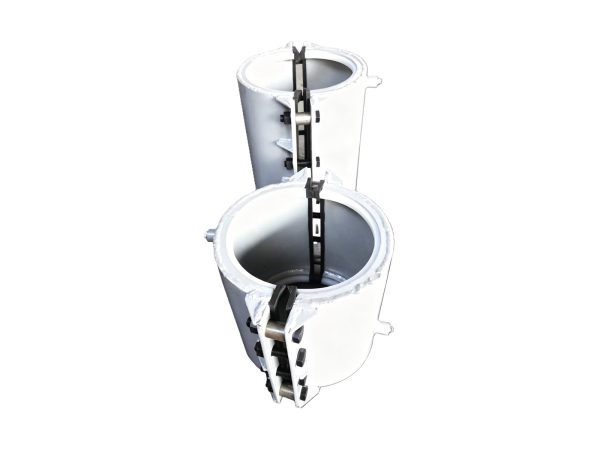
Ultra-Low-Temperature Repair Sleeve
Confirm the PTFE seal construction and the full assembly for the actual minimum temperature, fluid phase, pressure and…
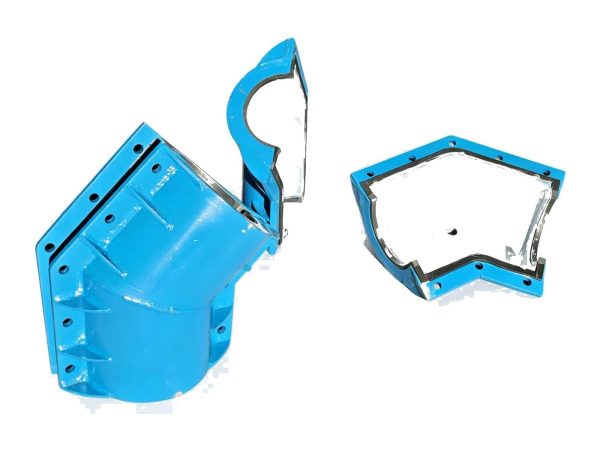
Corrosion-Resistant Repair Sleeve
The interior fluoroplastic barrier protects its covered shell surfaces, while FKM provides the seal; confirm both for…
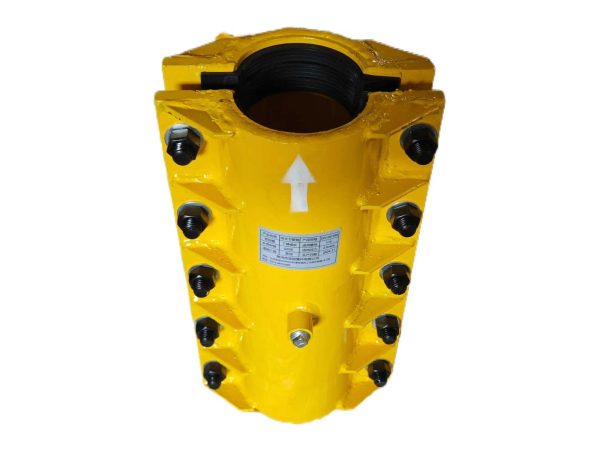
NBR-Sealed Repair Sleeve
NBR-sealed repair clamp for petroleum, lubricant and fuel lines — hydrocarbon service that swells and destroys EPDM…