
 1 / 4
Click image to enlarge
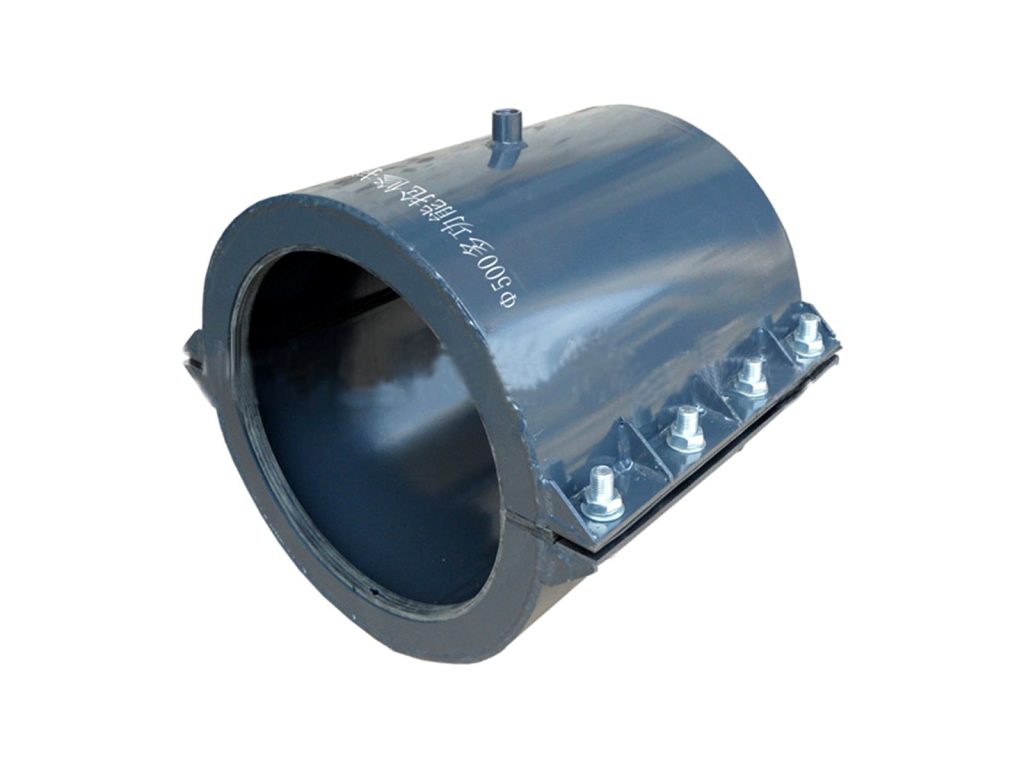
Mechanical Joint Split Repair Sleeve
Select a socket-joint repair sleeve from the actual joint profile, measured pipe and socket diameters, sealing positions and access. Confirm the pipe material, service limits and supplied configuration before planning the repair.
Also known as: Socket Joint Repair Clamp, Bell Joint Repair Sleeve
BS-RCSKUsually replies within 24 hours sales@baoshuopipe.com
Technical Specifications
| Part Number | BS-RCSK |
|---|---|
| Size Range | DN15–DN4000 · Plastic φ20–φ800 / Ductile Iron DN40–DN2000 / Steel DN40–DN2000 · Custom sizes available beyond the above range |
| Body Material | Q235 Carbon Steel / SS304 / SS316L / Duplex 2205 |
| Seal Material | EPDM |
| Sealing Pressure | ≥1.6MPa (232 PSI) |
| Bolt Specification | M20×100, Grade 8.8 High-Strength Bolts |
| Coating | Epoxy Powder |
| Length Range | 200–500mm (7.9"–19.7") |
| Weight | 0.3–24.4 kg (approx) |
| Applicable Pipe Types | Steel, Ductile Iron, Cast Iron |
| Working Conditions | Standard Pressure |
Custom Orders Available
This product can be customized to your specifications. Contact us with your requirements.
Request Custom QuoteCheck the fit before ordering.
- Measure the actual pipe
- Nominal DN alone does not define the outside diameter. Confirm the pipe material, measured OD and condition.
- Confirm the geometry
- Provide dimensions of the connection or damaged area. Product shape, sealing length and end connections must match the job.
- Match the seal to the service
- Confirm medium, temperature and pressure together. A material name alone is not a service approval.
- Plan a safe installation
- Pipe integrity, isolation and installation procedure require a site-specific assessment. Suitability for live service must be confirmed.
Read the full technical guide6 chapters · complete product description
Product Overview
Select a socket-joint repair sleeve from the actual joint profile, measured pipe and socket diameters, sealing positions and access. Confirm the pipe material, service limits and supplied configuration before planning the repair.
Identify the joint and repair route
A socket-joint repair sleeve must be matched to the external profile of the connection it will enclose. Identify whether the joint has a bell, gland, collar, bolts or other projections and record exactly where it leaks. Do not infer the internal seal design or failure cause from the product name. A pulled joint, damaged socket or uncertain restraint needs operator assessment before selecting an external sealing repair. Use the repair-or-replacement guide to frame that decision.
Measure the complete external profile
Provide the measured pipe OD on both sides, maximum socket or gland OD, axial length of every projection, proposed sealing positions and clear length beyond the joint. Record offset, angular deflection, ovality, coatings and nearby structures with labelled photographs or a sketch. The shell must clear the joint while placing its seals as designed; nominal diameter alone cannot establish this. A deflected connection needs configuration review rather than an assumption that tightening will straighten it. See the selection guide.
Confirm the configuration for the pipe material
Identify each pipe material and joint specification separately. Plastic-pipe and ductile-iron socket configurations are listed separately in the product dimensions; their presence does not make a single sleeve interchangeable across materials or socket profiles. For plastic, provide the polymer and wall designation; for iron or steel, record the actual external dimensions and remaining surface condition. Ask for confirmation of the applicable model and sealing arrangement. The pipe-material guide explains why measured geometry and pipe condition both matter.
Check seal, pressure and restraint
EPDM is the currently listed seal. Confirm the actual compound against the medium, composition, temperatures, operating pressure and maximum pressure requirements. Material options or a catalogue rating do not establish approval for every service. External sealing does not by itself confirm axial restraint, support, structural repair or restored joint movement capacity; resolve those requirements separately with the operator. Refer to the seal guide and pressure guide for the information to request.
Prepare installation and acceptance
Agree isolation, depressurisation, excavation, support and work authorisation before handling the joint. Use the surface preparation method and tightening instructions for the supplied assembly; do not remove weakened pipe material or force alignment without an assessed method. Obtain the required sequence, torque, permitted gaps and inspection criteria rather than borrowing a pass count or judging compression visually. Testing and return to service follow the approved site plan. The installation guide lists the documents to obtain.
Send the socket-joint enquiry
Send the joint type, material of both pipe sections, dimensioned profile, leak position, wall-condition findings, deflection, available clearance and existing supports. Include medium, temperatures, pressures and quantity, and ask for the confirmed configuration and acceptance documents against the socket-joint datasheet. A flange pair requires review of the flange-wrap clamp; a leak on the straight barrel requires its own assessment. Changing shell material alone does not resolve a geometry mismatch.
Documents
Material standards GB/T 700 · ASTM A240 · GB/T 3280 · BS EN 681-1 · GB/T 21873 · AWWA C210 · GB/T 18593 · ISO 898-1 · GB/T 3098.1
Related Products
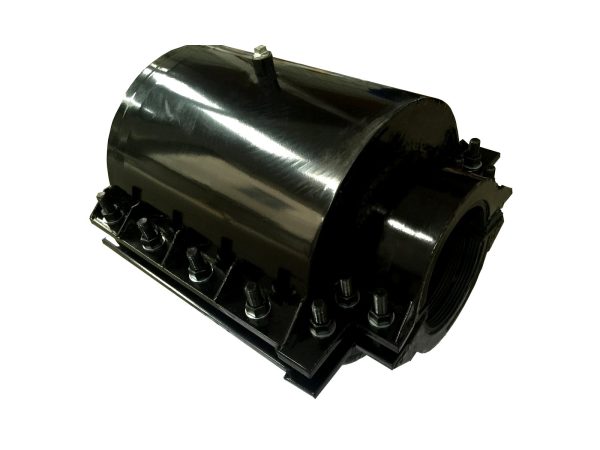
Repair Sleeve for Reducer Fittings
A split repair sleeve for a reducer fitting covers a local defect across an existing change in diameter. Both measured…
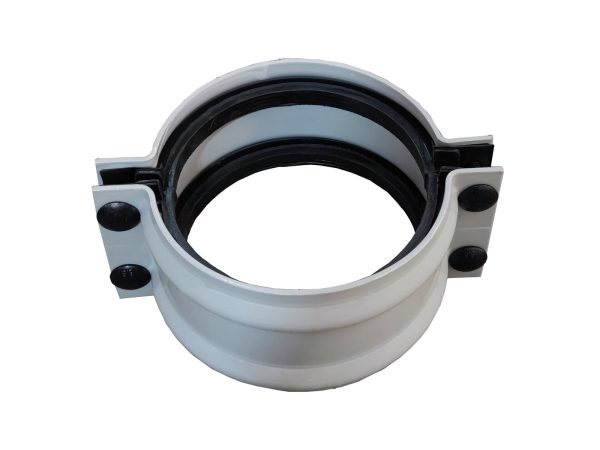
Weld Seam Repair Sleeve
Narrow-profile repair clamp for leaking weld seams on steel pipes. Targets the weld line directly with focused sealing…
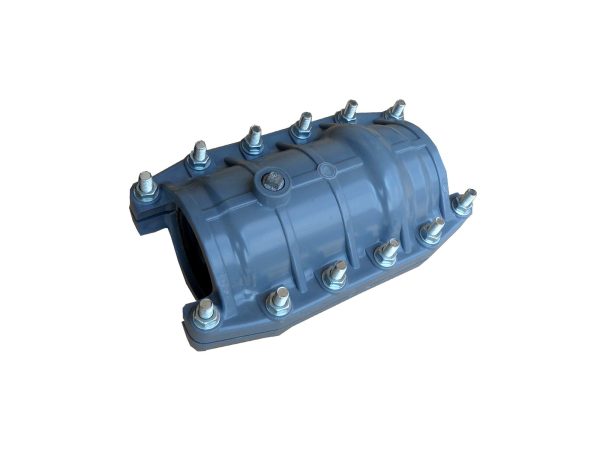
Split Repair Sleeve for PVC-M Pipe
Repair clamp specifically designed for PVC-M pipes. The PVC-M shell and supplied gasket must be checked against actual…