
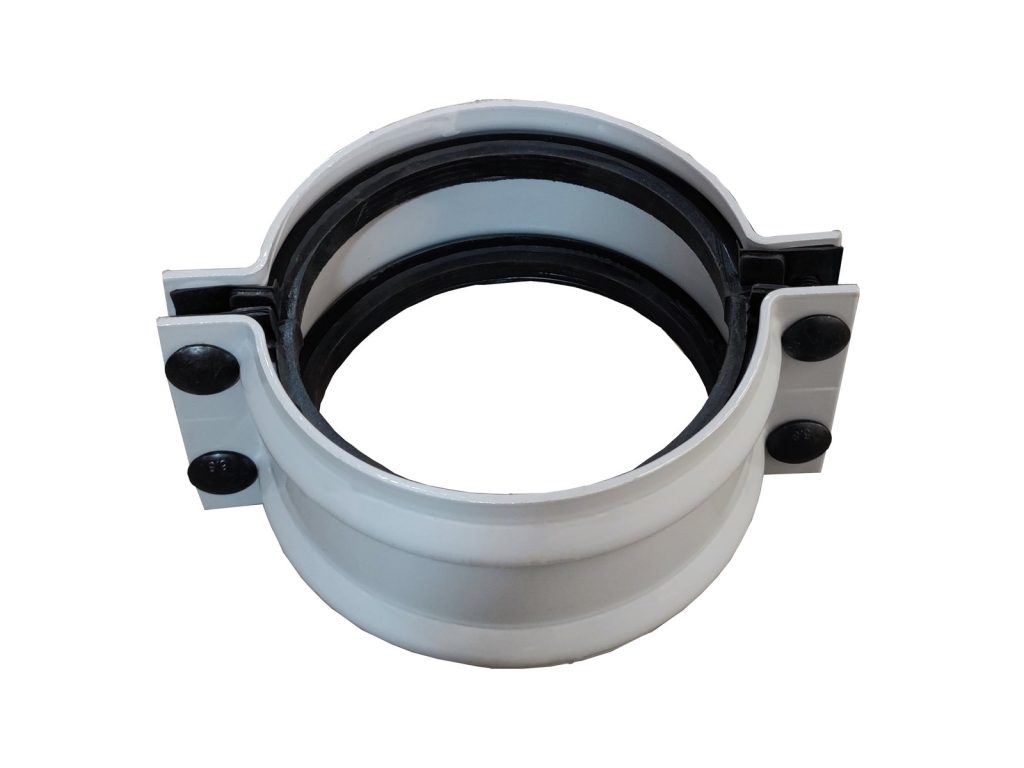
Weld Seam Repair Sleeve
A weld seam repair clamp is a narrow split sleeve aimed at the weld. A seam leak runs along a line rather than collecting at a point, so a wide sleeve spends most of its gasket on sound…
Also known as: Weld Seam Repair Clamp, Longitudinal Seam Repair Clamp
Usually replies within 24 hours sales@baoshuopipe.com
Technical Specifications
| Size Range | DN15–DN4000 · Steel DN100–DN800 · Custom sizes available beyond the above range |
|---|---|
| Body Material | Carbon Steel Q235 |
| Seal Material | EPDM |
| Sealing Pressure | ≥1.6MPa (232 PSI) |
| Bolt Specification | M16×80, Grade 8.8 High-Strength Bolts |
| Coating | Epoxy Powder |
| Length Range | 110–160mm (4.3"–6.3") |
| Applicable Pipe Types | Steel |
| Working Conditions | Standard Pressure |
Custom Orders Available
This product can be customized to your specifications. Contact us with your requirements.
Request Custom QuoteCheck the fit before ordering.
- Measure the actual pipe
- Nominal DN alone does not define the outside diameter. Confirm the pipe material, measured OD and condition.
- Confirm the geometry
- Provide dimensions of the connection or damaged area. Product shape, sealing length and end connections must match the job.
- Match the seal to the service
- Confirm medium, temperature and pressure together. A material name alone is not a service approval.
- Plan a safe installation
- Pipe integrity, isolation and installation procedure require a site-specific assessment. Suitability for live service must be confirmed.
Read the full technical guide7 chapters · complete product description
Product Overview
A weld seam repair clamp is a narrow split sleeve aimed at the weld. A seam leak runs along a line rather than collecting at a point, so a wide sleeve spends most of its gasket on sound pipe. The narrow shell concentrates the load over a short arc and length, which is the shape a longitudinal weld defect has.
Where it is used
- Longitudinal and spiral weld seams on steel pipe
- Weeping or porous welds found by pressure test or inspection
- Repairs in a trench or against a wall, where a long shell will not fit
- Spools where the seam alone is at fault
Choosing this clamp
Tell us the pipe outside diameter and the length of seam to be covered; the shell is deliberately short, so a longer defect needs a longer shell or two of them. For a leak at a branch or a bend, the tee or elbow sleeve follows the geometry instead.
Why a narrow shell is the right shape for a seam
A weld seam defect is linear. A longitudinal seam crack, a porous run of weld metal or a pinhole cluster along a fusion line all have length in one direction and almost none in the other. A gasket seals where it is loaded, so a wide sleeve on a seam defect loads a large area of sound pipe to reach a narrow strip of leaking weld.
A short, narrow shell puts the same bolt load into a much smaller gasket area. That raises the unit pressure at the seam, which is what a porous weld needs, without asking the shell to bend a long span of pipe.
The trade-off is coverage. The shell is short by design, so it must be placed accurately over the defect. Where the defect is longer than the shell, a second shell or a longer sleeve is the answer — a short shell stretched to cover too much will not load the ends.
Installation
- Locate the full extent of the seam defect first, by inspection or by pressure test. The shell is short, so position has to be decided before anything is fitted.
- Measure and mark the start and end of the defect on the pipe. Marking it on the pipe is faster and more reliable than trying to judge position through the open shell.
- Clean the seam and the pipe either side of it back to sound metal, including the weld cap and the toes of the weld. Weld toes and spatter are where a gasket bridges instead of touching.
- If the weld cap stands proud, check the gasket is thick enough to sit over it. A gasket that only touches the cap crown seals nothing at the toes.
- Centre the shell over the marked defect, allowing cover at both ends, then seat the gasket and bring the halves together.
- Tighten in a cross pattern in two passes. A narrow shell pulls down quickly, so the second pass is short — the aim is even loading, not maximum load.
- Test, then protect the shell. On a buried line the coating is the only thing between a carbon steel shell and the soil.
What we need to quote
The pipe outside diameter and the length of seam to be covered, measured along the pipe. Then the pipe wall thickness, because a thin-wall spool distorts under a narrow high-pressure contact patch more readily than under a wide sleeve.
Also send the weld type — longitudinal submerged-arc seam, spiral seam, or a site weld between two spools — because the cap profile differs and the gasket has to clear it. Add the pipe material and grade where it is known, the medium and its temperature, and the working pressure the line runs at rather than the class of the pipework. Where more than one seam or a seam plus a circumferential weld is at fault, say so: that combination is usually not a single-shell job.
Where this part does not fit
A seam shell covers a longitudinal line. It is not the part for a circumferential crack or a girth weld defect that runs around the pipe; for those the shell has to encircle the whole circumference, which is what a Straight Pipe Repair Clamp does.
It is also the wrong repair where the seam defect has propagated into the parent plate as laminations or where the spool has lost roundness. In both cases the shell seals a moving surface, and the leak will return. Where the defect sits at a branch or at an elbow, the geometry changes and the part is a Split Repair Tee or a Split Repair Elbow. And on a line where the weld has failed because the pipe was made from material with a lamination problem, a local shell is a temporary measure, not a repair.
Materials and standards
These shells are made in carbon steel to GB/T 700, and in SS304, SS316L or Duplex 2205 to ASTM A240 / GB/T 3280 where the line is stainless or the environment is aggressive. The material point specific to this product is galvanic: putting a carbon steel shell on a stainless pipe creates a couple, and the small area of the shell is the part that corrodes. On stainless and duplex lines, the shell is specified in the matching or a compatible grade, and the coating system is treated as a corrosion barrier rather than as paint.
Gaskets are EPDM to BS EN 681-1 / GB/T 21873, NBR to BS EN 681-2 / GB/T 21873 for oily media, and FKM or silicone to ASTM D2000 / ISO 1629 for temperature or chemical service. Because the shell is narrow, the gasket is highly loaded over a small area and compound selection is less forgiving than on a wide sleeve. Bolts are Grade 8.8 to ISO 898-1 / GB/T 3098.1 or SS304 to ASTM A193 / GB/T 3098.6, and external surfaces are epoxy coated to AWWA C210 / GB/T 18593, or zinc plated to ASTM B633 / GB/T 9799.
In the field
Photographs from completed installations of this product.
Material standards GB/T 700 · BS EN 681-1 · GB/T 21873 · AWWA C210 · GB/T 18593 · ISO 898-1 · GB/T 3098.1
Related Products
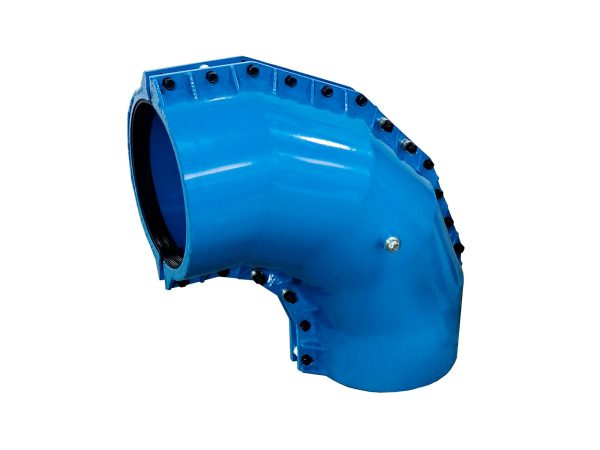
Repair Sleeve for Elbow Fittings
Elbow-section repair clamp for pipe bends at any angle. Fits both 45° and 90° elbows on steel and ductile iron pipes.
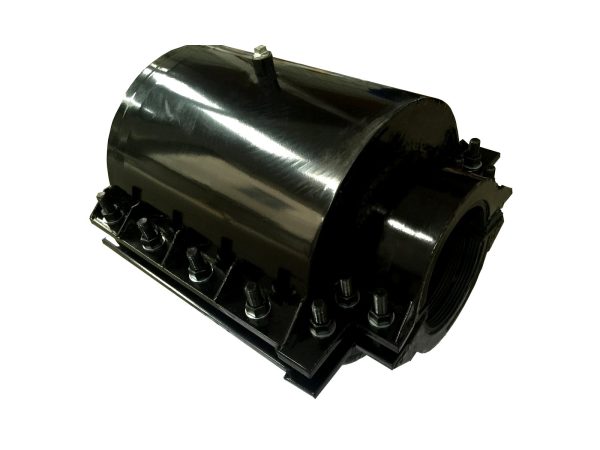
Repair Sleeve for Reducer Fittings
A split repair sleeve for a reducer fitting covers a local defect across an existing change in diameter. Both measured…
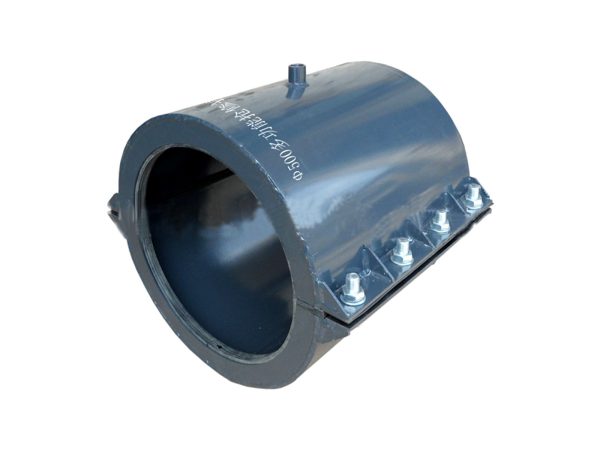
Mechanical Joint Split Repair Sleeve
Select a socket-joint repair sleeve from the actual joint profile, measured pipe and socket diameters, sealing…