
Repairing Leaks on Different Pipe Materials
Pipe material is one part of a leak-repair assessment. It does not identify the defect mechanism, remaining strength or a suitable clamp by itself. Record the actual pipe and joint construction, dimensions and condition, then check those inputs against a specific proposed assembly.
Iron pipe: identify the barrel and joint
For ductile or cast iron, record the pipe standard, nominal designation, actual outside diameter at the sealing areas, and available wall-condition information. Distinguish a barrel defect from a socket or flange leak, and provide the joint profile and nearby obstructions. DN alone does not establish the sealing dimensions. A product intended for a straight barrel is not confirmation of a solution for a damaged bell or moving joint.
Steel pipe: describe the wall and surface
For steel or stainless steel, document the defect location, visible weld or surface features, coating, dimensions and the surrounding wall condition. Have the responsible operator assess damage extent and structural implications. Do not assign a high-pressure model or an NBR/FKM seal merely because the line carries oil or gas. Body material, coating, seal and service limits must be confirmed together; a stainless shell alone does not resolve every corrosion concern.
Plastic pipe: provide the exact specification
For UPVC, PVC-M, HDPE, PPR or another plastic, provide the exact pipe identification, relevant pressure or wall series, measured OD, temperature and visible deformation. Ask whether the proposed clamp configuration covers that particular pipe and condition, including any support or restraint requirements. Compatibility stated for one plastic or one model is not approval for all plastics, and an outlet saddle is not automatically a repair for a longitudinal split.
Composite and cement pipe: describe the actual construction
For PE composite, FRP or cement-based pipe, supply the product standard, wall construction, external surface profile and damage information. Do not infer exposed ribs or a sealing surface from the words steel-skeleton composite, and do not prescribe a wider or softer gasket from the material name alone. Identify the proposed contact areas and refer uncertain wall condition or loading to the responsible specialist before confirming a repair method.
Check the relevant model and evidence
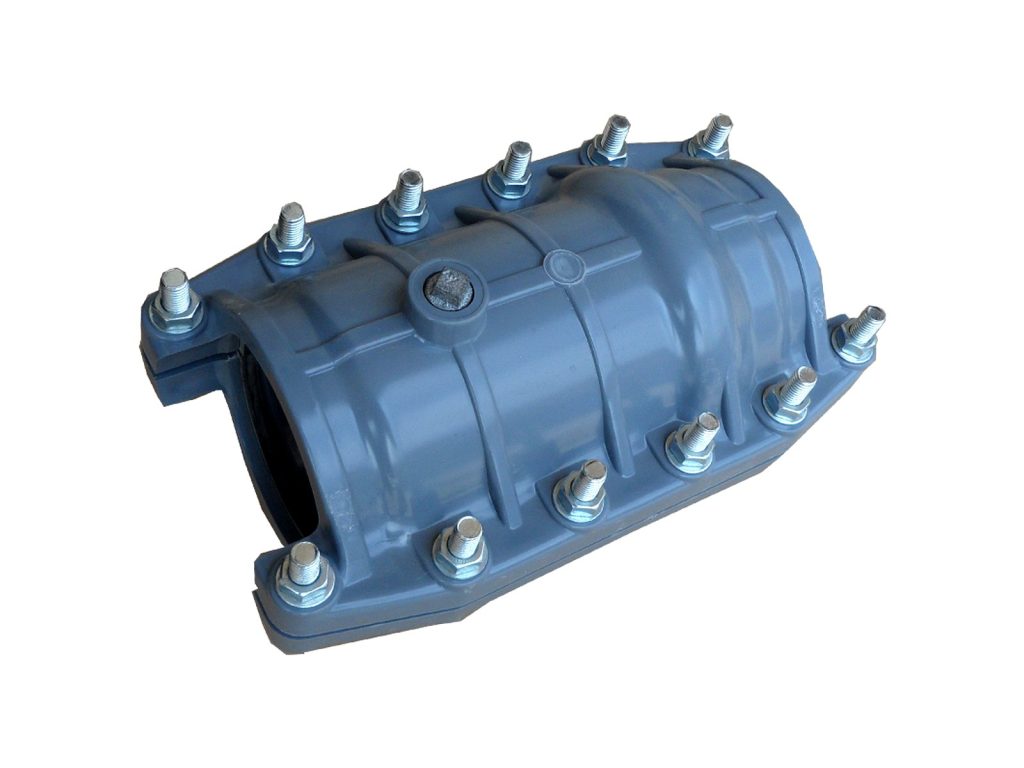
For a straight-section enquiry, compare the straight repair clamp and current datasheet with the measured pipe and the exact body-and-pipe row. Review unlisted combinations with the supplier. Use the pressure guide and seal guide for the operating conditions and compound information. Catalogue families are not a universal material-to-product selection table.
Keep the repair decision separate from a product enquiry
Send the pipe identification, measurements, joint drawing or photographs, defect extent, fluid, pressure and temperature to Baoshuo. Follow the selection guide to organise the enquiry. The operator must separately decide whether sealing, a different engineered repair or replacement is appropriate, and set the work and inspection requirements. A material match does not promise structural recovery, a permanent repair or permission to keep the line operating.