
 1 / 4
Click image to enlarge
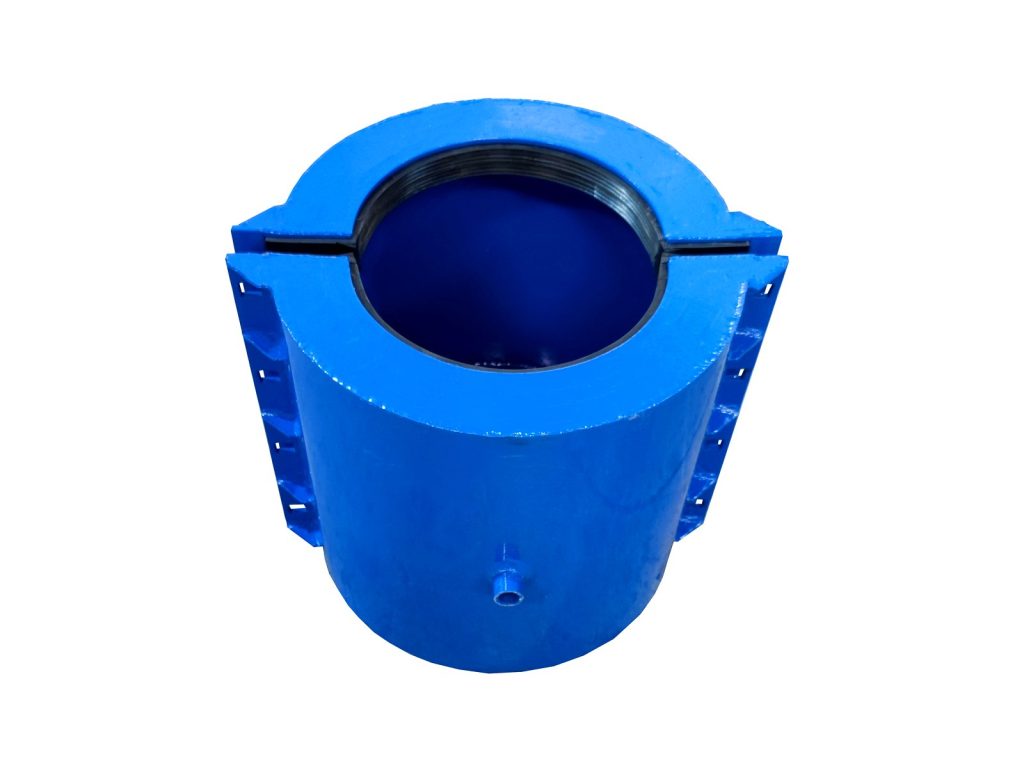
Repair Sleeve for Flange Joints
A flange wrap repair clamp is a split sleeve that seals a flange from the outside. When a flanged joint weeps, the pipe is usually sound and the faces are usually still parallel: what has failed is the…
Also known as: Flange Wrap Repair Clamp, Flange Leak Repair Sleeve
BS-RCFLUsually replies within 24 hours sales@baoshuopipe.com
Technical Specifications
| Part Number | BS-RCFL |
|---|---|
| Size Range | DN15–DN4000 · Plastic φ90–φ800 / Ductile Iron DN100–DN710 / Steel DN100–DN710 · Custom sizes available beyond the above range |
| Body Material | Q235 Carbon Steel / SS304 / SS316L / Duplex 2205 |
| Seal Material | EPDM |
| Sealing Pressure | ≥1.6MPa (232 PSI) |
| Bolt Specification | M16×80, Grade 8.8 High-Strength Bolts |
| Coating | Epoxy Powder |
| Length Range | 200–800mm (7.9"–31.5") |
| Weight | 2.0–48.0 kg (approx) |
| Applicable Pipe Types | UPVC, HDPE, Steel, Ductile Iron, Cast Iron |
| Working Conditions | Standard Pressure |
Custom Orders Available
This product can be customized to your specifications. Contact us with your requirements.
Request Custom QuoteCheck the fit before ordering.
- Measure the actual pipe
- Nominal DN alone does not define the outside diameter. Confirm the pipe material, measured OD and condition.
- Confirm the geometry
- Provide dimensions of the connection or damaged area. Product shape, sealing length and end connections must match the job.
- Match the seal to the service
- Confirm medium, temperature and pressure together. A material name alone is not a service approval.
- Plan a safe installation
- Pipe integrity, isolation and installation procedure require a site-specific assessment. Suitability for live service must be confirmed.
Read the full technical guide7 chapters · complete product description
Product Overview
A flange wrap repair clamp is a split sleeve that seals a flange from the outside. When a flanged joint weeps, the pipe is usually sound and the faces are usually still parallel: what has failed is the gasket between them. Breaking the joint means draining the line and renewing the gasket. The wrap sleeve pulls a gasket band over the outside instead, covering the gap and landing on sound pipe either side.
Where it is used
- Bolted flanged joints on steel, iron and plastic pipework
- Weeping gaskets where the line cannot be drained
- Flange pairs that are seized, corroded or short of spanner access
- Equipment flanges with no room to swing a spanner
Choosing this clamp
We need the pipe outside diameter either side, the flange outside diameter and thickness, and the bolt circle so the shell clears the fasteners. Where the leak is at a bell-and-spigot joint, the socket joint sleeve is the matching part; background: how to choose the right pipe repair clamp.
Why the shell has to clear the fasteners
A flange is the widest part of a pipe run. Bolt heads and nuts project radially from the flange outside diameter, and the gap between them is small. A wrap sleeve is therefore not a cylinder with a stepped inside: it is a shell whose cavity has to contain the flange, its gasket and the projecting fasteners, and it still has to grip sound pipe at both ends.
That geometry decides how the part is made. The gasket is carried on the pipe at each end, not on the flange face. The seal is made twice, once on each side of the flange, and the cavity between them is simply bridged. This is why a flange wrap works when the flange itself is sound and only the joint gasket has failed, and why it cannot work when the flange is cracked.
One more consequence is easy to miss: the shell is much larger in diameter than the pipe, so the hoop load it develops is carried by the shell section rather than by the pipe. The bolts tension the shell; the pipe only sees the two end contact bands.
Installation
- Measure before ordering: pipe outside diameter at both sides, flange outside diameter, flange thickness including any raised face, and the bolt circle with the number and size of bolts. All five go into the shell.
- Check that the bolts can be turned or, if they cannot, that the sleeve will clear their current position. A seized bolt head protruding further than the drawing allows is a fit problem found on site.
- Clean the pipe on both sides of the flange back to sound metal. The two end lands are the only places the gasket seals; everything on the flange face is bypassed.
- Check the flange faces have not separated. If the joint gap has opened, the sleeve has to be built for that condition, and it should be reported rather than tightened over.
- Open the shell over the pipe and work it into place with the cavity centred on the flange. Take care not to roll the end gaskets as the shell slides over the pipe ends.
- Run the bolts in finger-tight, then tighten in a cross pattern over several passes until both end lands are loaded evenly. Load the two ends together, not one and then the other.
- Pressure-test before backfill or insulation. Access after backfill is the main reason this repair is chosen, so use it while the joint is still open.
What we need to quote
The pipe outside diameter either side of the joint, the flange outside diameter, the flange thickness, and the bolt circle diameter with the number and size of bolts. Where the two flanges are different — which happens at a valve, a pump or an adaptor — measure both, because the cavity has to contain the largest one.
Also send the medium and its temperature, the working pressure of the line, and whether the joint is indoors, buried or exposed. Say whether the flange is a raised-face, flat-face or ring-joint type, and whether it is standard or a non-standard drilling, because the bolt positions decide whether the shell clears them. Where the flanges are insulated or the joint is inside a valve box or chamber, say so and give the available clearance: the sleeve is wider than the pipe and it needs room to open.
When a wrap sleeve is the wrong repair
If the flange is cracked, distorted or corroded through, the shell is sealing two sound lengths of pipe around a failed component. It will hold for a while and then leak again, and the correct repair is flange replacement. If the bolts have failed or the joint has separated, the load path has changed and the sleeve is being asked to act as a structural coupling; that is a different decision from a gasket repair.
Where the flanged joint is also a change of size and the leak is at the reducer rather than the joint, the geometry is two diameters rather than two faces, and the part is a Reducing Repair Clamp. Where the failure is at a bell-and-spigot joint a short distance away, the Mechanical Joint Split Repair Sleeve is the matching part. Where the leak is on the pipe run itself, a Straight Pipe Repair Clamp covers it and costs less. Where the line has to be permanently modified rather than repaired, a wrap sleeve is a holding measure. Background on selecting between repair types is in how to choose the right pipe repair clamp.
Materials and standards
The shell is made in Q235 carbon steel to GB/T 700, or SS304, SS316L or Duplex 2205 to ASTM A240 / GB/T 3280. A flange wrap is a fabricated part with a formed cavity, so material selection and welding procedure go together; duplex is used in chloride service such as seawater and coastal plant. Because the shell sits over a joint that may already have been leaking, stainless is frequently specified even on water mains, on the reasoning that the joint will stay wet.
Gaskets are EPDM to BS EN 681-1 / GB/T 21873 for water service, NBR to BS EN 681-2 / GB/T 21873 for oil and fuel lines, and FKM or silicone to ASTM D2000 / ISO 1629 where temperature or chemical exposure requires it. The gasket is in two parts here, one on each side of the flange, and both are selected from the same medium data. Bolts are Grade 8.8 to ISO 898-1 / GB/T 3098.1, or SS304 to ASTM A193 / GB/T 3098.6 where the fasteners stay exposed. Exterior surfaces are epoxy coated to AWWA C210 / GB/T 18593, or zinc plated to ASTM B633 / GB/T 9799. Bolted split-sleeve couplings that span a joint are described by AWWA C227 and AWWA C219.
Documents
In the field
Photographs from completed installations of this product.
Material standards GB/T 700 · ASTM A240 · GB/T 3280 · BS EN 681-1 · GB/T 21873 · AWWA C210 · GB/T 18593 · ISO 898-1 · GB/T 3098.1
Also available in stainless steel: Stainless Steel Repair Sleeve for Flange Joints
Related Products
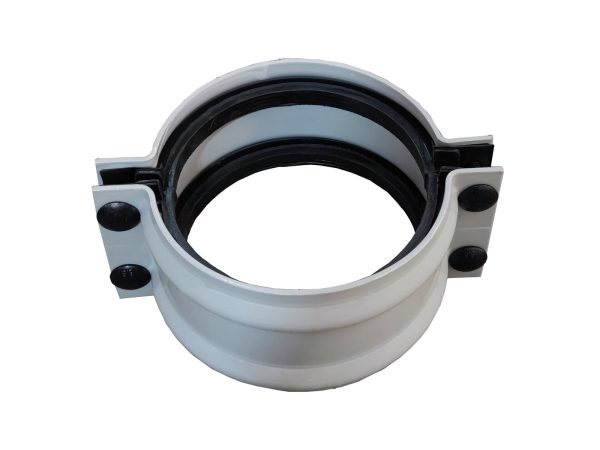
Weld Seam Repair Sleeve
Narrow-profile repair clamp for leaking weld seams on steel pipes. Targets the weld line directly with focused sealing…
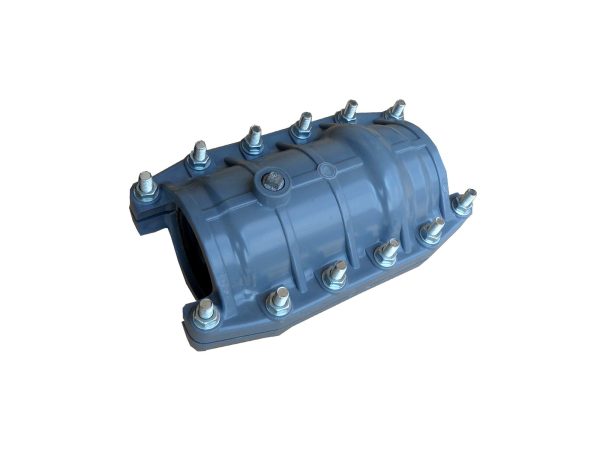
Split Repair Sleeve for PVC-M Pipe
Repair clamp specifically designed for PVC-M pipes. The PVC-M shell and supplied gasket must be checked against actual…
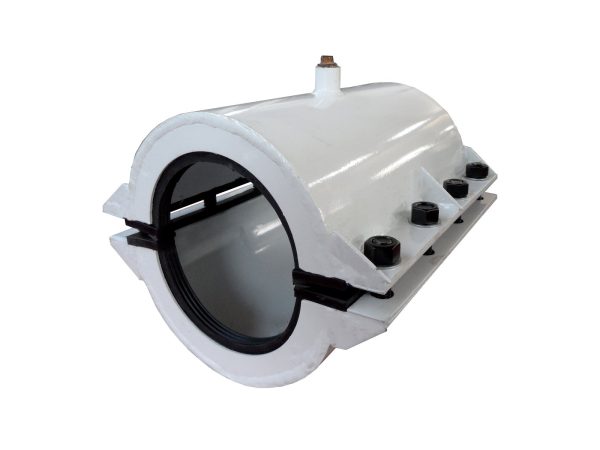
Split Repair Sleeve
Molded straight pipe repair clamp for steel and ductile iron pipes. Seals pinhole leaks, cracks, and weld seam damage…