
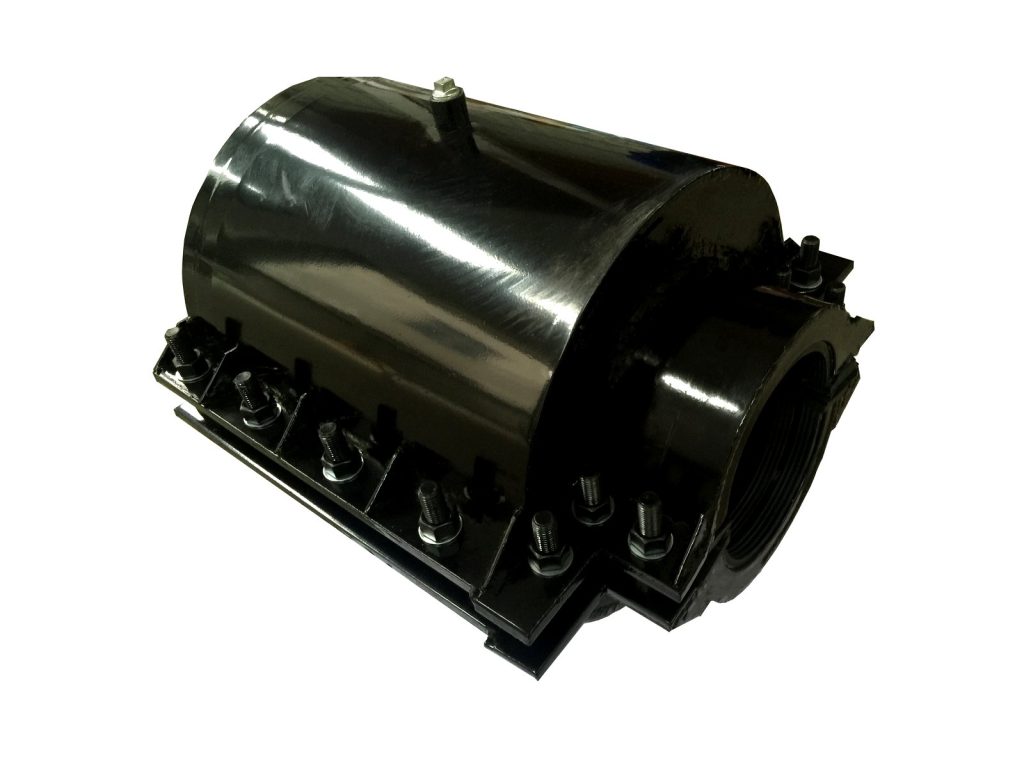
Repair Sleeve for Reducer Fittings
A split repair sleeve for a reducer fitting covers a local defect across an existing change in diameter. Both measured outside diameters, the transition shape and sound sealing surfaces must be confirmed for the proposed assembly; the sleeve does not replace a reducer or restore damaged pipe strength.
Also known as: Reducing Repair Clamp, Reducer Repair Sleeve
BS-RCRDUsually replies within 24 hours sales@baoshuopipe.com
Technical Specifications
| Part Number | BS-RCRD |
|---|---|
| Size Range | DN15–DN4000 · Ductile Iron DN20–DN800 / Steel DN20–DN800 · Custom sizes available beyond the above range |
| Body Material | Q235 Carbon Steel / SS304 / SS316L / Duplex 2205 |
| Seal Material | EPDM |
| Sealing Pressure | ≥1.6MPa (232 PSI) |
| Bolt Specification | M16×80, Grade 8.8 High-Strength Bolts |
| Coating | Epoxy Powder |
| Length Range | 150–600mm (5.9"–23.6") |
| Applicable Pipe Types | Steel, Ductile Iron, Cast Iron |
| Working Conditions | Standard Pressure |
Custom Orders Available
This product can be customized to your specifications. Contact us with your requirements.
Request Custom QuoteCheck the fit before ordering.
- Measure the actual pipe
- Nominal DN alone does not define the outside diameter. Confirm the pipe material, measured OD and condition.
- Confirm the geometry
- Provide dimensions of the connection or damaged area. Product shape, sealing length and end connections must match the job.
- Match the seal to the service
- Confirm medium, temperature and pressure together. A material name alone is not a service approval.
- Plan a safe installation
- Pipe integrity, isolation and installation procedure require a site-specific assessment. Suitability for live service must be confirmed.
Read the full technical guide6 chapters · complete product description
Product Overview
A split repair sleeve for a reducer fitting covers a local defect across an existing change in diameter. Both measured outside diameters, the transition shape and sound sealing surfaces must be confirmed for the proposed assembly; the sleeve does not replace a reducer or restore damaged pipe strength.
Match the existing transition
This sleeve is assessed around the shape of an existing reducer rather than selected as a general adaptor between two nominal pipe sizes. Confirm whether the transition is concentric or eccentric and distinguish a leak on the reducer from a leak at a nearby flange or socket joint. A flange wrap repair sleeve or socket-joint repair sleeve may be the relevant geometry for those joints. The need to keep a line operating does not itself establish that installation under pressure is permitted.
Measure both ends and the transition profile
Identify the large and small ends on a sketch and provide the actual outside diameter and material at each end. Record the transition length, concentric or eccentric form, offset direction, shoulders, weld profiles and nearby fittings. Measure the coverage required between sound sealing areas, not only the length of the reducer body. Add the location and extent of the defect relative to the transition and the space available for the shell and tools. DN labels alone do not define the seating geometry.
Check sealing areas and repair limits
Both ends need sealing surfaces suitable for the supplied design. Corrosion, ovality, damaged coatings or an uneven transition must be assessed before confirming fit. Advancing cracks, severe wall loss, separated pipe sections or abnormal movement may require replacement or a different engineered repair. An external seal does not establish restored wall strength, axial restraint or control of the underlying cause of damage. Pipe supports and restraint requirements must be reviewed independently of the sleeve.
Confirm the configuration for the actual service
The current product lists steel, ductile iron and cast iron pipe with an EPDM seal. Plastic pipe or a transition between dissimilar materials requires separate confirmation of the proposed product and conditions; it is not a general capability established by this listing. Send the medium, relevant concentration, normal and maximum temperatures, working pressure and transients. Confirm shell, seal and coating details together for the order. A shell material option or reference standard alone does not prove chemical compatibility, assembly approval or a pressure rating for every size.
Plan orientation, isolation and assembly
The operator must define the permitted procedure, isolation and depressurisation before work. Confirm large-end and small-end orientation and any eccentric offset against the approved drawing, then check access and independent pipe support. Verify seating at both ends before loading the supplied assembly. Apply tightening in the sequence and to the control values specified for that assembly, checking gasket position and fit; do not force an unsuitable shell into place or invent a universal torque or pass count. Complete inspection and testing under the approved site procedure before reinstatement.
Provide the enquiry details and choose relevant references
Send a dimensioned sketch, defect and access photos, materials at both ends, service conditions, quantity, destination and required inspection scope. No separate standard RC-RD dimension datasheet is currently published: request the project drawing and proposed configuration instead of using another model table. Read the repair sleeve installation manual with the supplied instructions. Where both ends have the same diameter and the defect is on straight pipe, compare a straight repair sleeve rather than specifying a reducer shape.
Material standards GB/T 700 · ASTM A240 · GB/T 3280 · BS EN 681-1 · GB/T 21873 · AWWA C210 · GB/T 18593 · ISO 898-1 · GB/T 3098.1
Also available in stainless steel: Stainless Steel Repair Sleeve for Reducer Fittings
Related Products
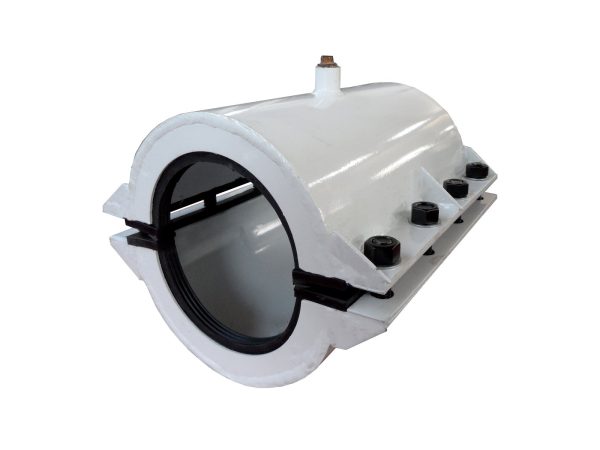
Split Repair Sleeve
Molded straight pipe repair clamp for steel and ductile iron pipes. Seals pinhole leaks, cracks, and weld seam damage…
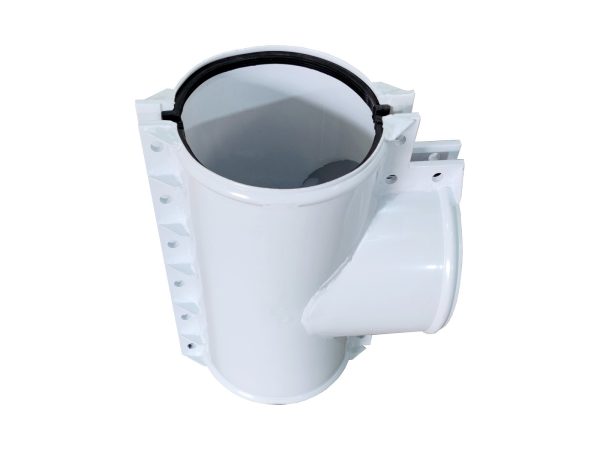
Repair Sleeve for Tee Fittings
Tee-section pipe repair clamp for branch connections on steel and ductile iron pipelines. Seals leaks at tee joints…
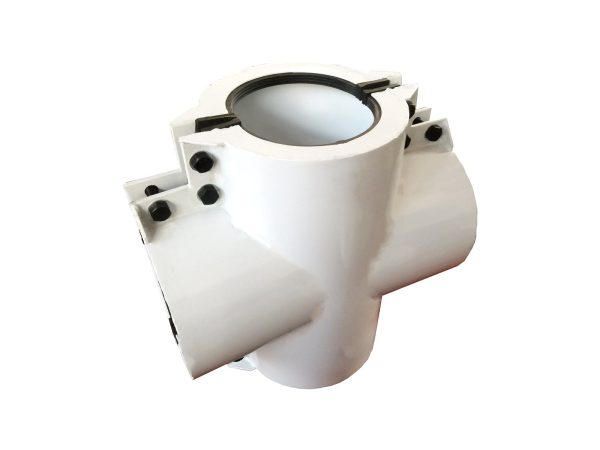
Repair Sleeve for Cross Fittings
A split repair sleeve for a cross fitting encloses a local defect at an existing four-way junction. Selection depends…