
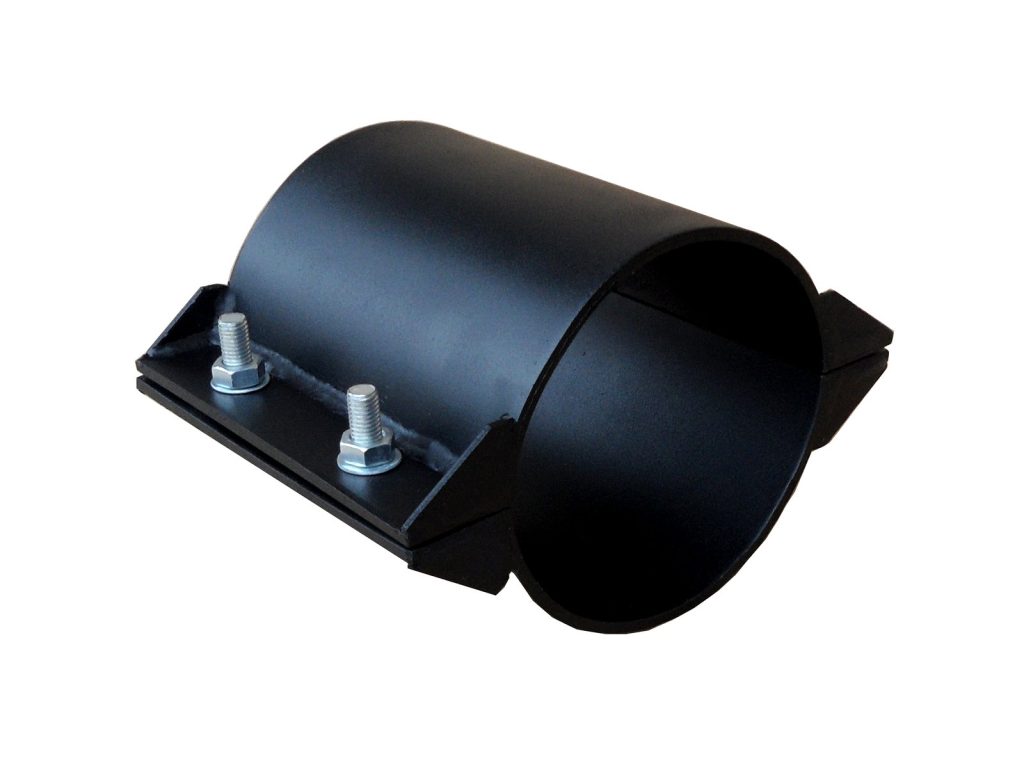
Emergency Pipe Repair: Clamp or Replace the Section?
When a line bursts or starts leaking, the first question is always the same: fix it now, or replace it? For a manufacturing plant, a single hour of downtime can cost more than the whole repair. Knowing when a repair clamp is the right permanent fix — and when it is only a stopgap — saves both money and reputations.
When a repair clamp is the right call
A repair clamp is a permanent, engineered repair when the pipe itself is still sound:
- The leak is localised — a pinhole, crack, weld-seam fault, or a failed joint — on otherwise healthy pipe.
- The pipe wall around the leak has not lost significant thickness.
- Line pressure is within the clamp rating, or a high-pressure clamp is specified.
- The pipe is round enough for the gasket to seat all the way around.
In these cases a clamp is not a patch — it is the specified repair, and it restores the line to full working pressure immediately.
When you should replace the section
Replace when the problem is structural, not localised:
- Generalised corrosion across a long section — a clamp would be bolted onto weak metal.
- Cracking around more than half the circumference, or longitudinal cracking running beyond the clamp length.
- Out-of-round, deformed or collapsed pipe where the gasket cannot seat.
- Repeated failures at the same location, which usually indicate the pipe has reached the end of its life.
In these cases a clamp is a temporary measure to keep the line running until the section is scheduled for replacement.
Cost and downtime comparison
A repair clamp installs in minutes on a live line — no shutdown, no excavation in many cases, no welding. The clamp itself is a fraction of the cost of cutting out and replacing a section, and it can be removed and reused later. Replacing a section means draining, cutting, welding or fitting couplings, and usually shutting the line. For a municipal main or a factory line, the downtime cost alone usually decides the question.
A simple decision checklist
- Leak localised, pipe otherwise sound → clamp
- Pressure within rating → clamp
- Corrosion or damage widespread → replace
- Crack extends beyond the clamp length → replace
- Pipe out of round or deformed → replace
- Unsure? Clamp now to stop the leak, plan the replacement
Keep a small stock of standard clamps in your sizes — when a line fails at 2 a.m., the clamp that is already in the store is the cheapest insurance you will ever buy.