
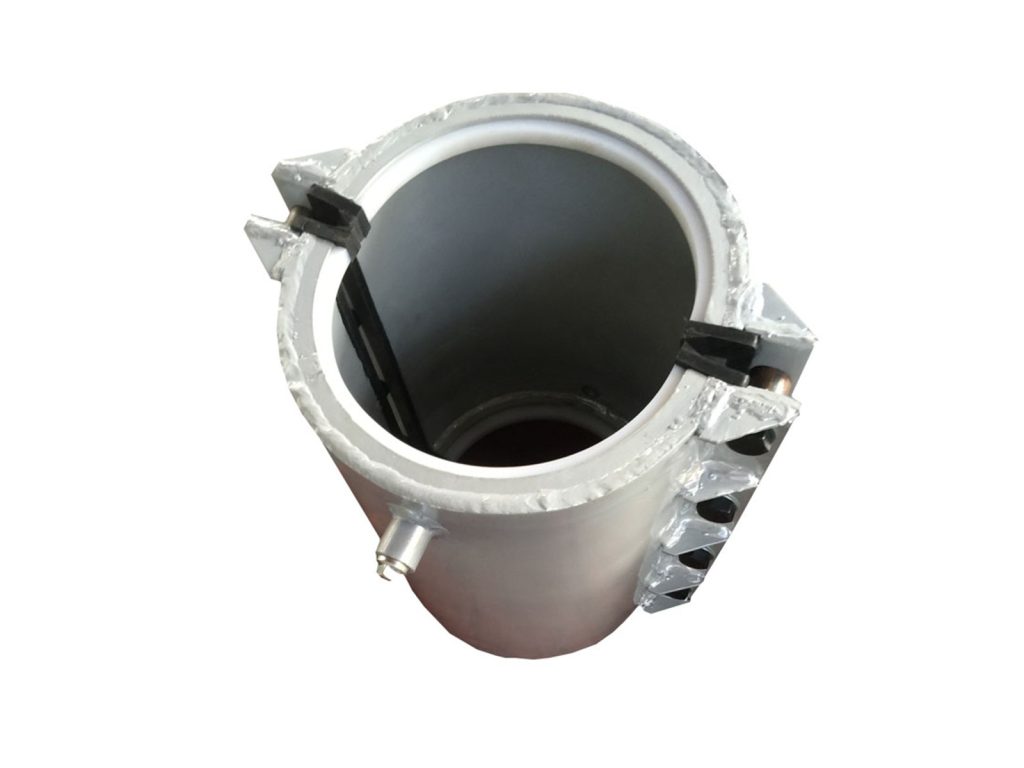
Stainless Steel High-Temperature Repair Sleeve
Heat changes the problem for a split sleeve rather than adding to it. A gasket that seals well at ambient temperature hardens and loses its recovery as the line heats up, so the seal that held on commissioning…
Also known as: Stainless Steel High Temperature Repair Clamp
Usually replies within 24 hours sales@baoshuopipe.com
Technical Specifications
| Size Range | DN15–DN4000 · Stainless Steel DN15–DN4000 · Custom sizes available beyond the above range |
|---|---|
| Body Material | SS304 / SS316L / Duplex 2205 |
| Seal Material | Silicone |
| Sealing Pressure | ≥1.6MPa (232 PSI) |
| Bolt Specification | M16×80, Grade 8.8 High-Strength Bolts |
| Coating | None (Stainless Steel Body) |
| Length Range | 200–600mm (7.9"–23.6") |
| Applicable Pipe Types | Steel, Stainless Steel, Ductile Iron, PVC |
| Working Conditions | High Temperature, Corrosion Resistant |
Custom Orders Available
This product can be customized to your specifications. Contact us with your requirements.
Request Custom QuoteCheck the fit before ordering.
- Measure the actual pipe
- Nominal DN alone does not define the outside diameter. Confirm the pipe material, measured OD and condition.
- Confirm the geometry
- Provide dimensions of the connection or damaged area. Product shape, sealing length and end connections must match the job.
- Match the seal to the service
- Confirm medium, temperature and pressure together. A material name alone is not a service approval.
- Plan a safe installation
- Pipe integrity, isolation and installation procedure require a site-specific assessment. Suitability for live service must be confirmed.
Read the full technical guide7 chapters · complete product description
Product Overview
Heat changes the problem for a split sleeve rather than adding to it. A gasket that seals well at ambient temperature hardens and loses its recovery as the line heats up, so the seal that held on commissioning starts to weep at operating temperature. This sleeve pairs a stainless shell with a gasket chosen for hot service.
Where it is used
- State the proposed fluid and thermal conditions for configuration review before treating the product as suitable for the service.
- Installation requires the line conditions authorized by the operator, including isolation, depressurization and temperature conditioning.
- Corrosive duty that also runs hot
- Repairs where the leak only appears once the plant is at temperature
Choosing the right build
Normal operating temperature, the maximum the line can reach, and the outside diameter are the three inputs; the gasket follows the higher temperature. Compounds are compared in EPDM, NBR, FKM and silicone compared; the carbon steel version is the high temperature repair clamp.
Heat is a seal problem before it is a metal problem
The shell of a stainless sleeve loses strength slowly as it gets hotter. The gasket does not. Above its service ceiling an elastomer hardens, loses its elastic recovery and takes a permanent set, so it stops pushing back against the pipe. The joint still looks sound, still passes a cold pressure test, and then weeps on the way down.
That is the defining behaviour of this product: the leak from heat damage normally appears on the cool-down or at the next start-up, not while the line is hot. It is also why the compound is chosen from the highest temperature the line can reach, not the operating point. A sleeve selected at the operating temperature works perfectly until the first upset, and the upset sets the seal for the rest of its life.
Compression set is worse under cycling than under steady heat, because the same deformation is applied and released repeatedly, and a line that swings daily is harder on the gasket than one that runs hot continuously.
Installation
- Confirm the compound against the maximum temperature the line can reach, including steam-out and upset. Not the normal operating temperature.
- Clean the pipe to bare metal and remove all insulation dust and old lagging residue. On a hot line, dust under the gasket keeps it from seating.
- Check the shell alloy matches the pipe alloy family, so differential expansion between sleeve and pipe stays small.
- Assemble and tighten cold, from the centre outwards in stages, alternating sides.
- Re-torque after the line first reaches operating temperature and has cooled to ambient. Hot fasteners relax and take a set, so this step is not optional.
- Do not handle a hot sleeve without protection, and do not torque a joint at temperature.
- Reinstate the insulation over the sleeve, but leave the joint inspectable rather than buried under lagging.
- A weep that appears only at temperature is the classic signal that the compound was selected from the operating point instead of the ceiling.
What to send with an enquiry
- Normal operating temperature, and separately the maximum the line can reach. The compound follows the higher number, and only the higher number matters for selection.
- How often the line cycles, daily or seasonally. Cycling is a different duty and it changes the gasket recommendation.
- The medium, and whether it is steam, hot water, hot oil or a hot process chemical. These point at different compounds and are not interchangeable.
- Whether the sleeve will be insulated, and with what. Insulated hot stainless is where external chloride attack occurs, so this is a material input.
- Pipe outside diameter and alloy, and the design pressure.
- The defect type and its length.
- Whether the line is steam cleaned or steam-out purged, and at what temperature.
Failure modes, and where a hot-line sleeve is the wrong part
The characteristic failure is the cool-down weep caused by compression set. Next is fastener relaxation: the joint is tight at commissioning and loose a week later, because hot fasteners lose preload and the shell and pipe expand differently. A third failure is specific to insulated lines. A sleeve lagged while the surrounding pipe is not, or the reverse, becomes a cold spot; on a wet line that is where condensation collects, and on a chlorided line it is where chlorides concentrate under the lagging and attack the shell from outside.
Do not use an elastomer-sealed clamp above the temperature its compound can hold. On a steam header running beyond the ceiling of the available compounds, a field clamp is the wrong family and the repair should be a welded or flanged replacement; we will say so rather than supply a part that weeps. At a joint, a bend, a branch or a flange the load path is different: use the mechanical joint split repair sleeve, the stainless steel split repair elbow, the stainless steel split repair tee or the stainless steel flange wrap repair clamp.
For standard temperature stainless lines the stainless steel straight pipe repair clamp is the lighter answer, and the carbon steel hot-service part is the high temperature repair clamp.
Materials and the standards behind them
The shell is SS304, SS316L or Duplex 2205 to ASTM A240 / GB/T 3280. Temperature changes the grade argument. SS304 and SS316L are austenitic grades and are susceptible to chloride stress corrosion cracking at elevated temperature, which covers much of the hot process and washdown duty this sleeve serves. Duplex 2205 resists that mechanism far better and keeps more of its yield strength when hot, so on a hot chlorided line it is the grade that rules the others out.
The gasket is silicone to ASTM D2000 / ISO 1629. Confirm the supplied silicone seal and complete assembly for the actual fluid, phase, temperature, pressure and cycles; the material name does not establish a temperature rating or approval for steam or hot oil. Any FKM alternative requires confirmation of the actual formulation, medium, temperature, pressure and complete assembly; the material name does not establish hot-hydrocarbon or chemical-service approval. Steam is the case where neither is comfortable, so state it as steam rather than as hot.
On an insulated line, external chloride attack under the lagging is a real mechanism, so the lagging and the shell alloy belong to one decision. EPDM to BS EN 681-1 / GB/T 21873 remains the standard potable water compound. Seal options are compared in the guide to EPDM, NBR, FKM and silicone seal materials.
Documents
Material standards ASTM A240 · GB/T 3280 · ASTM D2000 · ISO 1629 · ISO 898-1 · GB/T 3098.1
Warning: Undefined array key "sp03-ss" in /www/wwwroot/baoshuopipe.com/wp-content/themes/astra-child/inc/helpers.php on line 1806
Also available in carbon steel: High-Temperature Repair Sleeve
Related Products
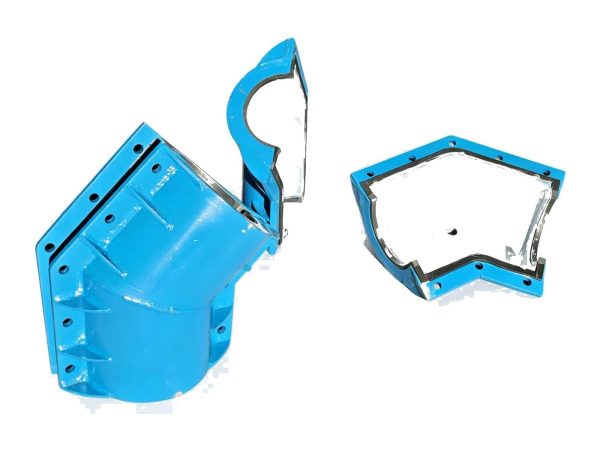
Corrosion-Resistant Repair Sleeve
The interior fluoroplastic barrier protects its covered shell surfaces, while FKM provides the seal; confirm both for…
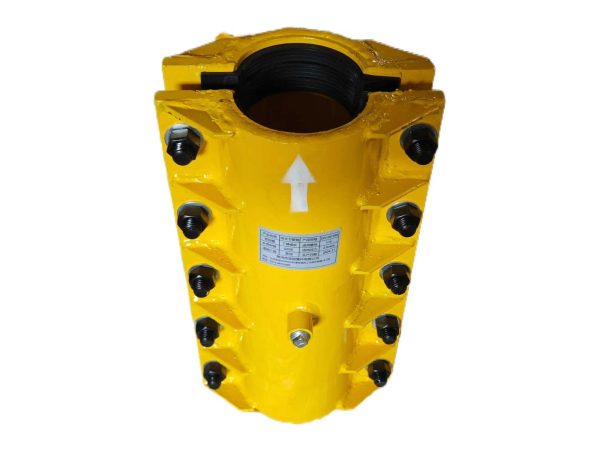
NBR-Sealed Repair Sleeve
NBR-sealed repair clamp for petroleum, lubricant and fuel lines — hydrocarbon service that swells and destroys EPDM…
High-Temperature Repair Sleeve
The supplied silicone VMQ seal requires confirmation for the actual fluid, phase, temperature, pressure and thermal…