
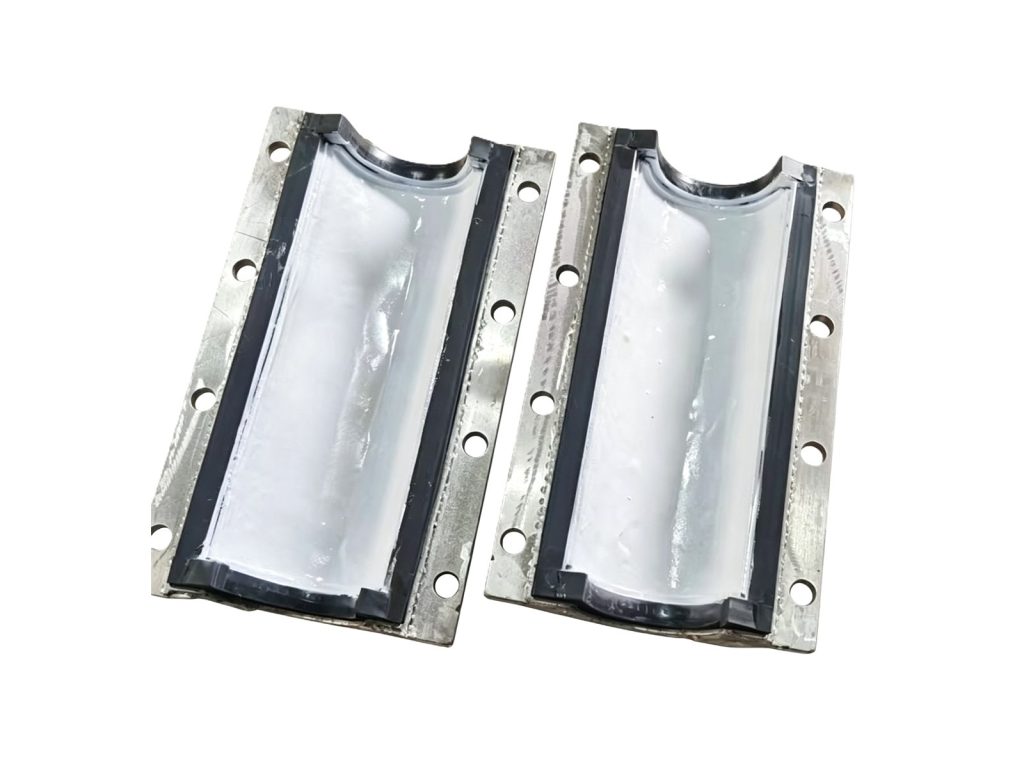
Stainless Steel Corrosion-Resistant Repair Sleeve
A coated stainless split sleeve exists for media that attack the pipe and the repair part equally. A coated carbon steel shell is the wrong choice there: the coating is the only barrier, and once it is nicked…
Also known as: Stainless Steel Corrosion Resistant Repair Clamp
Usually replies within 24 hours sales@baoshuopipe.com
Technical Specifications
| Size Range | DN15–DN4000 · Stainless Steel DN15–DN4000 · Custom sizes available beyond the above range |
|---|---|
| Body Material | SS304 / SS316L / Duplex 2205 |
| Seal Material | FKM + Fluoroplastic Coating |
| Sealing Pressure | ≥1.6MPa (232 PSI) |
| Bolt Specification | M16×80, Grade 8.8 High-Strength Bolts |
| Coating | None (Stainless Steel Body) |
| Length Range | 200–600mm (7.9"–23.6") |
| Applicable Pipe Types | Steel, Stainless Steel, Ductile Iron, PVC |
| Working Conditions | Corrosion Resistant, Acid & Alkali Resistant |
Custom Orders Available
This product can be customized to your specifications. Contact us with your requirements.
Request Custom QuoteCheck the fit before ordering.
- Measure the actual pipe
- Nominal DN alone does not define the outside diameter. Confirm the pipe material, measured OD and condition.
- Confirm the geometry
- Provide dimensions of the connection or damaged area. Product shape, sealing length and end connections must match the job.
- Match the seal to the service
- Confirm medium, temperature and pressure together. A material name alone is not a service approval.
- Plan a safe installation
- Pipe integrity, isolation and installation procedure require a site-specific assessment. Suitability for live service must be confirmed.
Read the full technical guide7 chapters · complete product description
Product Overview
A coated stainless split sleeve exists for media that attack the pipe and the repair part equally. A coated carbon steel shell is the wrong choice there: the coating is the only barrier, and once it is nicked at an edge the steel underneath becomes the weakest point in the line. This sleeve puts a fluoroplastic layer inside a stainless shell, so the medium meets a plastic surface first.
Where it is used
- Chemical plants, plating lines and acid or caustic service
- Stainless lines carrying media that also attack stainless
- Repairs where a coating failure would mean a second leak
- Duty with both corrosion and temperature in play
Choosing the right build
Tell us the medium, its concentration and its temperature — the barrier and the gasket are chosen together, and the wrong pair fails sooner than either would alone. Compounds are compared in EPDM, NBR, FKM and silicone compared; the carbon steel counterpart is the corrosion resistant repair clamp.
One barrier against two
A coated repair sleeve has a single line of defence and it is thin. The coating is weakest where a split sleeve puts its edges, and every bolt hole and cut face is another place it must survive handling and backfill. Once breached, the steel underneath is exposed in the most aggressive position in the assembly, in a wet crevice against a pipe, where it becomes the anode for whatever the pipe is made of.
This build changes the logic rather than thickening the barrier. A fluoroplastic layer faces the medium, and behind it sits a stainless shell, so even a breach exposes an alloy rather than a galvanic anode. Two materials have to fail before the pipe is at risk.
What the barrier does not do is seal. The gasket still does that, and it has its own compatibility limits. A flawless barrier with the wrong elastomer fails sooner than an ordinary sleeve with the right one, which is why the medium data here matters more than the pressure data.
Installation
- Keep the barrier shell in its packing until it is at the pipe. A barrier part dropped on a trench edge or dragged over a pipe end is scrap, and the damage is often invisible.
- Do not cut, drill, file or wire-brush the barrier or the shell edges. If the build does not fit, check the pipe diameter rather than modifying the part.
- Clean the pipe with a scraper and a stainless or plastic brush. A carbon steel brush leaves free iron that rusts and mimics a barrier failure.
- Dry the pipe and the barrier and handle both with clean gloves.
- Use only the lubricant or talc the build specifies. A general purpose grease or solvent attacks the barrier and the FKM at once.
- Check the barrier is continuous at the shell edges and around every fastener hole before closing the sleeve.
- Tighten from the centre outwards in stages so the barrier is not pinched under a lug.
- After the line is back in service, re-check the fasteners and inspect both shell edges. A weep at the edge is a barrier problem, not a bolt problem.
What to send with an enquiry
This part is specified by chemistry, so the chemistry list comes first.
- The exact medium, its concentration and its temperature. Not a family name such as acid or caustic, but the actual substance, because the barrier and the gasket are chosen together.
- Whether the medium alternates. Many chemical lines run process fluid and then a caustic or acid wash, and the seal has to survive both.
- Whether the medium is aerated. Aerated acids are far more aggressive than the same acid kept air-free.
- Cleaning regime: CIP, steam-out, solvent flush, and the chemicals involved.
- Pipe outside diameter and alloy, and the design pressure.
- The defect type and its length.
- Whether the pipe is steel, stainless, plastic or GRP. The bolt load a barrier sleeve needs can crush a plastic or GRP wall, and if that is the pipe a different family applies.
Failure modes, and where a barrier sleeve is the wrong part
The failure this part exists to prevent is crevice corrosion under the sleeve, which is what usually kills a patch on a chemical line: it stops the leak and creates a chemistry cell along its own edge. The failure it has instead is mechanical damage to the barrier during handling, plus a gasket chosen for the process fluid and not for the wash cycle.
Not every chemistry can be sealed by an elastomer-based clamp, and it is better to say so. Strong alkalis at high temperature attack fluoropolymers, and solvents and chlorinated hydrocarbons can permeate the barrier and the gasket together.
Say no where the defect is at a joint, a bend, a branch or a flange; those are different load paths. Use the mechanical joint split repair sleeve, the stainless steel split repair elbow, the stainless steel split repair tee or the stainless steel flange wrap repair clamp. The carbon steel counterpart for less aggressive duty is the corrosion resistant repair clamp.
Materials and the standards behind them
The shell is SS316L or Duplex 2205 to ASTM A240 / GB/T 3280. SS304 is not the grade for this duty: molybdenum resists the chlorides and acidic conditions that form in the crevice behind the barrier, and without it the shell can fail before the barrier does. Duplex 2205 is specified where chloride levels are high or the sleeve also carries mechanical load.
The gasket is FKM to ASTM D2000 / ISO 1629, chosen for chemical and thermal resistance rather than potable water service. Its limits are worth knowing: FKM performs poorly in hot water, steam, ketones and amines. If the line is washed with steam or runs hot water, that is a different compound and the selection will be reviewed. EPDM to BS EN 681-1 / GB/T 21873 remains the right compound for potable water and is not used on this build.
The exterior stainless shell has no paint coating; the interior fluoroplastic barrier remains a separate construction element. The relevant industry standard for sleeve construction is AWWA C230, and an all-stainless build takes fasteners in a matching grade to ASTM A193 / GB/T 3098.6. Seal compound differences are set out in the guide to EPDM, NBR, FKM and silicone seal materials.
Documents
Material standards ASTM A240 · GB/T 3280 · ASTM D2000 · ISO 1629 · ISO 898-1 · GB/T 3098.1
Warning: Undefined array key "sp02-ss" in /www/wwwroot/baoshuopipe.com/wp-content/themes/astra-child/inc/helpers.php on line 1806
Also available in carbon steel: Corrosion-Resistant Repair Sleeve
Related Products
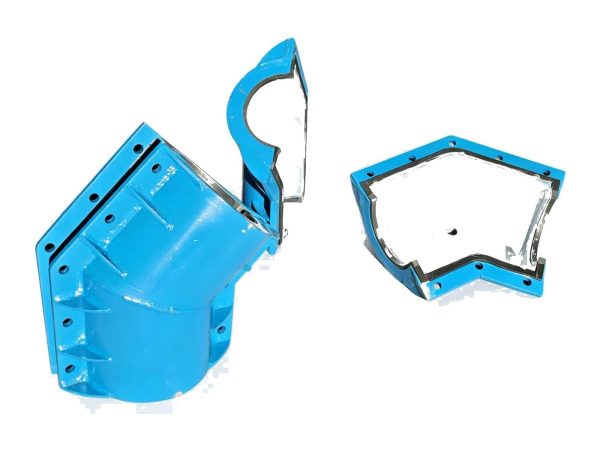
Corrosion-Resistant Repair Sleeve
The interior fluoroplastic barrier protects its covered shell surfaces, while FKM provides the seal; confirm both for…
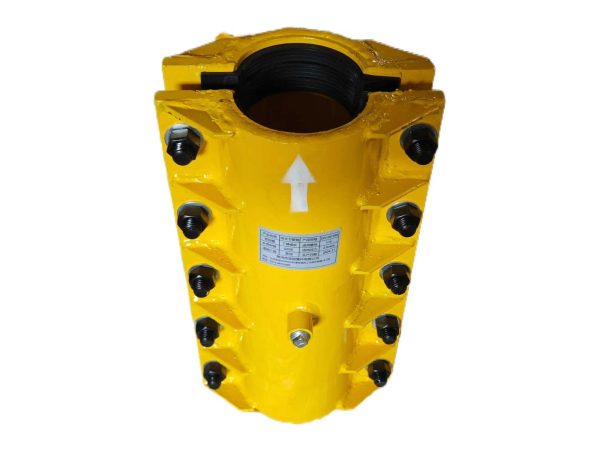
NBR-Sealed Repair Sleeve
NBR-sealed repair clamp for petroleum, lubricant and fuel lines — hydrocarbon service that swells and destroys EPDM…
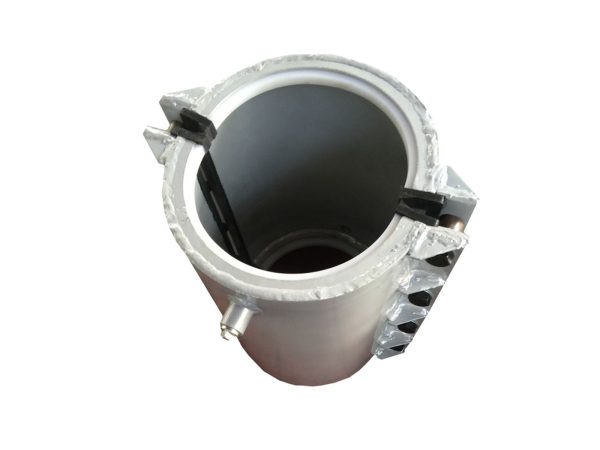
High-Temperature Repair Sleeve
The supplied silicone VMQ seal requires confirmation for the actual fluid, phase, temperature, pressure and thermal…