
 1 / 8
Click image to enlarge
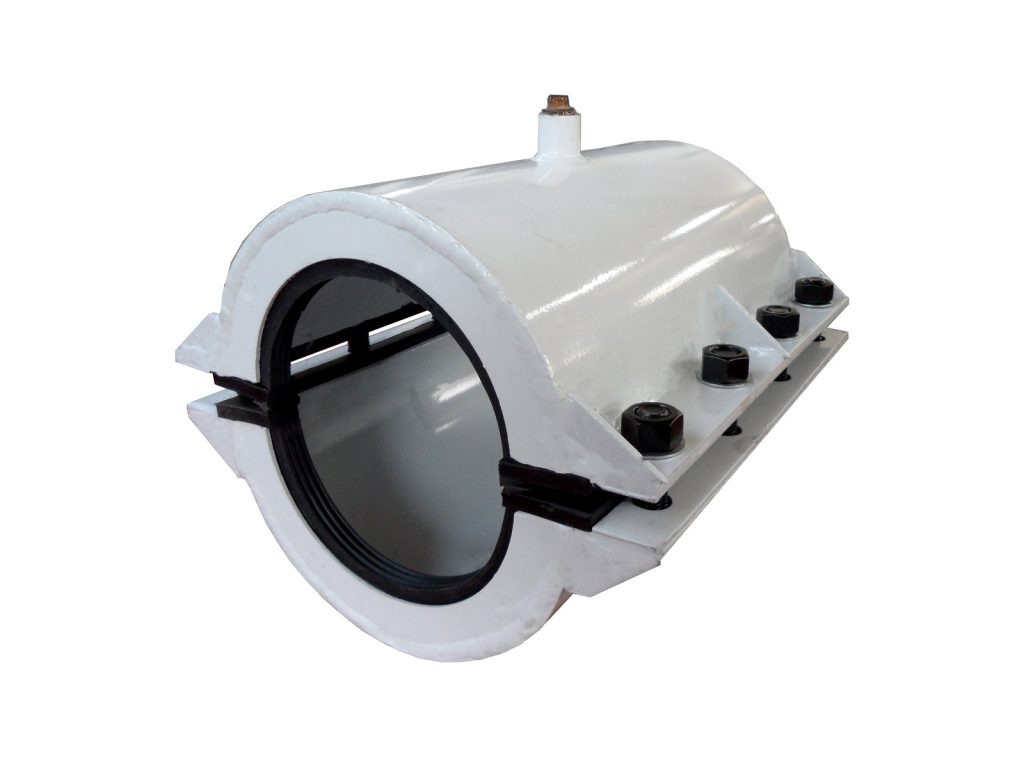
Split Repair Sleeve
A split steel sleeve seals local defects on straight pipe runs; select the shell length, actual pipe OD and seal for the service.
Also known as: Pipe Repair Sleeve, Split Sleeve Repair Clamp
BS-RCSPUsually replies within 24 hours sales@baoshuopipe.com
Technical Specifications
| Part Number | BS-RCSP |
|---|---|
| Size Range | DN15–DN4000 · Plastic φ20–φ1600 / Ductile Iron DN20–DN2600 / Steel DN15–DN3400 / FRP OD100–OD4000 / PE Steel Skeleton OD50–OD600 / Cement Lined OD100–OD3500 / Grooved DN25–DN600 / Stainless Steel DN15–DN3400 · Custom sizes available beyond the above range |
| Body Material | Q235 Carbon Steel / SS304 / SS316L / Duplex 2205 |
| Seal Material | EPDM |
| Sealing Pressure | ≥1.6MPa (232 PSI) |
| Bolt Specification | M16×80, Grade 8.8 High-Strength Bolts |
| Coating | Epoxy Powder |
| Length Range | 100–1000mm (3.9"–39.4") |
| Applicable Pipe Types | UPVC, HDPE, Steel, Ductile Iron, Cast Iron |
| Working Conditions | Standard Pressure, High Pressure |
Custom Orders Available
This product can be customized to your specifications. Contact us with your requirements.
Request Custom QuoteCheck the fit before ordering.
- Measure the actual pipe
- Nominal DN alone does not define the outside diameter. Confirm the pipe material, measured OD and condition.
- Confirm the geometry
- Provide dimensions of the connection or damaged area. Product shape, sealing length and end connections must match the job.
- Match the seal to the service
- Confirm medium, temperature and pressure together. A material name alone is not a service approval.
- Plan a safe installation
- Pipe integrity, isolation and installation procedure require a site-specific assessment. Suitability for live service must be confirmed.
Read the full technical guide8 chapters · complete product description
Product Overview
A split repair sleeve — also called a pipe repair sleeve — is a steel shell split along its length: it opens over the pipe, closes around it and is drawn shut with bolts, while the gasket held inside the shell does the sealing. It is the standard choice for a defect on a straight run of pipe.
Where it is used
- Straight runs of steel, iron and plastic pipe
- Pinholes, cracks and pitting
- Buried mains, plant pipework, risers
- Small service connections to transmission mains
Choosing this clamp
Three details decide the part: pipe outside diameter, length of the damaged section, and the medium with its temperature. If the defect sits at a bend, a branch or a joint, use the elbow, tee or socket-joint sleeve instead — the shell has to follow the geometry it covers.
Fitting
Whether the line is isolated or kept running is an operating decision, not a property of the sleeve. The sequence — surface preparation, positioning, bolt order — is in the installation manual.
How the shell carries the bolt load
The bolts do not press the gasket. They tension the shell, and the shell presses the gasket. Close the sleeve and the whole circumference is in hoop tension, which is why the seal is loaded all the way round the pipe and not only under the bolt lugs.
Two properties follow from that. The shell has to be stiff enough to spread the load between the lugs instead of bowing away from the pipe between them, and the gasket has to be soft enough to fill the pipe surface without the shell having to deflect to reach it. Carbon steel shells with an EPDM gasket held in a locating strip cover most sizes in the range. Very large or thin-wall pipe is where the shell section and the number of bolts, not the gasket, decide whether the sleeve seals.
This is also why the sleeve is not a clamp in the everyday sense. A clamp holds two things together. A repair sleeve holds a gasket against a pipe, and the pipe wall is what reacts the load.
Installation
- Expose the full length of pipe the shell will cover, plus enough either side to open the two halves. Remove scale, old coating, mud and loose corrosion; the gasket seals against the pipe surface, not against the dirt on it.
- Check the defect sits inside the shell length with sound pipe at both ends. A defect at the very edge of the shell has nowhere to seal.
- Fit the gasket into the shell and check it is centred and not twisted. A gasket that has slipped off its locating strip will pinch at the split line.
- Open the sleeve over the pipe and bring the two halves together by hand. Seat the bolts finger-tight so the shell is aligned before any load goes on.
- Tighten in a cross pattern, as flange bolts are tightened, in two or three passes rather than one. Doing up one side first walks the shell along the pipe and off the defect.
- Stop when the gasket is compressed evenly and the shell gaps look even along both split lines. Forcing the edges together compresses nothing further and loads the bolts only.
- Pressure-test or watch the line, then backfill. On buried work, bed the pipe so the sleeve is not the point that takes the ground load.
What we need to quote
Pipe outside diameter comes first, and it has to be measured on the pipe rather than taken from the drawing. Nominal bore does not fix outside diameter: the same DN can be one of several wall thicknesses, and different pipe materials share a size label without sharing a diameter. The shell is built on the outside diameter, so that is the number to send.
Then the length of pipe to be covered, measured over the defect. Then the medium and its temperature, which select the gasket, and the pipe material, which sets how much clamping load the wall will take. Two more details decide whether the part is right: whether the pipe is buried or exposed, and whether the line is isolated or kept running during the repair. Size range and standard lengths are shown in the table on this page; sizes outside it are quoted as drawn.
Limits and common mistakes
A full encirclement sleeve is the right part for a defect on a straight run. It is the wrong part for a crack that has run around the pipe, because the crack continues under the shell ends and the sleeve restores nothing. It is also wrong where the pipe has distorted — a dent or an ovalised length leaves the gasket unloaded on the flat side, and the leak returns.
The most common failure of this product in service is not a failed gasket but a gasket that was never fully loaded: bolts done up hand-tight and left, or tightened on one side only. The second most common is the sleeve bought to bridge a defect it does not cover, with one end hanging off the pit. Both show up as a weep at the split line rather than at the defect.
Where the defect sits at a bend or a branch, take the Split Repair Elbow or the Split Repair Tee. Where it sits at a bell-and-spigot joint, the shell has to reach across the socket, and the Mechanical Joint Split Repair Sleeve is the part made for it. Where the line is aggressive to carbon steel, the stainless steel version uses the same geometry in a different material.
Materials and standards
Shells are made in Q235 carbon steel to GB/T 700, or in SS304, SS316L or Duplex 2205 to ASTM A240 / GB/T 3280 where the environment or the medium rules carbon steel out. Carbon steel is the default for buried and exposed water mains, and it is the cheaper part; stainless is chosen for chemical exposure, coastal atmospheres and aggressive soils, and for lines where a corrosion product in the water is not acceptable.
Gaskets are EPDM to BS EN 681-1 / GB/T 21873, which suits potable water, raw water and most municipal service. NBR to BS EN 681-2 / GB/T 21873 is the alternative for oily and fuel media, and FKM or silicone to ASTM D2000 / ISO 1629 for higher temperatures and chemical service. Bolts are Grade 8.8 to ISO 898-1 / GB/T 3098.1, or SS304 to ASTM A193 / GB/T 3098.6 where the fasteners are the exposed part. Exterior steelwork is epoxy coated to AWWA C210 / GB/T 18593, or zinc plated to ASTM B633 / GB/T 9799 on request. As a category these sleeves sit alongside AWWA C230 full-encirclement repair clamps, which is the standard a specifying engineer can name for this class of fitting.
Documents
In the field
Photographs from completed installations of this product.
Material standards GB/T 700 · ASTM A240 · GB/T 3280 · BS EN 681-1 · GB/T 21873 · AWWA C210 · GB/T 18593 · ISO 898-1 · GB/T 3098.1
Related Products
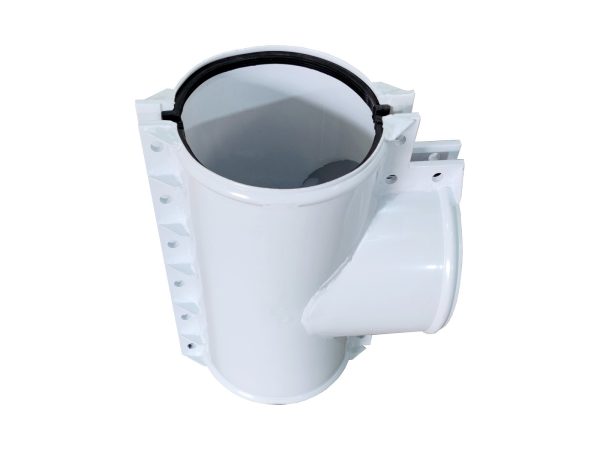
Repair Sleeve for Tee Fittings
Tee-section pipe repair clamp for branch connections on steel and ductile iron pipelines. Seals leaks at tee joints…
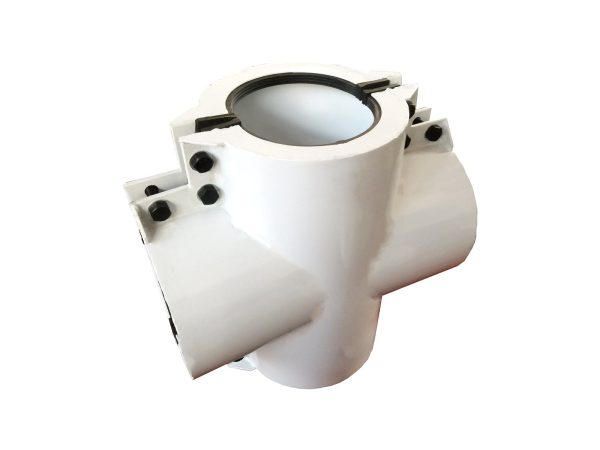
Repair Sleeve for Cross Fittings
A split repair sleeve for a cross fitting encloses a local defect at an existing four-way junction. Selection depends…
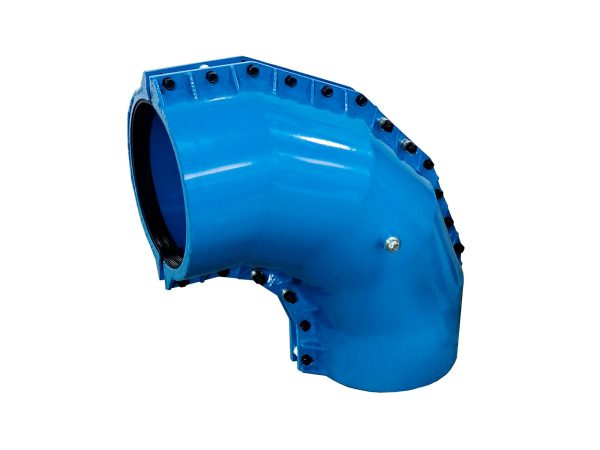
Repair Sleeve for Elbow Fittings
Elbow-section repair clamp for pipe bends at any angle. Fits both 45° and 90° elbows on steel and ductile iron pipes.