
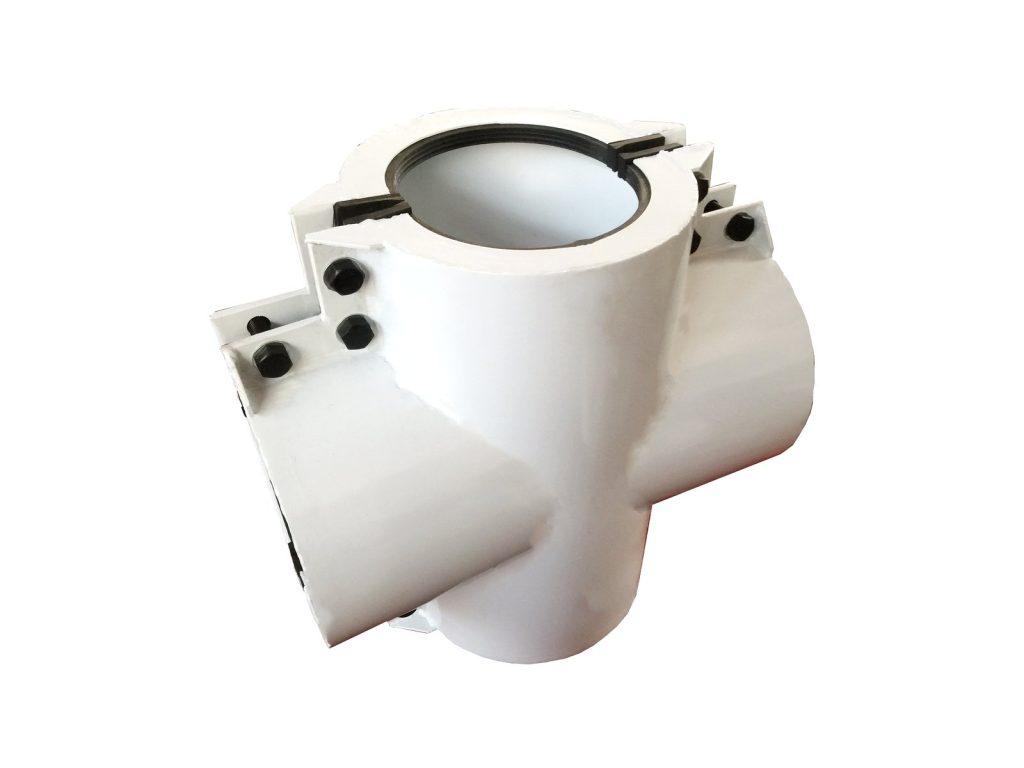
Repair Sleeve for Cross Fittings
A split repair sleeve for a cross fitting encloses a local defect at an existing four-way junction. Selection depends on the measured outside diameter of every leg, the junction geometry, sound sealing surfaces and the service conditions; sealing a leak does not restore damaged pipe strength.
Also known as: Split Repair Cross, Cross Repair Clamp
BS-RCCRUsually replies within 24 hours sales@baoshuopipe.com
Technical Specifications
| Part Number | BS-RCCR |
|---|---|
| Size Range | DN15–DN4000 · Custom sizes available beyond the above range |
| Body Material | Q235 Carbon Steel / SS304 / SS316L / Duplex 2205 |
| Seal Material | EPDM |
| Sealing Pressure | ≥1.6MPa (232 PSI) |
| Bolt Specification | M20×100, Grade 8.8 High-Strength Bolts |
| Coating | Epoxy Powder |
| Length Range | 200–600mm (7.9"–23.6") |
| Applicable Pipe Types | Steel, Ductile Iron |
| Working Conditions | Standard Pressure |
Custom Orders Available
This product can be customized to your specifications. Contact us with your requirements.
Request Custom QuoteCheck the fit before ordering.
- Measure the actual pipe
- Nominal DN alone does not define the outside diameter. Confirm the pipe material, measured OD and condition.
- Confirm the geometry
- Provide dimensions of the connection or damaged area. Product shape, sealing length and end connections must match the job.
- Match the seal to the service
- Confirm medium, temperature and pressure together. A material name alone is not a service approval.
- Plan a safe installation
- Pipe integrity, isolation and installation procedure require a site-specific assessment. Suitability for live service must be confirmed.
Read the full technical guide6 chapters · complete product description
Product Overview
A split repair sleeve for a cross fitting encloses a local defect at an existing four-way junction. Selection depends on the measured outside diameter of every leg, the junction geometry, sound sealing surfaces and the service conditions; sealing a leak does not restore damaged pipe strength.
Repairing an existing four-way fitting
The sleeve must follow the existing junction and leave usable sealing areas around the defect. A symmetric cross and a junction with unequal or offset legs require different dimensional information. This product is intended for assessing a repair to an existing fitting; it should not be treated as a way to turn a straight pipe into a new four-way connection. Where the requirement is a new outlet, compare the saddle outlet cross and repair branch cross for the actual connection arrangement.
Measure and label all four legs
Provide the actual outside diameter and pipe material for each leg, identifying their positions on a labelled sketch. Include branch directions and angles, the junction outline, required coverage along each centreline, and the position and extent of the defect. Record nearby weld beads, flanges, valves, existing collars and changes in section. Nominal DN alone does not define these dimensions. Photos with a scale and enough access to inspect each sealing area help establish whether a proposed shell can fit.
Check the defect and the sealing boundaries
Identify sound pipe surfaces beyond the damaged area on every leg that the proposed seal will contact. Loose corrosion, damaged coatings, local distortion or an irregular junction can affect seating and require assessment before sizing the shell. Growing cracks, substantial wall loss, displaced pipework or unsupported branches call for an engineering review of repair versus replacement. The sleeve must not be assumed to restore wall strength, provide axial restraint or carry loads from the connected pipework.
Confirm materials and service conditions
The current product lists steel and ductile iron pipe with an EPDM seal; shell material options must be confirmed for the proposed configuration. Send the medium and, where relevant, concentration, normal and maximum temperature, working pressure and possible transients. A material name or a reference standard alone does not establish chemical compatibility, drinking-water approval or certification of the complete assembly. Do not transfer the widest catalogue range or the rating of another sleeve to a custom cross.
Plan access, isolation and assembly checks
The operator must establish the pipe condition, isolation and depressurisation requirements and the permitted work procedure. Check space for both shell parts, gasket positioning, tools and independent support around all four legs. During assembly, confirm that the supplied components seat without forcing the junction out of alignment. Follow the assembly-specific tightening sequence and control values, checking seating as load is applied. There is no universal number of tightening passes or torque value for every cross. Inspect and test under the approved site procedure before reinstatement.
Prepare the enquiry and use the matching documents
Send the labelled measurements, defect photographs, materials, operating conditions, quantity, delivery destination and required inspection scope. The RC-CR datasheet is an enquiry reference rather than a standard dimension or price table; the project drawing and supplied configuration must settle the final details. Read the repair sleeve installation manual with the assembly instructions. A three-leg fitting may need a tee repair sleeve; a defect away from the junction may be assessed with a straight repair sleeve.
Documents
Material standards GB/T 700 · ASTM A240 · GB/T 3280 · BS EN 681-1 · GB/T 21873 · AWWA C210 · GB/T 18593 · ISO 898-1 · GB/T 3098.1
Related Products
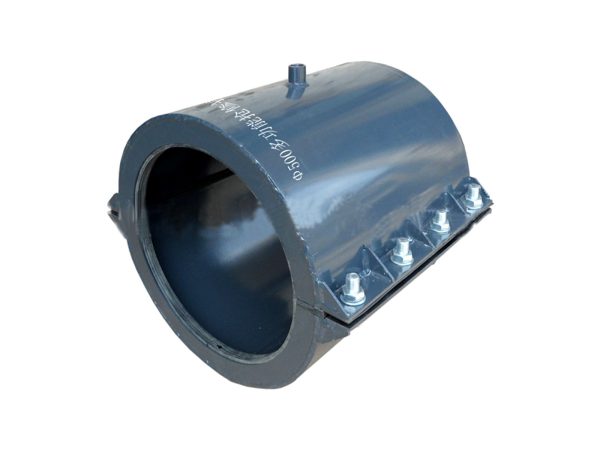
Mechanical Joint Split Repair Sleeve
Select a socket-joint repair sleeve from the actual joint profile, measured pipe and socket diameters, sealing…
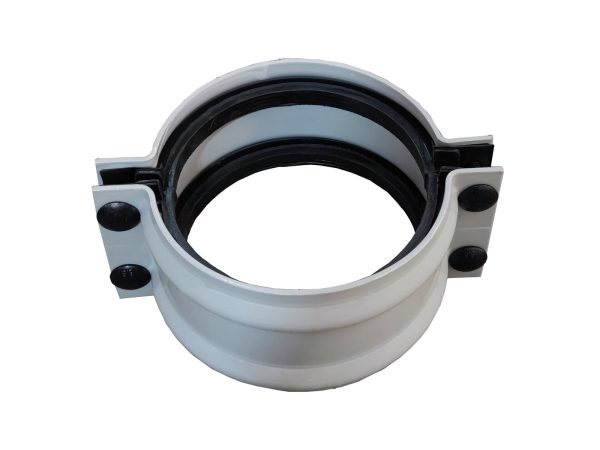
Weld Seam Repair Sleeve
Narrow-profile repair clamp for leaking weld seams on steel pipes. Targets the weld line directly with focused sealing…
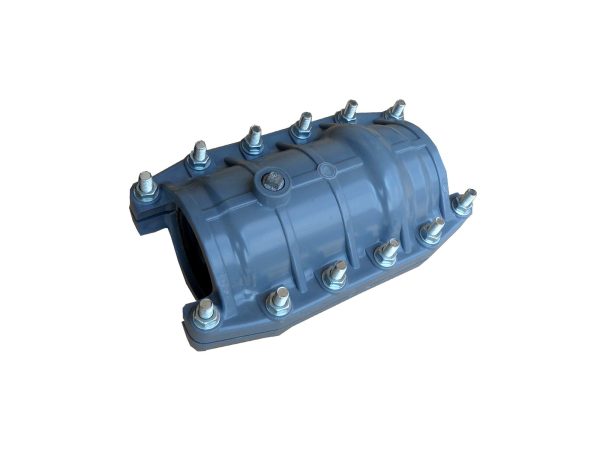
Split Repair Sleeve for PVC-M Pipe
Repair clamp specifically designed for PVC-M pipes. The PVC-M shell and supplied gasket must be checked against actual…