
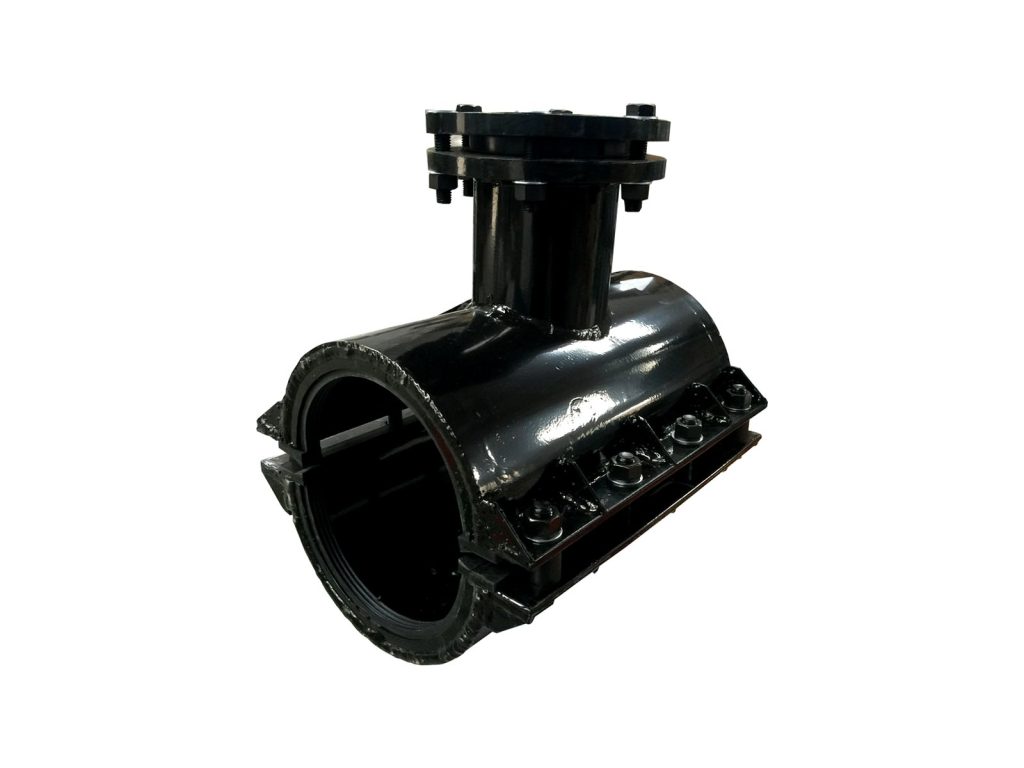
Repair Sleeve with Quick-Connect Outlet
An emergency branch is usually needed before anyone has decided what it will finally be. This split branch clamp seals the junction and leaves a push-fit outlet, so a branch pipe can be connected immediately and re-routed later…
Also known as: Repair Clamp with Quick-Release Outlet, Quick-Connect Repair Branch
BS-RBRQUsually replies within 24 hours sales@baoshuopipe.com
Technical Specifications
| Part Number | BS-RBRQ |
|---|---|
| Size Range | DN15–DN4000 · Custom sizes available beyond the above range |
| Body Material | Q235 Carbon Steel / SS304 / SS316L / Duplex 2205 |
| Seal Material | EPDM |
| Sealing Pressure | ≥1.0MPa (145 PSI) |
| Bolt Specification | M16×80, Grade 8.8 High-Strength Bolts |
| Coating | Epoxy Powder |
| Applicable Pipe Types | UPVC, PVC-M, HDPE, Steel |
| Working Conditions | Standard Pressure |
Custom Orders Available
This product can be customized to your specifications. Contact us with your requirements.
Request Custom QuoteCheck the fit before ordering.
- Measure the actual pipe
- Nominal DN alone does not define the outside diameter. Confirm the pipe material, measured OD and condition.
- Confirm the geometry
- Provide dimensions of the connection or damaged area. Product shape, sealing length and end connections must match the job.
- Match the seal to the service
- Confirm medium, temperature and pressure together. A material name alone is not a service approval.
- Plan a safe installation
- Pipe integrity, isolation and installation procedure require a site-specific assessment. Suitability for live service must be confirmed.
Read the full technical guide7 chapters · complete product description
Product Overview
An emergency branch is usually needed before anyone has decided what it will finally be. This split branch clamp seals the junction and leaves a push-fit outlet, so a branch pipe can be connected immediately and re-routed later without cutting anything again. It is the part used when a municipal water or drainage main has to be tapped today and the permanent arrangement can wait.
Where it fits
- Emergency branch additions on water and drainage mains
- Temporary supplies during works or outages
- Plastic mains where a fused branch would take too long
- Junctions that will be rationalised after the event
Choosing the right outlet
Tell us the main outside diameter, the branch pipe size and material — the coupling grips a specific pipe, so the branch material matters. For a permanent threaded branch, use the threaded repair branch tee; when the choice between repair and replacement is still open, see emergency pipe repair: clamp or replace the section.
Sealing a junction and leaving a socket behind
An emergency branch is usually needed before anyone has decided what it will finally be. This fitting seals the leaking junction and leaves a push-fit socket on the outlet, so a branch pipe can be connected the same day and re-routed later without cutting the main a second time.
The outlet is a coupling rather than a thread or a flange for the same reason as on the saddle version, but it matters more here. The shell is already doing the heavier job of closing a leak. Adding a wrench load, or a flange pull-up, would load the same bolts twice. A push-fit outlet adds no torque to the shell at all.
That leaves two independent sealing systems in one part. The band against the main is a static compression seal. The coupling is a seal on the branch pipe outside diameter, made when the pipe is pushed home. They fail for different reasons, so diagnosis starts by establishing which one is weeping. A weep at the main usually means uneven bolt load. A weep at the push-fit joint means something else: the branch pipe is not fully home, or the ring is damaged, or the pipe end was never chamfered. Those are different repairs, so the first step on site is to establish which joint is wet before anything is tightened.
Installation
- Measure the main outside diameter and locate the leak precisely. The shell has to cover the junction with sound pipe at each end.
- Check the branch pipe outside diameter against the coupling and inspect the pipe end. A crushed or previously gripped end will not seal, and no amount of tightening changes that.
- Cut the branch square, chamfer and deburr it, then mark the insertion depth with a paint line.
- Clean the main under the gasket land and seat the gasket as one band. Fit the lower half, then the upper half over the junction.
- Torque in a cross pattern in two or three passes, watching the shell gaps close evenly along the whole length rather than only at the ends.
- Pressure-test the shell with the outlet capped. If it weeps now, the main seal is the problem and the leak itself has not been disturbed any further.
- Fit the outlet connection and tighten by hand plus a short spanner only. The coupling body distorts under excess torque, and a distorted coupling will not hold a seal.
What we need to quote
Main outside diameter and main material. Branch pipe outside diameter and wall class, because the coupling grips a specific pipe, and a thinner wall of the same nominal size is a different fit.
Then working pressure and test pressure, medium and temperature range, and whether the line can be taken out of service if the shell has to be repositioned. Say how the branch will be restrained against pull-out and how it will be supported.
Two questions change the recommendation. Is the take-off temporary or permanent? And will the outlet be capped and opened again later, or is this the final branch? A coupling that is made and broken repeatedly is a service item, so the permanent arrangement is worth planning at the same time as the emergency one — one excavation rather than two.
The built size range and the pressure rating are in the table on this page. Sizes outside it are quoted as drawn.
Limits of a push-fit outlet on a repair clamp
A coupling seals and grips, but on its own it is not a restraint against branch thrust. Where the branch is large and permanent, or where the line cycles hard in pressure, the honest answer is a flange outlet — the Repair Clamp with Flanged Outlet — with the branch properly supported.
The second limit is the pipe end. A ring cannot seal against a dent, an out-of-round end, or a pipe that has already been squeezed by an earlier coupling. Cut back to sound pipe or replace that end.
Third, where the take-off is new and the junction is sound, there is nothing here to seal and the lighter part is the Quick-Joint Saddle Outlet Tee.
Fourth, where the main is damaged over a length rather than at one junction, no branch fitting helps. Repair the run first with a Straight Pipe Repair Clamp or replace the section, then take the branch.
For an emergency where the choice between repair and replacement is still open, the decision sequence is set out in emergency pipe repair: clamp or replace the section.
Materials and standards
The shell is Q235 carbon steel to GB/T 700, epoxy coated to AWWA C210 / GB/T 18593, or SS304, SS316L or Duplex 2205 to ASTM A240 / GB/T 3280. On this fitting stainless deserves more consideration than on a plain clamp, because the shell often goes into wet ground during a shutdown and may stay there for some time before the permanent arrangement is built.
The gasket is EPDM to BS EN 681-1 / GB/T 21873, the right default for potable water and for contact with PE, PVC and PVC-M surfaces. NBR to BS EN 681-2 / GB/T 21873 is used where the line carries oil or a hydrocarbon-bearing effluent, which is common on drainage and trade-waste lines. FKM or silicone to ASTM D2000 / ISO 1629 covers higher temperature.
The coupling’s sealing ring is matched to the branch pipe material and the medium, and it is ordered with the fitting rather than substituted on site. Bolts are Grade 8.8 to ISO 898-1 / GB/T 3098.1, or SS304 to ASTM A193 / GB/T 3098.6. AWWA C230 covers full-encirclement repair and service connection clamps; AWWA C227 covers bolted split-sleeve couplings.
Material standards GB/T 700 · ASTM A240 · GB/T 3280 · BS EN 681-1 · GB/T 21873 · AWWA C210 · GB/T 18593 · ISO 898-1 · GB/T 3098.1
Related Products
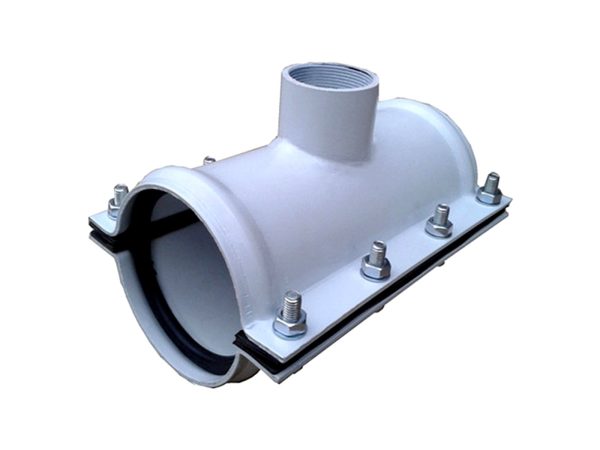
Repair Sleeve with Threaded Outlet
Split-type repair branch clamp with threaded outlet. For adding or repairing threaded branch connections on live…
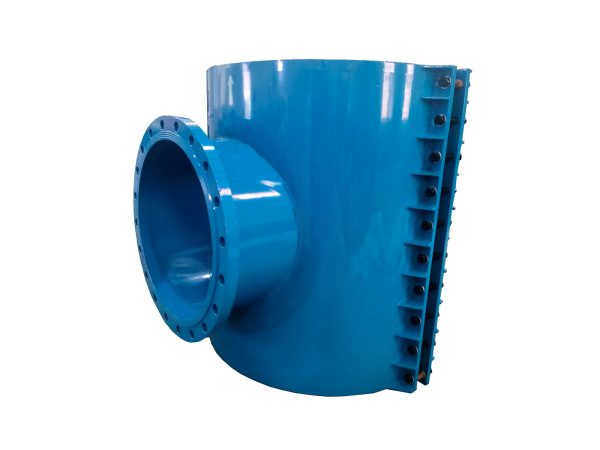
Repair Sleeve with Flanged Outlet
Split-type repair branch clamp with flanged outlet. For high-pressure branch connection repairs on industrial pipelines…
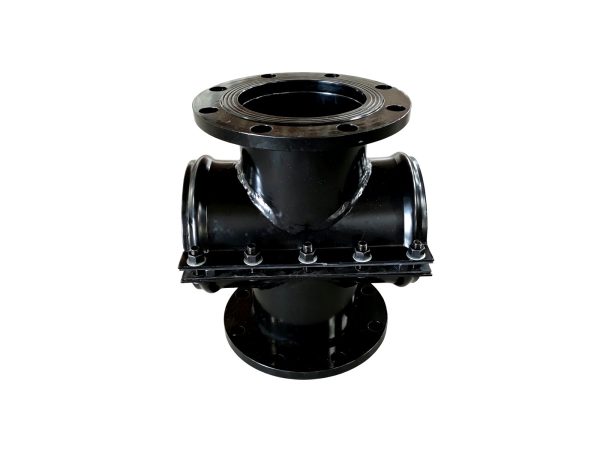
Repair Sleeve with Cross Outlets
Split-type four-way repair clamp for cross-intersection repairs. Dual opposing branch outlets — seals leaks at all four…