
 1 / 4
Click image to enlarge
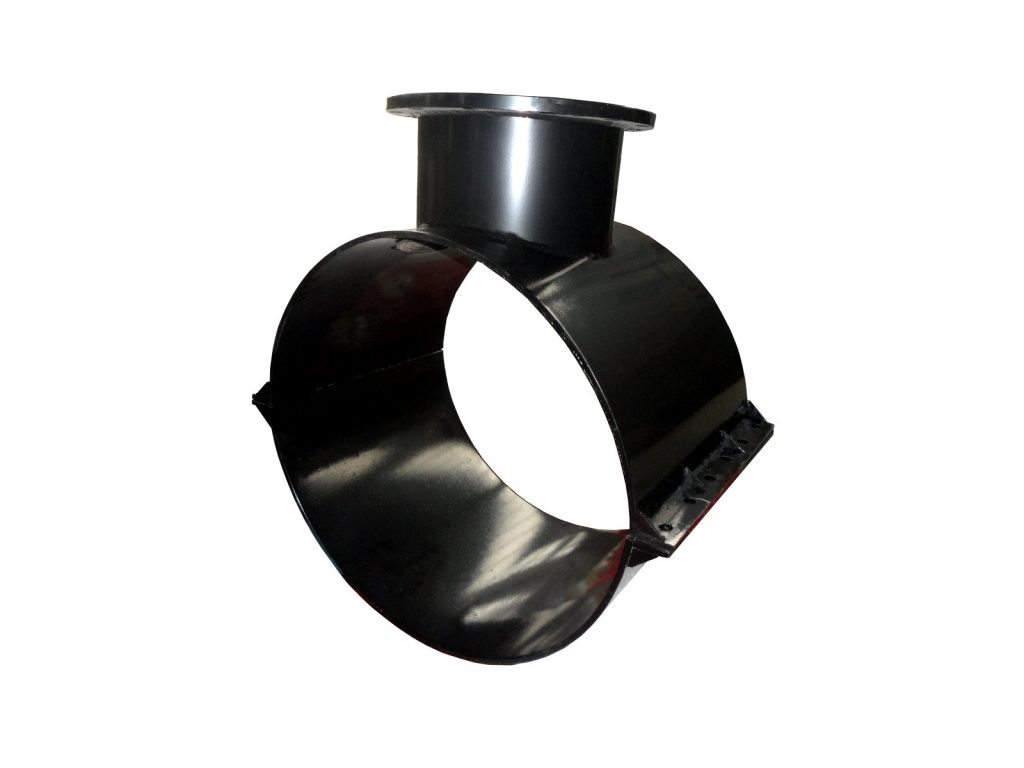
Flanged Saddle Outlet
This tapping saddle adds a flanged branch to a main in service. The body is the same split wrap as the threaded version, but the outlet ends in a flange instead of a thread — the right choice…
Also known as: Saddle Outlet, Flanged Branch Saddle
BS-SLFTUsually replies within 24 hours sales@baoshuopipe.com
Technical Specifications
| Part Number | BS-SLFT |
|---|---|
| Size Range | DN15–DN4000 · Ductile Iron DN40–DN2600 / Steel DN40–DN2600 · Custom sizes available beyond the above range |
| Body Material | Q235 Carbon Steel / SS304 / SS316L / Duplex 2205 |
| Seal Material | EPDM |
| Sealing Pressure | ≥1.0MPa (145 PSI) |
| Bolt Specification | M16×80, Grade 8.8 High-Strength Bolts |
| Coating | Epoxy Powder |
| Weight | 1.3–957 kg (approx) |
| Applicable Pipe Types | UPVC, HDPE, Steel, Ductile Iron |
| Working Conditions | Standard Pressure |
Custom Orders Available
This product can be customized to your specifications. Contact us with your requirements.
Request Custom QuoteCheck the fit before ordering.
- Measure the actual pipe
- Nominal DN alone does not define the outside diameter. Confirm the pipe material, measured OD and condition.
- Confirm the geometry
- Provide dimensions of the connection or damaged area. Product shape, sealing length and end connections must match the job.
- Match the seal to the service
- Confirm medium, temperature and pressure together. A material name alone is not a service approval.
- Plan a safe installation
- Pipe integrity, isolation and installation procedure require a site-specific assessment. Suitability for live service must be confirmed.
Read the full technical guide7 chapters · complete product description
Product Overview
This tapping saddle adds a flanged branch to a main in service. The body is the same split wrap as the threaded version, but the outlet ends in a flange instead of a thread — the right choice when the branch carries equipment or a full-bore connection: a valve, a meter run, a pump take-off or a fire main connection.
Where it fits
- Water treatment plants and pumping stations
- Plant rooms where branches end at equipment
- Large branches where a threaded outlet would be too small
- Take-offs that will be isolated for maintenance later
Choosing the right outlet
Tell us the main outside diameter, the branch size and the flange drilling you need to mate with — the outlet is machined to that standard. Where the branch ends in a thread, use the threaded outlet saddle; where the take-off is temporary, the quick-joint saddle comes off again without tools.
Why a saddle is not a repair clamp
A repair clamp seals a defect that is already there. A tapping saddle does the opposite job: it puts a new hole in a main that is still sound and seals around the outlet while the main keeps working. The two are not interchangeable, and the difference has to be settled at the enquiry stage rather than on site.
The wrap is a full-encirclement band. The bolts tension the band, the band compresses the elastomer against the pipe outside diameter, and that compressed band is the only thing holding the outlet on the main. Nothing is welded and nothing is screwed into the pipe wall. Branch pressure acting on the outlet bore produces a net force that tries to peel the saddle off, and gasket friction plus bolt load are what resist it.
A flanged outlet makes that harder than a threaded one. A flange joint only seals when its bolts pull the two faces together hard, and the reaction to that pull is carried entirely by the shell underneath. That is why the flanged body runs longer along the main than a threaded saddle of the same branch size — the extra length spreads the moment over more pipe instead of concentrating it at the outlet neck.
Installation
- Measure the main outside diameter with a tape. The band is built on the outside diameter, and nominal bore does not fix it.
- Check the surface under the gasket land: no weld seam standing proud, no deep pitting, no ovality. A band cannot pull a gasket down into a pit.
- Mark the branch position and confirm the clocking — which way the flange face ends up and where the bolt holes point. Rotating the saddle later means breaking the main seal.
- Dry-fit the halves without the gasket to prove the bolt holes line up and that there is room to swing a spanner on the outlet flange.
- Seat the gasket, fit the lower half, then the upper half over the outlet. Run every bolt finger-tight before any load goes on.
- Torque in a cross pattern in two or three passes, watching the gap between the halves close evenly. Doing one side up fully cockles the shell and lifts the gasket on the far side.
- Pressure-test the branch connection before drilling. This is the step that gets skipped, and it is the last chance to find a leaking gasket before there is a hole in the main.
- Drill through the outlet so the cutter is guided by the outlet bore, and retain the coupon so it cannot travel downstream.
What we need to quote
Six items settle the build: the measured main outside diameter; the branch size; the flange you are bolting to, meaning standard, pressure rating, bolt count, bolt size and pitch circle diameter; the working and test pressures; the medium and its temperature; and the main material with its wall condition. Add whether the main stays in service, because that decides whether the outlet is drilled under pressure and how the coupon is held.
Two things we will not guess. The flange drilling has to come from the standard you are mating to, not from the saddle. If the branch ends at an existing valve, meter or spool, send the flange dimensions off that item. And the branch load has to be stated: an unsupported branch pipe running several metres puts a bending moment into the shell that no gasket was sized for. Say how the branch will be carried.
Standard sizes and the pressure rating are in the table on this page. Sizes outside it are quoted as drawn.
Where a flanged saddle is the wrong part
Three situations send the enquiry elsewhere.
The first is a main that is already leaking where the branch has to go. Drilling there opens a hole straight into a defect. Seal the run first with a Straight Pipe Repair Clamp, then tap a sound length of pipe.
The second is a branch connection that already exists and is leaking at the collar or the thread. A saddle adds a branch; it does not seal the old one. That job belongs to the Repair Clamp with Flanged Outlet, which seals the junction and leaves a usable flange face in one bolt-up.
The third is a main wall too thin or too corroded to develop the friction the design assumes under the gasket land. The saddle reacts branch thrust through the shell and the pipe surface, so a wall that has lost section will let the fitting creep. Replace that length of main rather than tapping it.
A saddle is also the wrong part wherever the branch will carry equipment weight. It is a take-off and sealing fitting, not a support.
Materials and standards
The shell is Q235 carbon steel to GB/T 700 as standard, with SS304, SS316L or Duplex 2205 to ASTM A240 / GB/T 3280 where the soil, the atmosphere or the water rules carbon steel out. Buried municipal work is almost always carbon steel with an epoxy coating to AWWA C210 / GB/T 18593. Stainless is specified where the coating is likely to be damaged during installation, where the water carries residual chlorine or chloride, or where a corrosion product in the water is not acceptable.
The gasket is EPDM to BS EN 681-1 / GB/T 21873 for water and most municipal service, or NBR to BS EN 681-2 / GB/T 21873 where the main carries oil or fuel. FKM or silicone to ASTM D2000 / ISO 1629 covers higher temperatures and chemical duty. This is the one choice that cannot be revisited: the gasket sits compressed against the main for the life of the fitting.
Bolts are Grade 8.8 to ISO 898-1 / GB/T 3098.1, or SS304 to ASTM A193 / GB/T 3098.6 on stainless shells. As a class these fittings sit under AWWA C223, fabricated steel and stainless steel tapping sleeves, which is the standard a specifying engineer can name on a drawing. The outlet pattern and bolting are confirmed per order.
Documents
Material standards GB/T 700 · ASTM A240 · GB/T 3280 · BS EN 681-1 · GB/T 21873 · AWWA C210 · GB/T 18593 · ISO 898-1 · GB/T 3098.1
Related Products
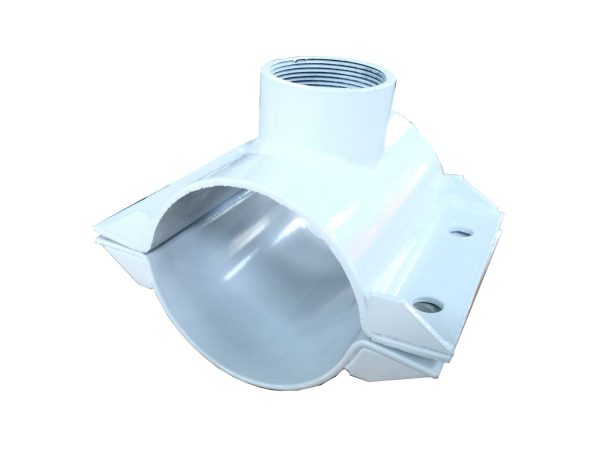
Threaded Saddle Outlet
Saddle-type tapping tee with threaded (BSP/NPT) branch outlet. For adding branch connections to existing pipelines…
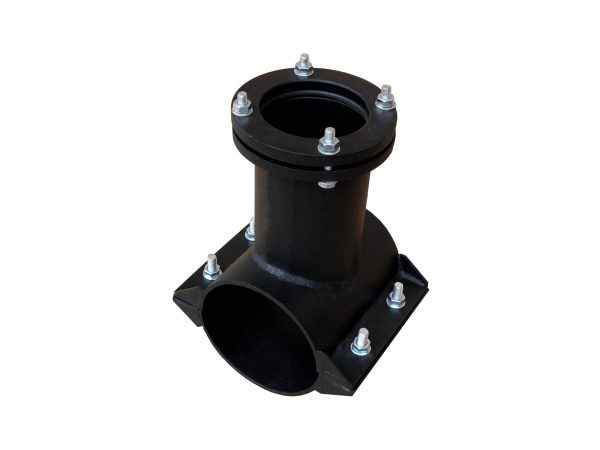
Saddle Outlet with Quick-Connect Branch
Saddle outlet tee with quick-connect coupling on the branch. Tool-free installation for temporary or emergency branch…
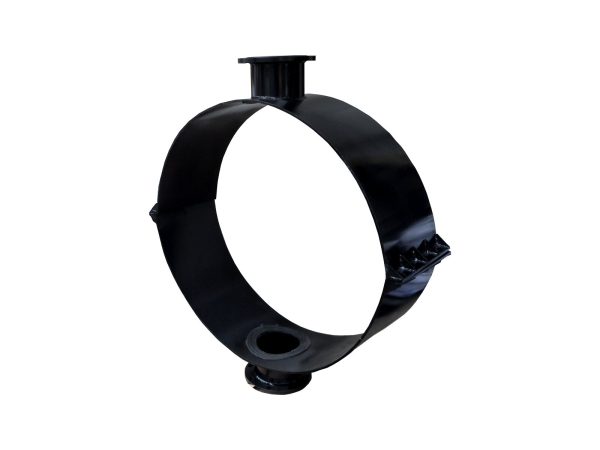
Saddle Outlet for Cross Connections
Four-way saddle clamp for creating cross-intersections on existing pipelines. Two opposing branch outlets with…