
 1 / 4
Click image to enlarge
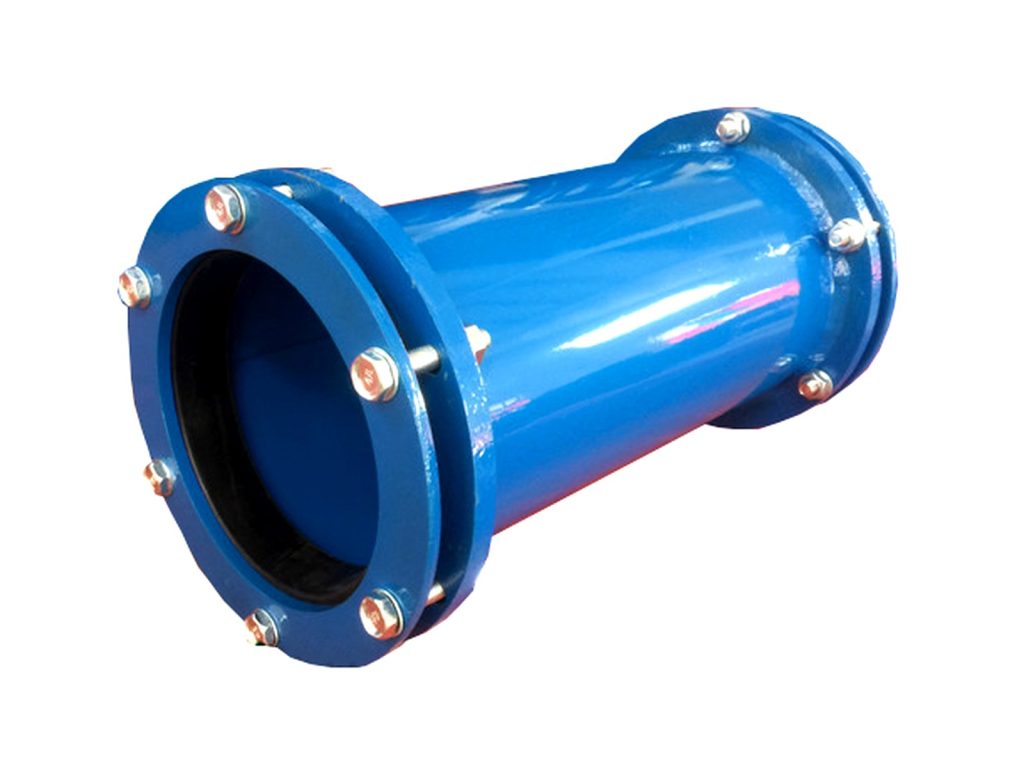
Telescopic Expansion Coupling
A telescopic sleeve accommodates specified axial pipe movement; travel, anchors, guides and operating conditions determine the configuration.
Also known as: Expansion Coupling, Axial Expansion Joint
BS-EJESUsually replies within 24 hours sales@baoshuopipe.com
Technical Specifications
| Part Number | BS-EJES |
|---|---|
| Size Range | DN15–DN4000 · Ductile Iron DN40–DN4000 / Steel DN40–DN4000 · Custom sizes available beyond the above range |
| Body Material | Q235 Carbon Steel / SS304 / SS316L / Duplex 2205 |
| Seal Material | EPDM |
| Sealing Pressure | ≥1.6MPa (232 PSI) |
| Bolt Specification | M16×80, Grade 8.8 High-Strength Bolts |
| Coating | Epoxy Powder |
| Length Range | 100–700mm (3.9"–27.6") |
| Applicable Pipe Types | Steel, Ductile Iron, Cast Iron, UPVC, HDPE |
| Working Conditions | Standard Pressure, High Temperature |
Custom Orders Available
This product can be customized to your specifications. Contact us with your requirements.
Request Custom QuoteCheck the fit before ordering.
- Measure the actual pipe
- Nominal DN alone does not define the outside diameter. Confirm the pipe material, measured OD and condition.
- Confirm the geometry
- Provide dimensions of the connection or damaged area. Product shape, sealing length and end connections must match the job.
- Match the seal to the service
- Confirm medium, temperature and pressure together. A material name alone is not a service approval.
- Plan a safe installation
- Pipe integrity, isolation and installation procedure require a site-specific assessment. Suitability for live service must be confirmed.
Read the full technical guide7 chapters · complete product description
Product Overview
A straight expansion joint answers a different question from a split sleeve: it does not seal a defect, it gives a pipeline somewhere to move. Pipe changes length with temperature, and on a restrained run that movement becomes stress carried into anchors, valves and connections. The joint absorbs the travel in a sliding sleeve, and it also works as a quick coupling.
Where it is installed
- Long exposed runs, where the temperature swing is largest
- Lines between fixed anchors and equipment connections
- Pipework assembled then taken apart again
- Retrofit positions where an expansion loop is not practical
Choosing the right size
Send the pipe outside diameter, the movement to be absorbed, the medium and its temperature range — travel and temperature decide the internal design. The installation sequence is in the expansion joints installation manual, and anchor and guide arrangements follow from the travel you specify. Where the movement sits at a bend instead, take the elbow expansion joint.
Travel, not pressure, is the first number
An axial expansion joint is a movement part rather than a pressure part. The sleeve slides inside the body and the seal is an elastomer ring compressed radially against the sliding surface, so what the product is built around is how far it has to move, not how hard it is pushed.
Two consequences catch buyers out. A sliding joint does not restrain the pipe: internal pressure pushes the two halves apart, so if the pipeline is not anchored either side, the joint extends to the end of its travel and then behaves as a rigid spacer, or separates. The anchors carry the thrust, and the joint only supplies the movement.
Travel is also finite and fixed at build. Once the sleeve bottoms out, the pipe’s movement returns to the line as a compressive load — exactly the condition the joint was bought to prevent. So the first number on the enquiry is the displacement to be absorbed and the temperature swing behind it, not the pressure rating. Pressure still matters, but a joint that fails in service has almost always been given the wrong travel rather than the wrong rating.
Installation
- Establish the travel required before ordering, from the run length, the temperature swing and the installation temperature. It needs to be a figure, not a range.
- Install anchors both sides. The joint must not be the anchor, and the pipe either side must not be free to walk.
- Fit guides at the spacing the layout calls for so the pipe moves along its own axis instead of buckling sideways. An unguided joint cocks in the bore and scores its sleeve.
- Set the joint at the mid-point of its travel at the installation temperature. This is the most common error: fitted at full length, it has no travel left to give when the line goes cold.
- Align the two pipe ends before closing the joint. A sliding seal cannot absorb angular misalignment, and forcing it in loads the elastomer on one side only.
- Fit and tension in stages, then check by hand that the sleeve still moves freely through its travel.
- Pressure-test and watch the sliding seal specifically. A weep there on a new joint usually means a scored or dirty sleeve, not a failed elastomer.
- Record the set position and the installation temperature, so the next person can tell whether the joint has moved as expected.
What we need to quote
Displacement first: how far the pipe moves, and whether that movement reverses between a cold start and a hot run. Then the temperature swing and the installation temperature, because the set position is calculated from them.
Then the pipe: outside diameter, material and wall, followed by working pressure, test pressure and medium. On a hot water line the medium and temperature together select the gasket compound, and that is decided at order rather than on site.
Then the layout, where most of the engineering actually sits — anchor positions, guide positions, whether the pipe is restrained or free, and how much straight length is available. State whether the joint is also expected to serve as a dismantling joint to let a spool come apart for maintenance, because that changes the seal requirement.
The built size and length ranges are in the table on this page; the installation sequence is in the expansion joints installation manual.
How these joints fail
Nearly every failure of this product is a layout failure, and the symptoms are consistent enough to diagnose from.
If the joint is found fully closed with no seal weep but distorted supports nearby, the run has moved further than the travel allowed. The answer is more travel or more joints, not a different material.
If the joint has extended and the line has separated, or a support has been dragged, there were no anchors, or anchors on one side only. That is a design error rather than a product defect.
If the sliding seal weeps, the sleeve has been scored — almost always by lateral or angular movement the joint was not meant to take. Where that movement sits at a bend, take the Elbow Expansion Joint; at a branch, the Tee Expansion Joint.
And where the pipe is rigidly anchored at both ends with no allowance for movement, the joint has no travel to give and passes the load straight through. If the only purpose is to let pipework come apart for maintenance, say so at enquiry: the same family does it, and the seal is specified differently for a joint that is dismantled rather than one that slides.
Materials and standards
Body and sleeve are Q235 carbon steel to GB/T 700 with an epoxy coating to AWWA C210 / GB/T 18593, which suits buried and exposed water service. SS304 or SS316L to ASTM A240 / GB/T 3280 is specified where the line is aggressive or the joint stays exposed. Duplex 2205 is worth naming here specifically: the sliding surface is the part that fails, and a duplex sleeve resists scoring better than a carbon steel one — a direct answer to the most common service complaint.
The elastomer is EPDM to BS EN 681-1 / GB/T 21873. That default carries extra weight on this product because the working conditions include high temperature: EPDM covers hot water and steam condensate where a nitrile compound would be the wrong selection. NBR to BS EN 681-2 / GB/T 21873 is used for oil and gas condensate, and FKM or silicone to ASTM D2000 / ISO 1629 for higher temperature and hydrocarbons.
Bolts are Grade 8.8 to ISO 898-1 / GB/T 3098.1, or SS304 to ASTM A193 / GB/T 3098.6. AWWA C219, bolted sleeve-type couplings, is the class standard this family sits under.
Documents
Material standards GB/T 700 · ASTM A240 · GB/T 3280 · BS EN 681-1 · GB/T 21873 · AWWA C210 · GB/T 18593 · ISO 898-1 · GB/T 3098.1
Related Products
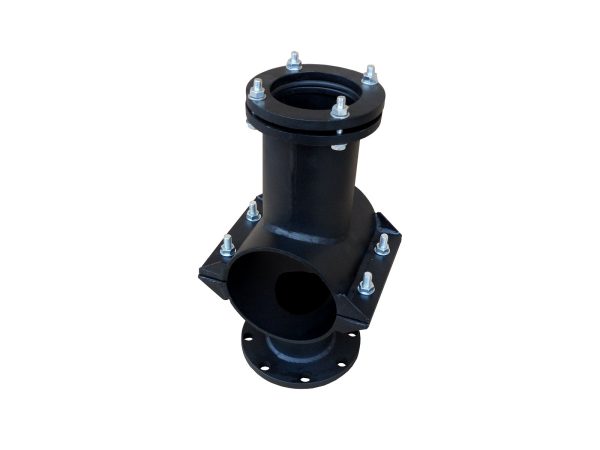
Cross Expansion Joint
Four-way expansion joint for cross intersections. Measure each leg outside diameter separately; confirm which ports…
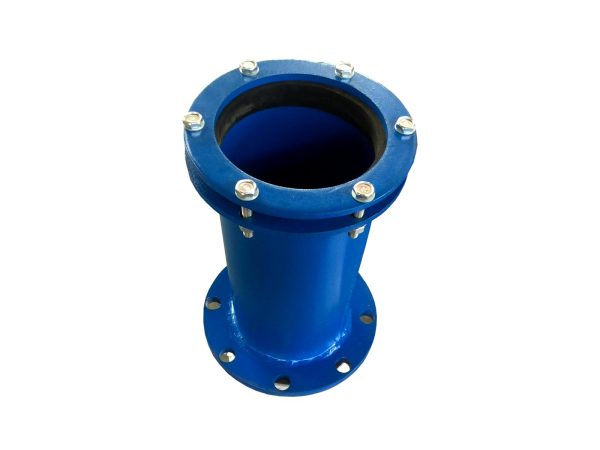
Flanged Expansion Adapter
Single-flange expansion joint for connecting plain-end pipe to flanged valve or fitting. Axial travel with full-face…
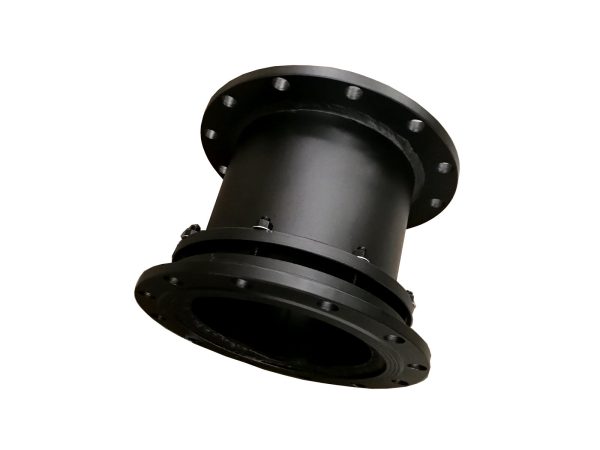
Double-Flange Expansion Joint
Double-flanged expansion joint for installation between two flanged connections. Absorbs axial movement and reduces…