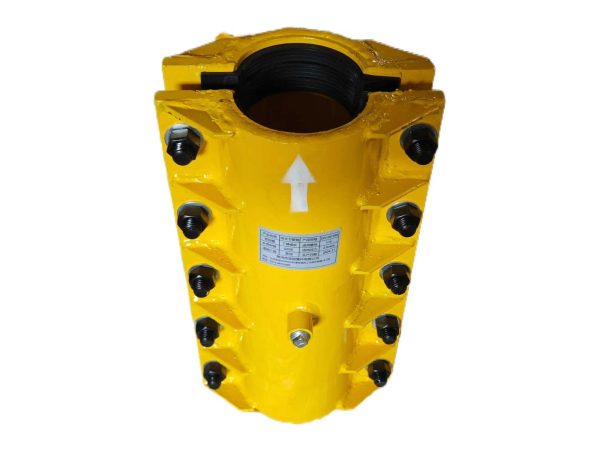
Acid- and Alkali-Resistant Repair Sleeve
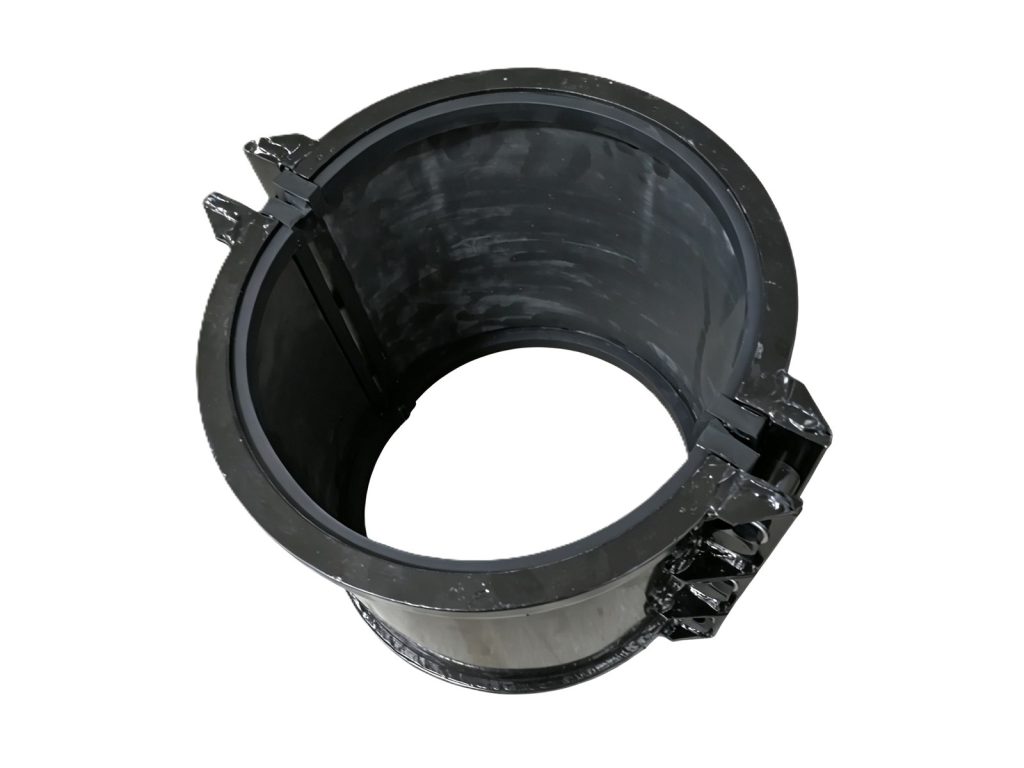
An acid and alkali resistant split sleeve carries its seal bonded to the shell instead of held in it, because an ordinary gasket will not survive the medium. There is no separate gasket to creep, no cavity behind…
Also known as: Acid and Alkali Resistant Repair Clamp, Chemical Resistant Repair Sleeve
Usually replies within 24 hours sales@baoshuopipe.com
Technical Specifications
| Size Range | DN15–DN4000 · Ductile Iron DN15–DN4000 / Steel DN15–DN4000 / Stainless Steel DN15–DN4000 · Custom sizes available beyond the above range |
|---|---|
| Body Material | Carbon Steel Q235 / SS304 / SS316L / Duplex 2205 |
| Seal Material | FKM (Bonded to Shell Interior) |
| Sealing Pressure | ≥1.6MPa (232 PSI) |
| Bolt Specification | M16×80, Grade 8.8 High-Strength Bolts |
| Coating | Epoxy Powder (or Stainless Steel on request) |
| Length Range | 200–600mm (7.9"–23.6") |
| Applicable Pipe Types | Steel, Stainless Steel, Ductile Iron, PVC |
| Working Conditions | Acid & Alkali Resistant |
Custom Orders Available
This product can be customized to your specifications. Contact us with your requirements.
Request Custom QuoteCheck the fit before ordering.
- Measure the actual pipe
- Nominal DN alone does not define the outside diameter. Confirm the pipe material, measured OD and condition.
- Confirm the geometry
- Provide dimensions of the connection or damaged area. Product shape, sealing length and end connections must match the job.
- Match the seal to the service
- Confirm medium, temperature and pressure together. A material name alone is not a service approval.
- Plan a safe installation
- Pipe integrity, isolation and installation procedure require a site-specific assessment. Suitability for live service must be confirmed.
Read the full technical guide7 chapters · complete product description
Product Overview
An acid and alkali resistant split sleeve carries its seal bonded to the shell instead of held in it, because an ordinary gasket will not survive the medium. There is no separate gasket to creep, no cavity behind it for the medium to reach, and nothing that can be displaced as the bolts are tightened. Sealing surface and shell behave as one part.
Where it is used
- Acid, alkali and plating lines in chemical plants
- Effluent and dosing pipework carrying aggressive media
- Joints where a loose gasket would be attacked from behind
- Duty that also involves heat or pressure
Choosing the right build
We need the medium with its concentration and temperature, the outside diameter and the line pressure — the elastomer is chosen for the chemistry first and the geometry second. How the compounds differ is set out in EPDM, NBR, FKM and silicone compared; where the medium attacks the metal too, see the corrosion resistant repair clamp.
Why the seal is bonded to the shell here
On a water line the gasket only has to hold pressure. On an acid or alkali line the gasket is also a wetted part, and the medium reaches it from two directions: through the pipe opening at the leak itself, and along the pipe surface from each end of the sleeve. An unbonded gasket sitting in a groove gives that second path somewhere to go. Medium creeps under the gasket edge, into the cavity between the gasket and the shell, and attacks the one surface no coating or barrier can reach.
Bonding the elastomer directly to the shell interior removes that cavity. There is no groove, no free edge to lift, and no space behind the seal for the medium to collect. The seal and the shell become one component, so the only exposed elastomer is the face in contact with the pipe and the narrow edge at each end of the sleeve.
That construction also changes how the part behaves as it is tightened. A loose gasket can be displaced, rolled or extruded sideways by the closing force. A bonded one cannot, so the compression is set by the shell geometry and the bolt load rather than by how carefully the fitter placed the seal. On aggressive duty that predictability is worth more than anything else about the design.
Installation
- Confirm the medium first. Write down the chemical name, its concentration as supplied, the normal and maximum temperature, and whether the line carries a mixture or is used for different products on different days. A line that runs two different chemicals is two different selection problems.
- Check the pH range actually seen, including cleaning and flushing cycles. A line that is caustic-washed between batches spends part of its life at a pH the process fluid never reaches.
- Depressurise, drain and flush before opening the line. Residual acid in the pipe beside the repair attacks both the fitter and the fresh shell.
- Clean the pipe back to bare metal over the full length the sleeve will cover, and well past it at both ends. Any product residue under the bonded seal is a leak path that starts working as soon as the line is warm.
- Inspect the pipe for wall loss. Aggressive media thin pipe from the inside; a sleeve over a wall that is already below the design thickness covers the problem without solving it.
- Fit the shell and set it centred on the defect, then mark the pipe either side so it cannot shift while closing.
- Tighten in two alternating passes. Because the seal is bonded, there is no gasket to roll, but an uneven close still leaves one side under-compressed.
- Pressure-test with the line at ambient, then again at operating temperature if the process runs hot. A bonded seal that passes cold can still weep once the pipe expands.
The two mistakes that matter are fitting onto a surface that still carries product residue, and assuming that one compound covers every chemical on site. Neither shows up at commissioning; both show up weeks later.
What decides the elastomer
Chemistry chooses the compound before geometry chooses the shell. Send these, because the answer changes with each one:
- Chemical name — not a trade name, not “acid”, the actual substance
- Concentration, and whether it varies
- Normal and maximum operating temperature
- pH range including cleaning cycles
- Whether the line is ever flushed with something else, and what
Then the geometry: outside diameter, the length of pipe available for the sleeve, line pressure, and whether the pipe is coated. A coated pipe changes the surface the bonded seal has to grip, and a barrier pipe may need the shell to match the barrier rather than the steel.
Send the safety data sheet if you have it. The section on chemical resistance and the listed pH are often more useful than any selection table, because they tell us what the medium actually is rather than what the line is called. Where the medium attacks the metal as well as the elastomer, the shell has to change too, and that is the corrosion resistant repair clamp.
Where each compound reaches its limit
This is the part buyers most often get wrong, so it is worth stating plainly. “Acid and alkali resistant” describes the product family, not every chemistry inside it. Each elastomer has a boundary, and the boundary is crossed by concentration and temperature, not by the name of the chemical.
- FKM, which is what this sleeve is supplied with bonded to the shell, covers a broad range of mineral acids and oxidising media and holds up at elevated temperature. Its weaknesses are equally specific: hot concentrated caustic soda and other strong alkalis attack it, and it is not the right choice for ketones, esters, ethers or low-molecular-weight organic acids in high concentration.
- EPDM is the opposite case. It handles alkalis, hot water, steam and many polar media well, which makes it the usual answer for caustic duty. It is attacked by mineral oils, fuels and many non-polar solvents, so it is the wrong choice on a line that also carries hydrocarbon.
- NBR is a hydrocarbon seal and has no place on an aggressive chemical line unless the duty is genuinely oily rather than acidic.
- Silicone is chosen for temperature, not for chemistry, and it has poor resistance to most acids and alkalis.
So for a hot, concentrated alkaline line, ask for EPDM or a barrier shell instead of the standard bonded FKM build. For a mixed stream that runs both acid and solvent, no single elastomer is the whole answer and the shell needs an inert barrier. Where the medium attacks the metal as well as the seal, or where the line carries an abrasive slurry, a sleeve is the wrong repair and the section should be replaced.
Materials and standards
The shell is supplied in carbon steel Q235 to GB/T 700, or in SS304, SS316L or Duplex 2205 to ASTM A240 / GB/T 3280, and the choice follows the medium rather than the pressure. Where the process fluid attacks carbon steel, an epoxy coating to AWWA C210 / GB/T 18593 protects the outside of the shell from the plant atmosphere, but the wetted face is the one that matters and a stainless shell is usually the honest answer.
- Q235 with epoxy coating for lines where the medium is aggressive but the surroundings are not.
- SS304 for mildly aggressive duty with low chlorides.
- SS316L where chlorides are present alongside the acid or alkali, which is common in plating and effluent lines.
- Duplex 2205 where chloride stress corrosion cracking is a risk; chemical lines are often warm and chloride-bearing at the same time.
The seal is FKM to ASTM D2000 / ISO 1629, bonded to the shell interior. Bonding is the reason this part differs from a standard sleeve: it removes the cavity behind the gasket where aggressive medium would otherwise sit. Fasteners are grade 8.8 to ISO 898-1 / GB/T 3098.1, or SS304 to ASTM A193 / GB/T 3098.6 where the bolts also see the plant atmosphere. The design working pressure is 1.6 MPa and the size range is DN15–DN4000. How the compounds differ is set out in EPDM, NBR, FKM and silicone compared.
Documents
Material standards GB/T 700 · ASTM A240 · GB/T 3280 · ASTM D2000 · ISO 1629 · AWWA C210 · GB/T 18593 · ISO 898-1 · GB/T 3098.1
Related Products
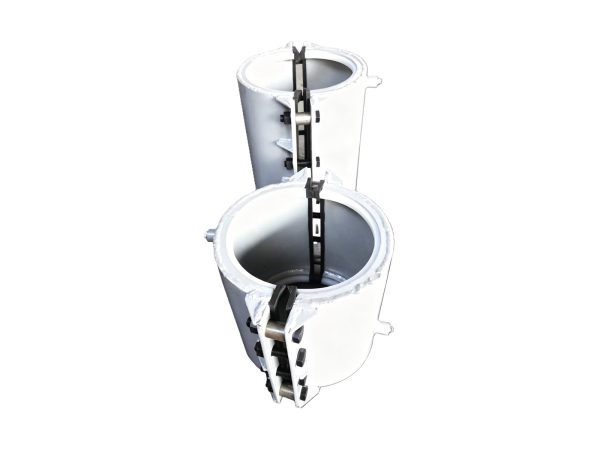
Ultra-Low-Temperature Repair Sleeve
Confirm the PTFE seal construction and the full assembly for the actual minimum temperature, fluid phase, pressure and…
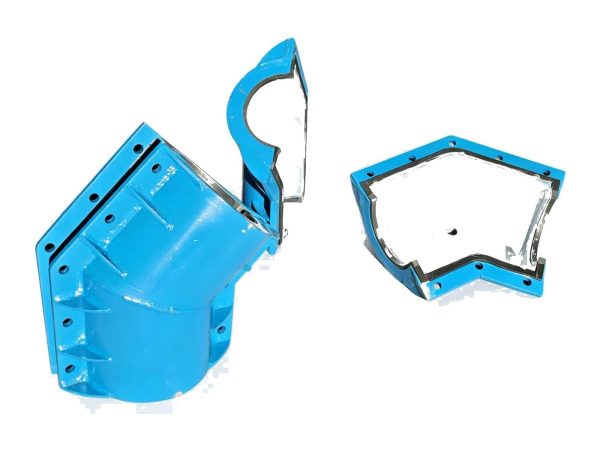
Corrosion-Resistant Repair Sleeve
The interior fluoroplastic barrier protects its covered shell surfaces, while FKM provides the seal; confirm both for…
NBR-Sealed Repair Sleeve
NBR-sealed repair clamp for petroleum, lubricant and fuel lines — hydrocarbon service that swells and destroys EPDM…